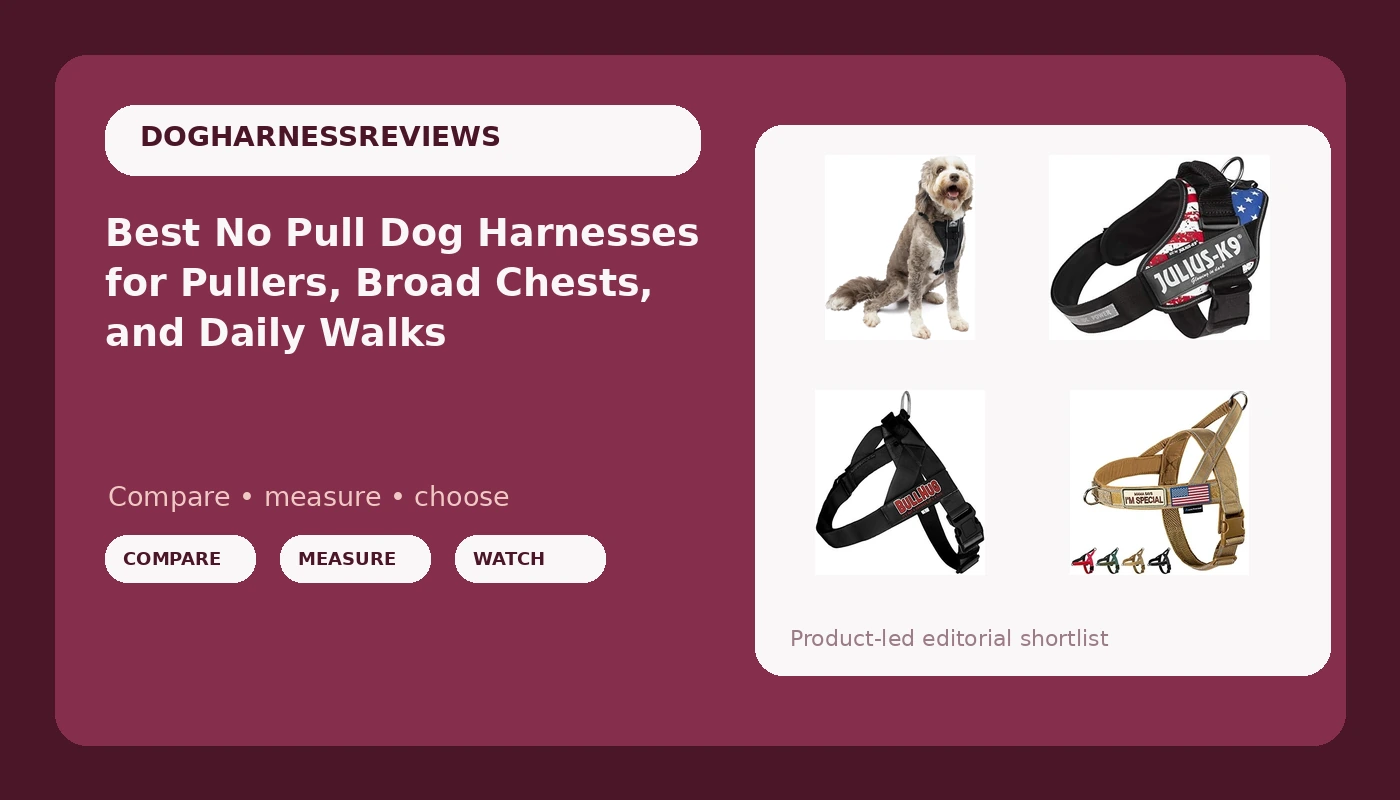
A no pull dog harness is sold as a fix, and most of the time it gets sold to the wrong dog. The harness that stops a strong adolescent from dragging you down the block is not the harness that fits an English bulldog, and neither one is the harness you want for a dog that already walks politely and just needs something comfortable for an hour on the trail. Buy by color or by star rating and you end up with a drawer full of harnesses that rub, twist, and ride up into the armpits.
This guide looks at six current harnesses that cover the range a real walker cares about: a chest leash point for dogs that lean into the leash, a broad-chested cut for bulldogs and pugs, a back-attachment option with a grab handle, a padded-handle design for training walks, a detachable 2-in-1, and a plain everyday no pull harness. Sizing runs from Small up through Large, including the European-style L/1 marking, and none of these listings pretend that one cut fits every body type. Prices move constantly, so every card below links to the live listing instead of printing a number that will be stale by the weekend.
Related: How to Fit a Dog Harness So It Stops Rubbing
Quick answer
The Kurgo Tru-Fit Smart Harness, Black, Large is the strongest fit for everyday walking with a dog that pulls, because it gives you a leash point at the chest for redirecting forward motion and a second point at the back for relaxed stretches, in a harness sold by named size rather than as a universal cut. Choose the BULLHUG Adjustable Dog Harness instead when your dog is broad-chested and short-backed, where the shape of the chest panel matters more than anything else on this list.
No-pull dog harnesses worth comparing
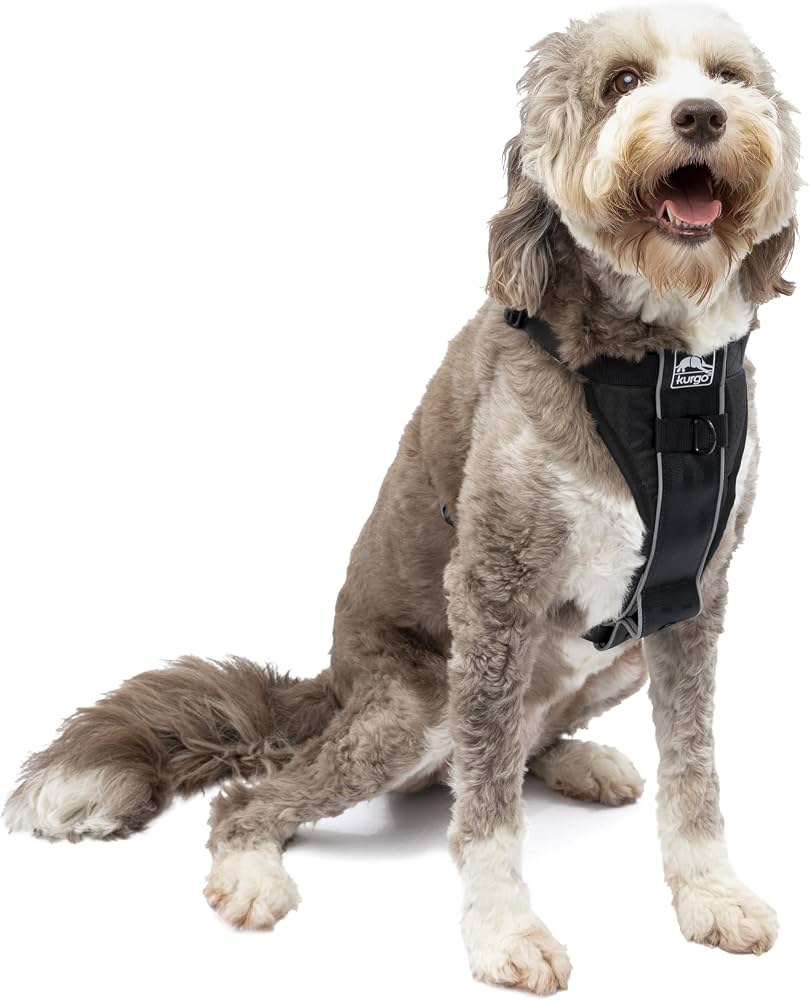
Kurgo Tru-Fit Smart Harness, Black, Large
A walking harness with a leash attachment at the chest and another at the back, sold in named sizes rather than a single adjustable cut. This is the black Large. The chest point is what makes it useful on a dog that leans into the leash, and the back point keeps it practical for relaxed walking and long-line work.
Visit on Amazon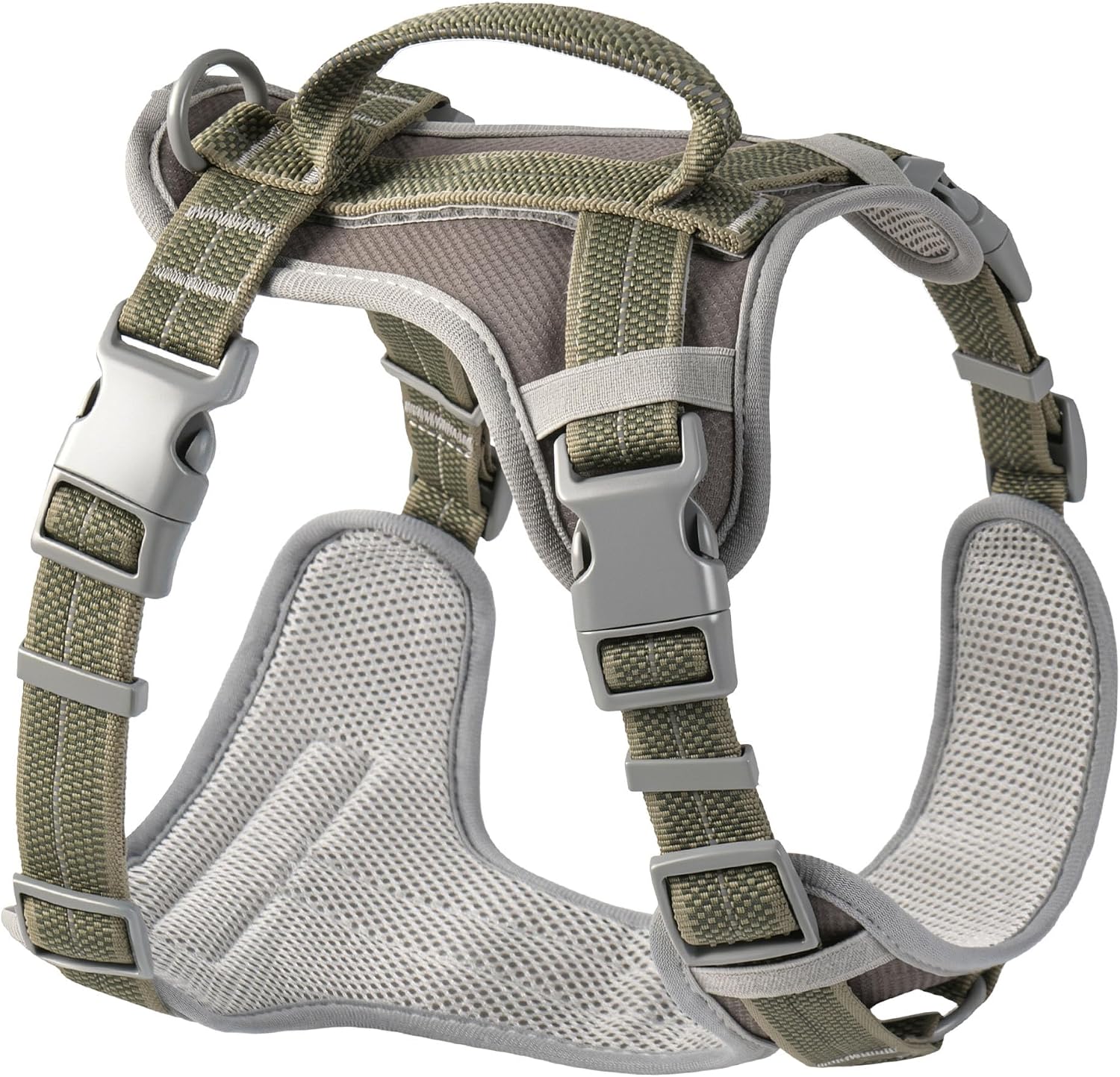
No Pull Harness, Detachable Dog Harness, 2-in-1, Comfy Green | L
A 2-in-1 no pull harness with a detachable section, so one harness can be worn as a full-coverage walking setup or stripped down to a lighter configuration for warmer days. This listing is size L in the Comfy Green colorway.
Visit on Amazon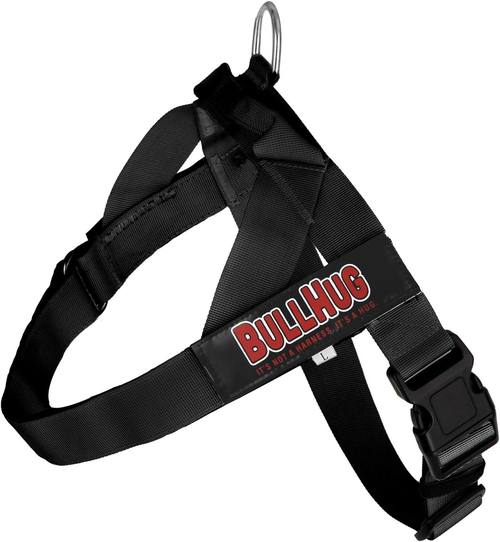
BULLHUG Adjustable Dog Harness - No Pull, No Choke - for English Bulldogs, French Bulldogs, Pugs & Broad-Chested Breeds - Easy, Safe Walks (Black, Small)
An adjustable, no pull, no choke harness shaped for broad-chested, short-backed breeds such as English bulldogs, French bulldogs, and pugs. This listing is the black Small, and the cut is the whole point: standard harnesses tend to slide forward or dig in on this body type.
Visit on Amazon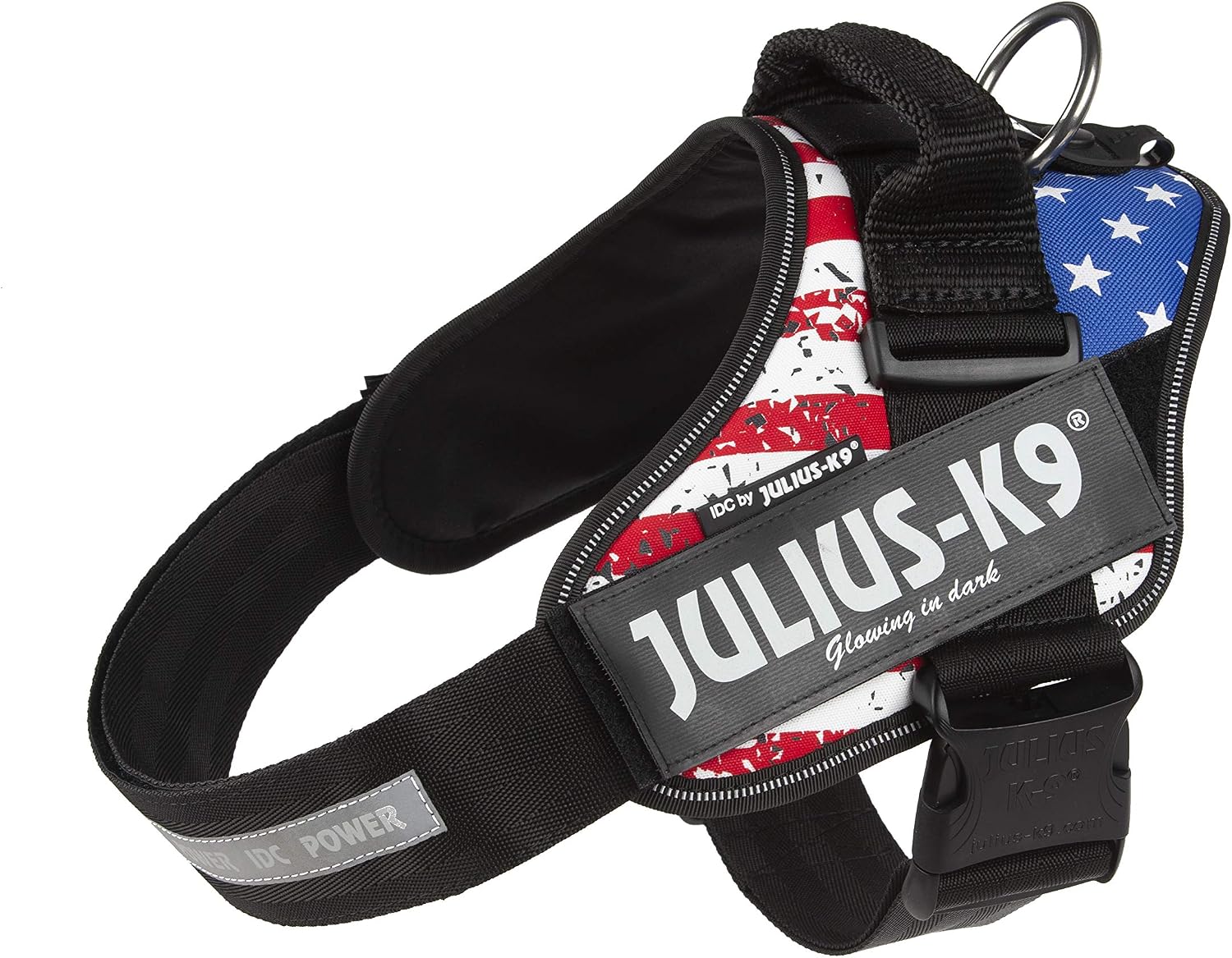
IDC Powerharness, Size: L/1, USA Flag
Check current Amazon price
A back-attachment style harness in size L/1 with a top grab handle and a USA Flag pattern. It suits handlers who want a steadying handhold on the back rather than a chest redirect, and the L/1 sizing note is worth reading carefully before ordering.
Visit on Amazon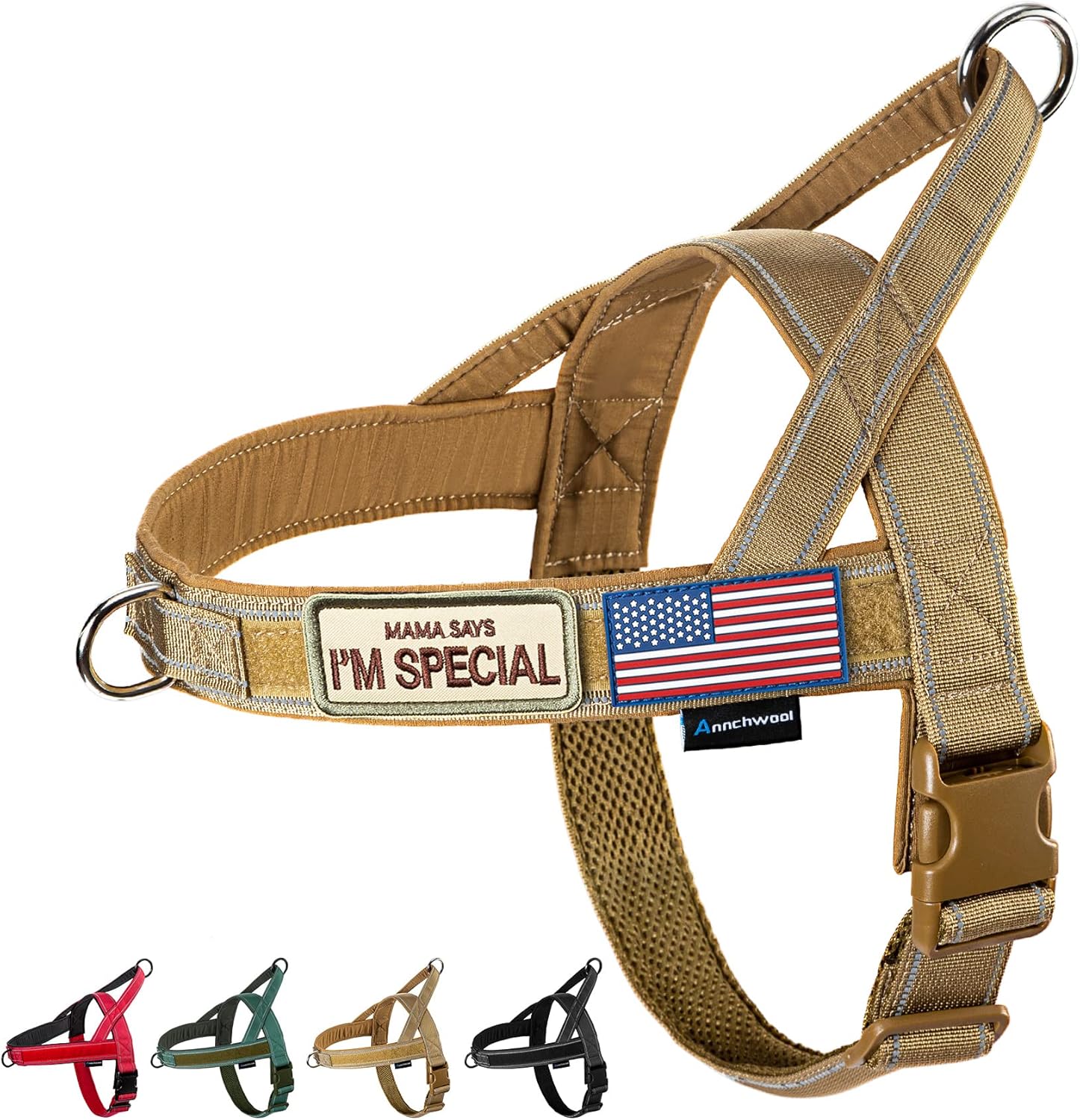
Annchwool No Pull Dog Harness with Soft Padded Handle, Reflective Strip Escape Proof and Quick Fit to Adjust Dog Harness, Easy for Training Walking for Small & Medium and Large Dogs(Brown,L)
A no pull harness built around a soft padded handle, a reflective strip, and quick-fit adjustment, described by the listing as escape proof for training and walking. This is the brown size L, and the handle is the feature that separates it from the plain walking harnesses here.
Visit on Amazon
No Pull Dog Harness with Urban Grid Style by Rabbitgoo
Check current Amazon price
Rabbitgoo's no pull harness in the Urban Grid pattern. A straightforward everyday option for owners who want the no pull function and a clean look without a specialty body shape, and the brand's harnesses are among the most commonly seen on neighborhood walks.
Visit on AmazonPrices and availability may change. Check the retailer for current details.
How these products were compared
This guide compares leash attachment placement, adjustment range and fit points, strap and hardware construction as described in each listing, size coverage across different body types, and how simple each harness is to put on, clean, and live with. Product names, images, and retailer links are matched by ASIN so that every card points to the product shown.
The comparison is built from the listings themselves and from how each design is meant to work on a dog. It is not a lab test, and nothing here should be read as a measured result. Where a feature is not visible in the listing, it does not appear in this article.
How to choose the right dog harness
Start with the tape measure, not the harness. Measure the girth of the chest just behind the front legs, at the widest point of the ribcage, and write the number down. Then measure again after a walk, because a dog that has been breathing hard will measure differently than a dog asleep on the couch. Sizing labels are not transferable between brands: a Small from one company can be a Medium from another, and European sizing such as L/1 does not line up with American letter sizes at all. If your dog lands between two sizes, look for a harness with a wider adjustment band rather than guessing, and check the listing for the actual girth range before you commit.
Fit points matter more than the feature list. Once the harness is on, check three places: the strap behind the front legs, where rubbing and chafing show up first; the chest panel, which should sit flat rather than gaping or digging in; and the attachment ring, which should ride above the shoulder blades or on the chest, never down in the armpit where it saws at skin with every step. A harness that slips forward on a walk is usually too loose in the chest and too long in the body.
Then decide where you want the leash to attach, because that choice drives everything else. A chest attachment redirects a dog that pulls by turning the body slightly when the leash comes tight, which is why it is the first thing to try on a dog that has never been trained out of pulling. A back attachment is fine for a dog that already walks on a loose leash, and it is what you want for long lines, hiking, and a grab handle you can reach in traffic. Many dogs end up needing two harnesses for two jobs, a walking harness and something for the car, and pretending one product covers both is how people end up frustrated with gear that is doing exactly what it was designed to do. A harness also does not train anything by itself; it buys you control while you work on the walking. If your dog is still learning, our harness fit walkthrough covers the adjustment sequence in more detail.
Kurgo Tru-Fit Smart Harness, Black, Large
The Kurgo Tru-Fit Smart Harness is the pick here because it covers both jobs in one piece of gear. The chest attachment handles a dog that leans into the leash, the back attachment works for a settled walk or a long line, and the harness is sold by named size, which means the fit is a real decision rather than a hope. Kurgo has been making training and travel gear for dogs for a long time, and this line is one of the designs that shows up in training classes rather than only in photos.
The trade-off is the sizing. A named size is precise for a dog that matches the listed girth, and unforgiving for a dog that sits between two sizes or has an unusual chest depth. If your dog measures awkwardly, a harness with a broader adjustment range, such as the BULLHUG or the Annchwool, gives you more room to tune the fit. This listing is also a single color and size combination, the black Large, so it is not the place to look if you want options. And if you specifically want a padded handle on the back for steadying a dog at a curb or in a crowd, that feature lives on other harnesses in this roundup, not this one.
Alternatives to consider
The BULLHUG Adjustable Dog Harness is better suited to broad-chested, short-backed dogs, the English bulldog, French bulldog, and pug shapes that make a standard harness slide forward or dig into the chest, while the Annchwool No Pull Dog Harness is a stronger fit when you want a padded handle for training walks and a reflective strip for evening outings in low light.
The No Pull Harness, Detachable Dog Harness, 2-in-1, the IDC Powerharness, and the Rabbitgoo No Pull Dog Harness with Urban Grid Style cover the rest of the field. The 2-in-1 is for owners who want one harness that can be worn full coverage or stripped to a lighter configuration, the IDC Powerharness is the back-attachment option with a top grab handle and the L/1 sizing notation, and the Rabbitgoo is the everyday no pull harness for an owner who wants a familiar design without a specialty cut.
Day-to-day use and maintenance
A harness takes more abuse than any other piece of dog gear, because it is under tension, in dirt, and in contact with fur and skin for an hour at a time. Check it the way you would check a climbing sling. Run your hands along the webbing every couple of weeks and look for fraying, thinning, or stiff spots where the material has been creased too long. Check the stitching at every attachment point and where the straps meet the body panel, since that is where a failure would start. Work the buckles open and closed and listen for a change in how they sound; a buckle that has started to feel gritty or that pops open under a light pull is done.
Most nylon harnesses can be hand washed in lukewarm water with a mild soap, rinsed thoroughly, and air dried away from direct heat. Skip the dryer, since heat is what shrinks webbing and warps plastic hardware, and skip fabric softener, which leaves residue that attracts dirt and can irritate skin. A harness that traps fur under a padded panel needs brushing out more often, especially on double-coated dogs during a coat blow.
Two habits matter for safety. First, recheck the fit after every bath, grooming appointment, or seasonal coat change, because a harness that fit in January can sit wrong by April. Second, do not leave a harness on a dog that is crated or unsupervised, since a strap can catch on a crate bar or a fence. Finally, treat every harness, including the ones described as escape proof, as a piece of equipment rather than a guarantee. A determined dog can back out of almost anything, and the harness that fits today is the one that works today.
Buying checklist
- Measure the chest girth just behind the front legs and compare it against the listed range, not the letter size.
- Choose the attachment point based on whether your dog pulls, not on which harness looks best in photos.
- Confirm that the exact model and size you are ordering includes the feature you want, since the same line is often sold in several configurations.
- Check the strap width and hardware description against your dog's weight and strength.
- Read the cleaning and care instructions before the first muddy walk.
- Verify current price, availability, and return terms through the retailer link before you buy.
Final recommendation
Choose the Kurgo Tru-Fit Smart Harness, Black, Large when you want one walking harness with a chest attachment for a dog that pulls and a back attachment for the calm parts of the walk, and when your dog matches a named size. Choose the BULLHUG Adjustable Dog Harness when your dog is broad-chested and short-backed, and the shape of the chest panel is the deciding factor. Choose the Annchwool No Pull Dog Harness when a padded handle and reflective trim matter for training walks, the IDC Powerharness when you want a back attachment with a grab handle, the No Pull Harness, Detachable Dog Harness, 2-in-1 when you want one harness that changes with the weather, and the Rabbitgoo No Pull Dog Harness with Urban Grid Style when you simply want a dependable everyday no pull harness. If your dog's measurements sit between sizes on every option here, spend the extra week finding a harness with a wider adjustment range instead of settling, because fit is the part that decides whether any of these actually works.