I have fitted harnesses on more than 3,000 dogs. Most of those fittings happened at a shelter, on dogs who pulled because nobody had ever taught them anything else, and a good number happened on my own two German shepherds, who between them have chewed through more gear than I want to price out. When someone asks me to recommend a no-pull dog harness, I ask three questions: how much does the dog weigh, does the dog lunge forward or back out of the harness, and does the owner actually intend to train or just survive the walk. The four harnesses in this comparison cover the answers I hear most often, and they all sit in the same affordable bracket, which is where the real competition is right now.
Related: Front-Clip vs Back-Clip Harness Mechanics
The short answer: for a dog between roughly 30 and 70 pounds who pulls, buy a front-clip harness with metal hardware. The PetSafe Easy Walk Harness is still the reference point for that job, and the tactical vest is the pick once your dog gets past 70 pounds. But a step-in mesh vest and a handle-first harness each win in situations the front-clip classics handle badly, and the table below is where I would start.
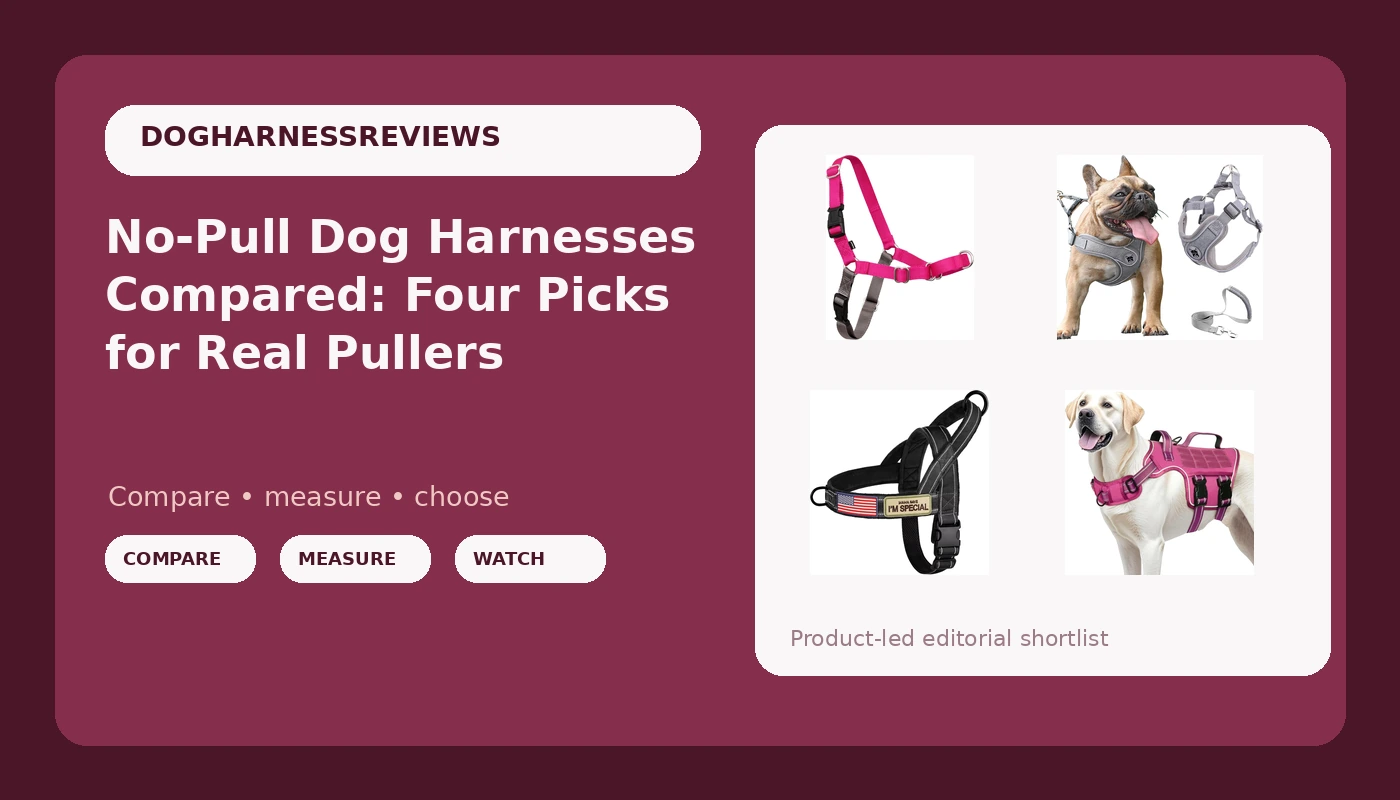
PetSafe Easy Walk Harness, No Pull Dog Harness, Medium, Raspberry
The front-clip layout that made this category mainstream, with a chest loop that redirects a lunging dog instead of letting it build speed
Sizing is fussier than the label suggests, and a chest strap that sits low will rub behind the front legs
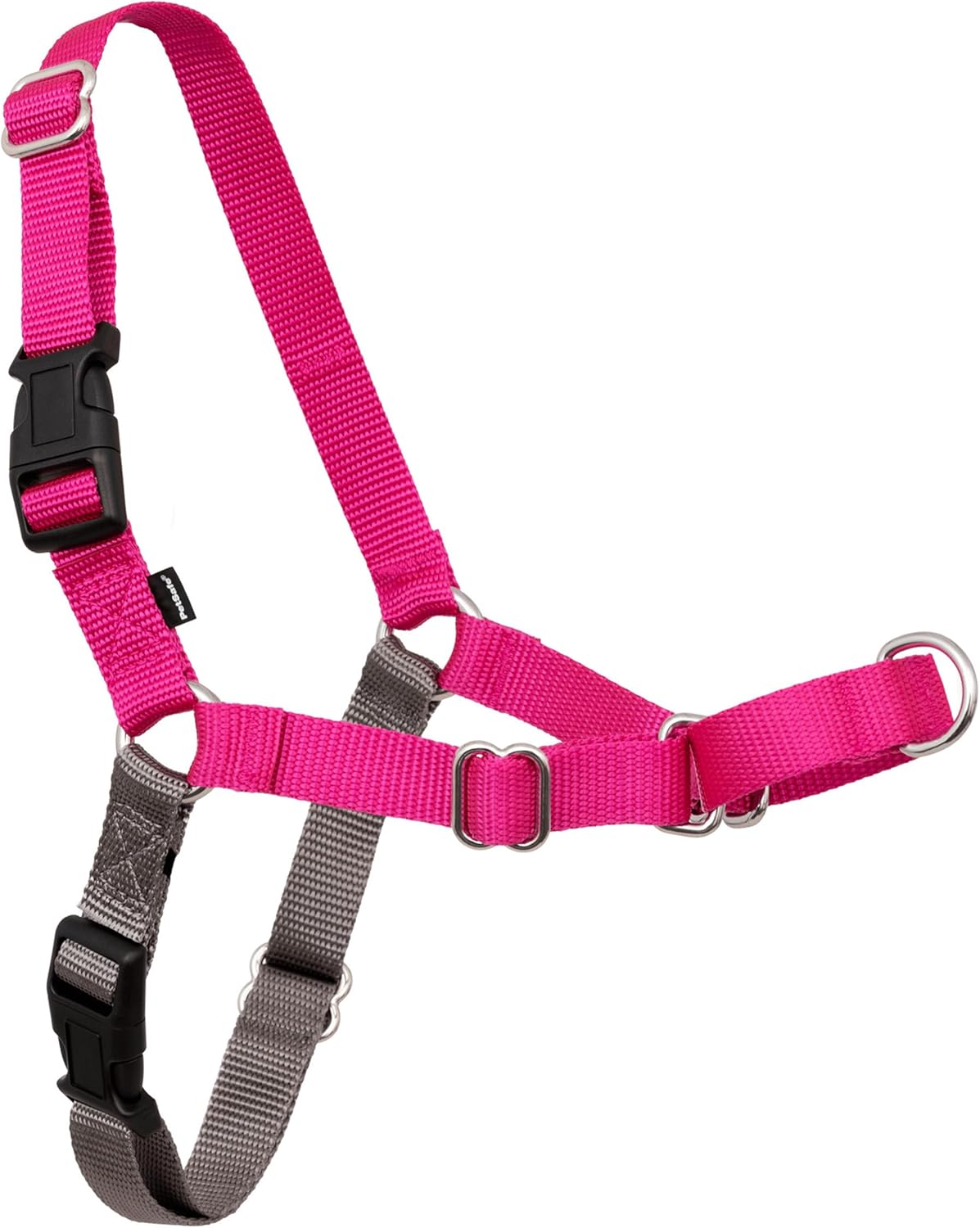
Dog Frenchie Harness and Leash Set, No Pull Adjustable Step in Soft Mesh Vest Harness, Easy Walk Reflective Pet Harness with Padded Handle (Grey, M)
Soft mesh panel, reflective trim, padded handle, and a matching leash in the box, which makes it the easiest first harness for a small dog
Mesh and light hardware are built for small and medium dogs, not for a hard puller at the top of that range
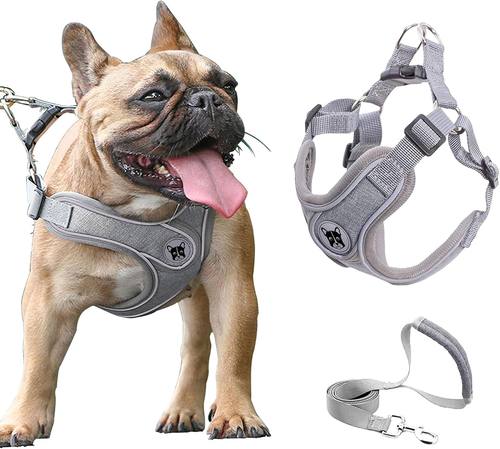
Forestpaw No Pull Dog Harness with Large Handle, Comfortable, M, Black
The large top handle is genuinely useful for car doors, stairs, and holding a dog steady at the vet
A handle invites owners to hold a dog back instead of teaching it anything, and black webbing shows every bit of trail dirt
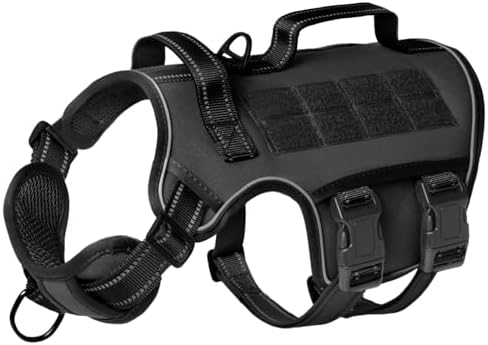
Dog Harness for Large Dogs, No Pull Tactical Vest with Front Clips
Front clips on a full-coverage vest, which is the combination that keeps very large dogs from backing out mid-walk
More material means more heat and more places to overtighten, and it is overkill on anything under about 50 pounds
Prices and availability were captured from Amazon Creators API and may change.
How I judge a no-pull harness
Four things, in order, and none of them are the color.
Fit points come first, because fit is most of the outcome. A harness only controls a dog if the chest strap sits at the sternum and the shoulder straps clear the armpits. Get that wrong and the best-made harness in the world slides sideways, rubs, and stops redirecting anything.
Buckle quality comes second. I have watched a plastic side-release buckle pop open on a leash-pop from a 60-pound dog, and once that happens you never fully trust the harness again. On dogs over 40 pounds I want metal where the leash attaches, and I want the adjusters to be metal too, not stamped plastic that deforms the first cold morning.
Strap webbing comes third. Wider webbing spreads load, but only if it stays flat. Narrow webbing with a soft edge beats wide webbing that rolls and digs.
The front clip comes fourth, and only because the first three decide whether the clip ever does its job.
The four harnesses, one at a time
PetSafe Easy Walk Harness, No Pull Dog Harness, Medium, Raspberry
This is the harness that put front-clip walking on the map, and it is still what I hand to a client with a 50-pound lab who drags them down the block. The leash attaches at the chest, so when the dog surges forward, the shoulders get steered sideways rather than the dog getting a running start. The chest loop tightens slightly as the dog leans into it, which is the whole trick: no pressure on the throat, no leverage for the dog.
Where it loses is sizing. The medium fits a narrower band of dogs than most owners expect, and the chest strap has to sit high on the sternum or it will rub behind the front legs on a long walk. Measure your dog before you order, and recheck the fit after the first two walks, because the straps settle.
Dog Frenchie Harness and Leash Set, Grey, M
This one is a step-in, which means the dog walks into the loops and you close a single buckle instead of wrestling a harness over the head. For puppies, seniors, and dogs who hate having anything pulled over their ears, that is not a small convenience. It is the difference between a two-second routine and a five-minute argument.
The mesh panel is soft against the chest, the reflective trim is the part I care about most in a Portland winter, and the padded handle gives you something to grab at a curb. The set also includes a matching leash, which is why I recommend it as a first harness for a small dog. The honest limit: this is a soft vest for small and medium dogs. If your dog is at the top of the medium range and pulls hard, you want the front clip and heavier hardware of a walking harness, not mesh.
Forestpaw No Pull Dog Harness with Large Handle, Comfortable, M, Black
The feature here is the large handle on the back, and I want to be precise about what a handle is for. It is for lifting a dog into a truck, guiding a dog up stairs, and keeping a dog steady while the vet listens to its heart. It is not a correction tool and it is not a substitute for training. The owners who get into trouble are the ones who grab the handle every time the dog lunges, which teaches the dog that the leash goes tight and nothing else happens.
Used properly, this is a comfortable everyday harness with a clean black look. Two cautions. First, the fit still has to be right at the chest, handle or no handle. Second, black nylon in a wet climate looks tired by February unless you rinse it, and a harness that traps grit against the coat will mat fur behind the shoulders.
Dog Harness for Large Dogs, No Pull Tactical Vest with Front Clips
This is the one I reach for with the dogs nobody else wants to walk. Full coverage plus front clips is the right combination for a very large dog, and it is also the right combination for a dog who backs out of harnesses, because there is simply more harness to back out of. The front attachment gives you the steering effect, and the vest body spreads pressure across the chest and shoulders instead of concentrating it on two straps.
The trade-offs are heat and bulk. A vest that covers more of the dog holds more warmth in August, and it takes longer to put on. There is also more webbing to adjust, which means more chances to overtighten one strap and leave another loose. If you own a big dog, this is worth the extra thirty seconds. If you own a 25-pound dog, it is a costume.
Where the trade-offs actually land
Coverage against weight is the first trade. The tactical vest covers more and steers a big dog better. The Easy Walk and the step-in set stay out of the way and dry faster.
Front clip against back clip is the second, and it is the one owners get wrong most often. A front attachment redirects forward motion. A back attachment gives a pulling dog something to lean into. If your dog pulls, the clip position matters more than the brand.
Handle against no handle is the third. A handle is a tool for lifting and steadying. The moment it becomes your braking system, you have stopped training and started arm-wrestling a dog that will eventually win.
Fit points that decide the outcome
Check these on every harness, in this order:
- The chest strap sits on the sternum, not across the throat and not down at the belly.
- You can fit two fingers under every strap, and no more than two.
- The shoulder straps clear the armpit by a finger width so they do not chafe on a long walk.
- The back strap sits behind the shoulder blades, not on top of them.
- Nothing shifts when you tug the leash attachment side to side.
Do that check again after the first week. Nylon relaxes, dogs lose winter coat, and a harness that fit in October can be loose by December.
Do you need two harnesses?
For most pullers, yes, but not two walking harnesses. You need one walking harness with a front clip and one car restraint, and those are different products with different jobs. The industry pretends a single harness does both, and it does not. A car setup has to hold a dog in a crash, and a walking harness has to redirect a dog in motion.
If you are buying one thing today and your dog pulls, buy the front-clip walking harness and work on the loose-leash habit separately. The harness buys you control while the training catches up. It does not replace the training, and any trainer who tells you otherwise is selling you a shortcut.
What I tell clients
Start with the weight of your dog. Under 25 pounds and easy on the leash, the step-in mesh set is the simplest, kindest option, and the included leash means one purchase instead of two. Between 30 and 70 pounds with a real pull, the PetSafe Easy Walk is the harness I trust to change the geometry of the walk on day one. If you want a handle for the car and the stairs, the Forestpaw is a comfortable daily harness as long as you use the handle for lifting, not for holding. And if your dog is genuinely large, or has learned to slip out of harnesses, the tactical vest with front clips is the one built for that dog.
Whichever you choose, spend ten minutes on the fit before the first walk. That ten minutes decides more than the price tag ever will.