Related: Front Clip vs Back Clip: What Actually Stops a Puller
I have fitted a no pull dog harness on more than 3,000 dogs. Most of them came through a shelter in Portland, where the pullers arrived with rope leashes, stretched-out collars, and owners who had already been dragged across a parking lot at least once. Eight years of that work taught me that the harness is rarely the thing that fixes pulling. The fit is. The hardware is what keeps the fit from failing on a Saturday afternoon when a squirrel crosses the path.
That is why I do not recommend harnesses by brand alone. I recommend by body type, by how hard the dog hits the end of the leash, and by what the owner is actually willing to adjust on every single walk. A harness that needs a five minute refit each time is a harness that ends up in a closet with the good intentions.
The four harnesses below are the ones that keep coming back to my fitting bench, and each one earns its place for a different reason. One is the set I hand to most owners. One is the value pick that survives years of daily rain walks. One is for the big, strong dog whose handler needs gear that will not give out. One is for the dog that has already destroyed something. All four can work. None of them is magic, and the wrong size will ruin any of them.
Best Overall for Most Owners: SlowTon No Pull Dog Harness and Leash Set
If you own one dog who pulls and you want one box that solves the walk, this is the box I point at first. It is a harness and a leash in the same package, it is built heavy duty, and the padding is soft enough that I do not see the rubbing I see on stiff, unlined webbing.
The no pull claim is the part you test with your hands before the first walk. Put a finger in the front attachment point and pull. If the metal flexes, or if the webbing bunches at the seam, send it back. I have bent plastic D-rings with my thumb, and a bent ring is how a calm walk turns into a chase down the block. On this one the build is the reason it makes the short list.
The set format matters more than people think. A mismatched leash and harness is where a lot of sloppy walking comes from, because the clip does not sit right at the attachment point and the leash hangs at an angle all walk long. When the leash comes from the same maker as the harness, that problem usually disappears.
Two honest notes. Soft padding is wonderful in October and annoying in July if your dog swims, because wet padding holds water and takes hours to dry. And any harness sold as a set is only as good as its size chart. Measure the chest girth, not the weight. Weight tells you nothing about whether the straps will sit behind the shoulder blades or drift into the armpit.
Best Everyday Value: Kurgo Tru-Fit Smart Harness, Black, Large
This is the harness I recommend to the owner who walks twice a day, every day, in the rain, and does not want to think about gear. The Tru-Fit name is a promise about adjustability, and adjustability is the single most important feature on a walking harness. A harness with several fit points can be tuned to a deep-chested shepherd and to a narrow-chested pit mix with the same product, which is not true of a harness with one fixed loop.
Black is the right color for the Pacific Northwest, and I mean that practically rather than aesthetically. Bright colors fade to a tired gray after one winter of rain and mud, and a faded harness reads as a worn-out harness even when the webbing is perfectly fine. Black hides the mud and the wear.
Size Large fits the middle of the dog population, roughly the dogs that walk at your knee rather than under it, but you still have to measure. I have watched a Large slide off a narrow dog's shoulders on the first hard pull because the owner bought by weight.
Where it earns its keep is on the dog that is already mostly trained. It is light, it goes on fast, and it does not interfere with a normal walk. Where it does not earn its keep is on the dog that launches. For that dog you want a front attachment and a handler who knows how to use it, which is a different conversation and a different section below.
Best for Hard Pullers and Big Frames: Julius-K9 IDC Powerharness, Size 0
I need to be straight with you about this one. The IDC Powerharness is a back-clip style harness, and my rule for a dog that pulls hard is front clip or nothing. So this is not the harness I hand to the owner of a lunging, reactive 70 pound dog on day one.
It is the harness I hand to two other people. The first is the handler of a big, strong dog that is already trained and just needs gear that will not fail. The second is the owner who has tried three cheap harnesses and watched all three come apart at the seams. This is the priciest harness in this guide, and you can feel where the money went the moment you hold it.
Size 0 is a real size designation rather than a small, medium, large guess, and that matters on a big frame. A harness designed in numbered sizes tends to sit more predictably across the chest, because the maker is building to a measured girth instead of a weight range.
What I do not like is the same thing I do not like about every back-clip harness: it gives a strong dog leverage. A back attachment point turns forward motion into pull, which is exactly the mechanic a sled dog team runs on. If your dog already drags you down the street, do not buy this and expect it to fix that. Buy it because you need a harness that will still be intact in three years.
Best for Dogs That Destroy Gear: Kurgo Enhanced Strength Tru-Fit Smart Harness
Some dogs are hard on gear in a way that has nothing to do with pulling. They chew the straps when you are not looking. They roll in the brush and drag the harness across rocks. They hit the end of a long line at a full sprint. If that is your dog, a standard harness is a rental, not a purchase.
The Enhanced Strength version of the Tru-Fit exists for exactly that dog. The name is the product. The build is heavier where failures actually happen, which in my experience is the buckle and the webbing right behind the attachment point. When a harness fails, it almost never fails in the middle of a strap. It fails where the load concentrates.
It is the same Large size, the same black color, and the same basic fit as the standard Tru-Fit, so if your dog is between sizes in one, they are between sizes in both. The difference is durability, and durability is the one thing you cannot add later with a better leash or a nicer treat pouch.
If your dog has already snapped a buckle, this is where I would start. If your dog has never damaged a harness, you can buy the standard one and put the savings toward training sessions.
How I test a harness
I test every harness the same way, on my own two German shepherds and on client dogs whose owners have signed off on it.
The fit bench comes first. I measure the strap webbing, I check whether the buckle is metal or plastic, and I find every fit point on the harness. Then I fit it to three body types: a deep-chested shepherd, a narrow sighthound mix, and a stocky bulldog type. A harness that only fits one of those three has a narrow audience, and I say so.
The walk test comes second. That means a reactive shepherd on a busy Saturday morning, with the dog at the end of the leash and my hand on the handle. I want to know whether the harness shifts, whether a strap ends up under the armpit, and whether the padding stays where I put it after twenty minutes of real walking. Padding that migrates is worse than no padding, because it rubs a raw spot in a place you cannot see until the dog is licking at it.
The last test is the wash. A harness lives in mud, rain, and dog hair. If the padding traps fur and mats it, or if the color fades to gray in one winter, that goes in the notes. I keep a shelf of more than 30 harnesses, and the ones that survive the season are the ones that get recommended to clients.
What the differences mean in practice
Front clip versus back clip is the first decision, not the last. A front attachment point turns a dog's forward momentum sideways, which is the whole mechanic behind no-pull walking. A back attachment point is comfortable and perfectly fine on a trained dog, and it is the wrong tool for a dog that drags.
Buckle quality is the second decision. I have seen plastic buckles burst on a leash pop, and I have bent a plastic D-ring with my thumb. On a dog under 40 pounds, a good plastic buckle can be fine. On a dog over 40 pounds, metal is the only answer I trust.
Fit is the third decision and the one that decides everything else. Measure the chest girth at the widest point behind the front legs, then check the size chart against that number. Weight is a marketing shortcut. A harness that does not fit will rub, slide, and fail no matter what it cost.
And two harnesses is normal. A walking harness and a car harness do different jobs, and the industry pretending one product does both is how dogs end up sore on a Tuesday or loose in a moving car.
Harness comparison table
| Harness | Best for | Size on the label | Notes |
|---|---|---|---|
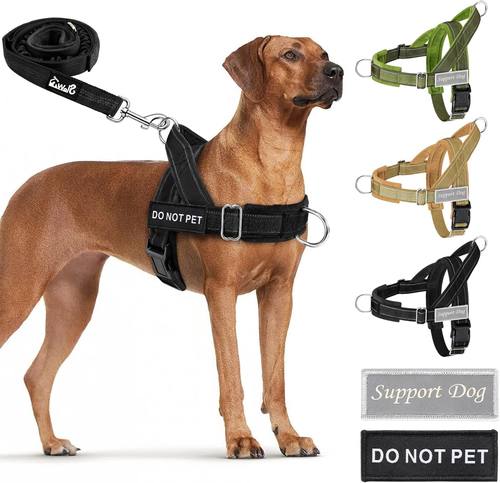 Visit on Amazon → SlowTon No Pull Dog Harness and Leash Set |
The owner who wants one box, harness and leash together | Check the listing size chart | Heavy duty build, soft padding, front attachment for no-pull walking |
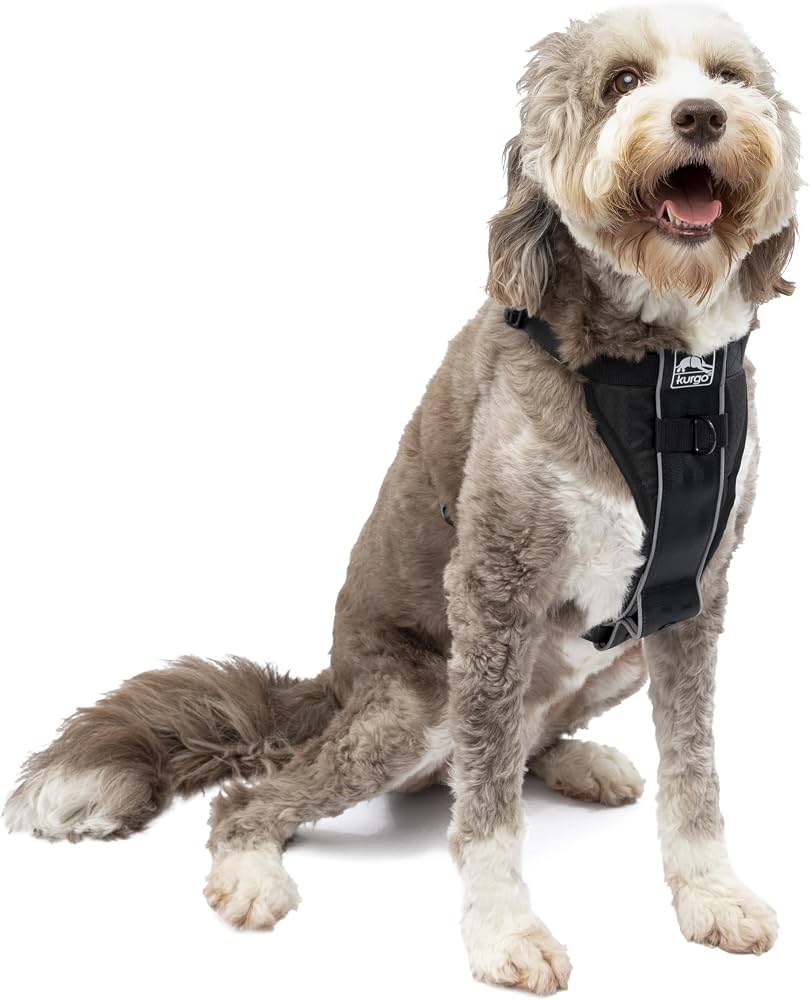 Visit on Amazon → Kurgo Tru-Fit Smart Harness |
Daily walks with a mostly trained dog | Large | Adjustable fit, black hides a Pacific Northwest winter |
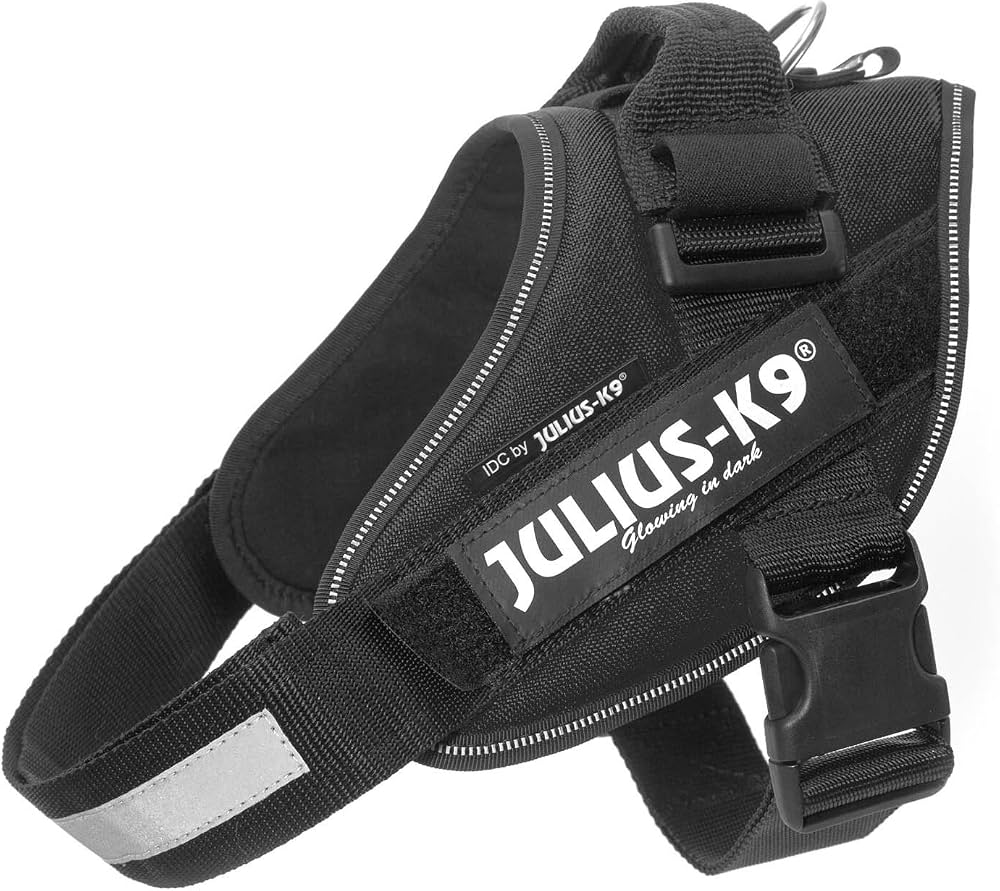 Visit on Amazon → Julius-K9 IDC Powerharness |
Big trained dogs, gear that lasts | Size 0 | Back clip only, not a fix for a hard puller |
 Visit on Amazon → Kurgo Enhanced Strength Tru-Fit Smart Harness |
Dogs that destroy standard gear | Large | Same fit as the standard Tru-Fit, heavier build at the load points |
Every row in that table is a harness I would put on a dog this week. The column that matters most is the third one, because a harness in the wrong size is not a harness. It is a strap that rubs.
Should you buy the SlowTon No Pull Dog Harness and Leash Set?
Yes, for most owners with one dog that pulls and one walk a day. It is the simplest way to get a complete setup that is built heavy duty and soft enough to wear for an hour. Check current Amazon price, then check the size chart twice.
The caveat is size. A set is only as good as the size you choose, and if you buy by weight you will end up with a harness that slides off one shoulder. Measure the girth.
Should you buy the Kurgo Tru-Fit Smart Harness?
Yes, if your dog is past the lunging stage and you want a harness that goes on in ten seconds. It is the value pick of this group, and the adjustability is what lets it work across a wide range of body types. If your dog still hits the end of the leash, spend your money on a front-clip harness instead and put the training work in.
Should you buy the Julius-K9 IDC Powerharness?
Yes, if you have a big dog that is trained and you are tired of replacing harnesses every six months. No, if your dog pulls, because the back clip hands them leverage and you will not like the result. The numbered sizing is a genuine advantage on a large frame.
Should you buy the Kurgo Enhanced Strength Tru-Fit Smart Harness?
Yes, if your dog has already broken a harness or chewed through straps. The heavier build is the entire point of the product, and the fit is the same as the standard version. If your dog has never damaged gear, the standard Tru-Fit does the same job and you can put the difference toward a training class.
That is the whole guide. Fit first, hardware second, and training always. The harness buys you control. It does not buy you a trained dog.