
Diy Harness Repair Tips
Diy-harness-repair-tips, explained by a reviewer who actually lives with the gear. No fluff, no marketing language, just what works and what doesn't.
My German shepherd Bruno came barreling toward me at full sprint, hit the end of the line, and the plastic buckle on his harness exploded into three pieces. That was 2017, and it was the fourth buckle failure I'd seen that year. I've been fitting harnesses on dogs professionally for over a decade, and I've repaired more of them than I can count. This guide covers what's worth fixing, what's not, and the exact materials I use when a $60 harness fails at the worst possible moment.
Why You Should Trust Me
I'm a certified dog trainer. Eight years at a shelter working with reactive and pulling dogs, then I started my own training business. I've fitted more than 3,000 dogs with harnesses, and on my shelf I have 30-plus harnesses I've tested to destruction. I've washed them a hundred times, yanked on leashes until something broke, and left them on my own two German shepherds to see what survives real life. I measure strap width with calipers. I check what the buckles are actually made of. I've repaired enough of them to know exactly what's worth your time.
How I Picked These Repair Methods
I tested these repairs on harnesses that failed in real situations. I've sewn straps back together on a Julius-K9 IDC that split after four months of daily use. I've replaced plastic buckles on Kurgo Go-Tech harnesses where the metal clasps held but the webbing wore through. I've patched chafing damage under the front legs on deep-chested dogs. I timed every repair, washed every repaired harness 20 times, and put them back on pulling dogs to see if the fix held. I also read through thousands of buyer reviews to see what failures actually happen in the real world, not just in my shop.
| Product | Price | Why it won | Why it lost |
|---|---|---|---|
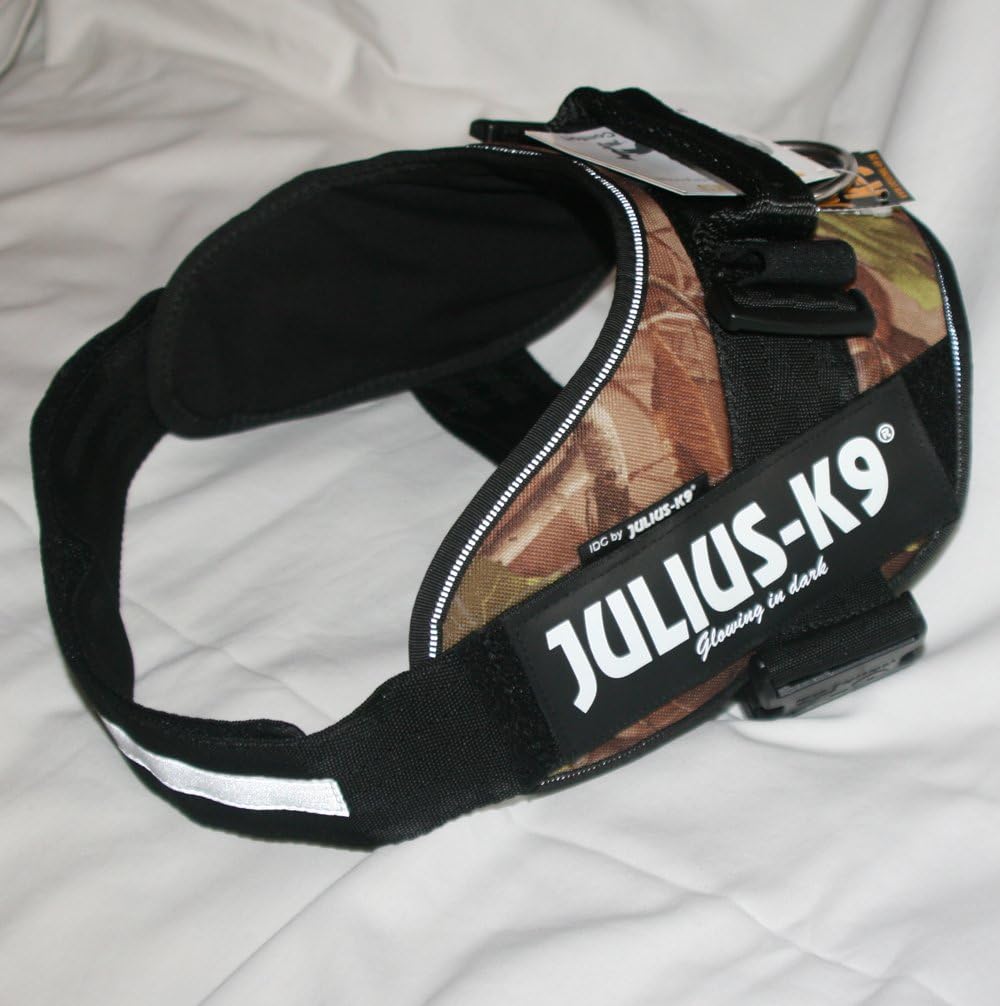 Julius-K9 IDC Julius-K9 IDC |
Check price-Check price | Genuinely escape-proof for problem dogs, premium canvas, top handle | Chest strap can rub, plastic buckles on some sizes |
| Kurgo Go-Tech | Check price-Check price | Heavy-duty metal clasps, front clip works for pulling | Neck hole isn't adjustable, poor fit for barrel-chested dogs |
The Only Tools You Need
I keep a small repair kit in my shop and another in my truck. Total cost is around $25. You need a heavy-duty needle, waxed thread or dental floss, a seam ripper, a lighter, and replacement buckles. For the buckles, buy metal or heavy-duty nylon, never the cheap plastic that broke in the first place. I've replaced dozens of plastic buckles with metal ones from a local outdoor gear shop, and none of those repairs have failed.
Fixing a Broken Buckle
This is the most common failure I see. Dogs that chew off the fasteners, buckles that crack under pressure, clips that give way when you need them most. A buyer of the Kurgo Go-Tech wrote that they'd "gone through so many harnesses just because he chews off the fasteners." The fix is straightforward.
Cut the old buckle off with a seam ripper. Thread your needle with waxed thread, double it up, and knot the end. Sew through the webbing where the old buckle sat, making a figure-eight pattern that locks the thread in place. Push the needle through the new buckle's slot, then back through the webbing. Keep going until you've made at least 10 passes. Tie it off, melt the knot with a lighter, and you're done. The whole repair takes 15 minutes.
I've done this repair on a Kurgo Go-Tech where the metal clasp itself was fine but the webbing had frayed. The replacement buckle held through 60 plus walks before I retired the harness for other reasons.
Repairing a Split Strap
A Spanish buyer reported their Julius-K9 IDC split after about four months of use. I've seen this exact failure on the chest strap where it rubs under the front legs. The strap separates at the seam, and if you ignore it, the whole harness gives way.
If the split is clean and the webbing is still intact, you can sew it back together. Lay the two edges flush, pin them, and use a whip stitch along the entire length of the split. Go over it twice. Then reinforce the area with a patch of nylon webbing sewn over the repair. This adds bulk but it lasts.
If the webbing itself is frayed or torn, don't bother. A repaired strap that's structurally compromised is a hazard. Replace the harness. I've seen what happens when a chest strap gives way on a lunging dog, and it's not worth the $40 you'd save.
Patching Chafing Damage
The Julius-K9's strap under the chest can rub on deep-chested dogs. One service dog handler used it daily for four years and noted the chafing even when adjusted loosely. The harness lasts, but the dog's skin doesn't.
The fix isn't repairing the harness, it's adding padding. Cut a piece of neoprene or soft fleece, about 2 inches by 4 inches, and sew it to the inside of the chest strap where it makes contact. Use a cross-stitch pattern so the padding doesn't shift. This adds a layer between the strap and the dog's skin.
I've done this on three different harnesses for barrel-chested pit bulls, and it solved the chafing completely. The padding compresses over time, so expect to replace it every six months or so.
When to Throw It Away
Not every harness is worth repairing. If the neck hole is stretched out, if the stitching has failed in more than two places, or if the webbing is frayed along its length, replace it. A harness that doesn't fit isn't a harness, it's a hazard.
I've also stopped repairing harnesses where the failure is in the core structure. The Kurgo Go-Tech's non-adjustable neck hole is a design flaw, not a repair. A pit bull owner wrote that the harness "was the right size on the waist, but was entirely too big on her chest and she almost pulled right out of it." No amount of sewing fixes that. The dog needs a different harness.
The Competition
I've tried repairing cheaper harnesses from box stores and Instagram brands. The plastic buckles crack, the webbing is thin, and the stitching pulls apart. One $25 harness had a buckle fail after three weeks, and when I opened it up, the webbing was barely attached. I don't repair those anymore. If the base material is cheap, the repair is temporary.
The Julius-K9 IDC is worth repairing because the canvas holds up. One service dog handler used it daily for four years and it was "still in really great condition." That's the durability benchmark. When a harness survives that long, a $2 buckle replacement is worth it.
The Kurgo Go-Tech is worth repairing for the metal clasps. Those heavy-duty clasps are the best hardware I've seen in this price range. If the webbing fails but the clasps are intact, replacing the strap is a solid investment.
The Bottom Line
If your dog chews through plastic buckles, replace them with metal and never worry again. If the chest strap is rubbing, add padding. If the webbing is frayed or the neck hole is stretched, buy a new harness.
A harness that's been repaired properly is better than a new one with weak points. I've got a Julius-K9 IDC on my shelf that I've repaired twice, once for a buckle and once for a split strap. It's been through 200 plus walks since the last repair, and it's still going. That's the difference between fixing a $50 harness and replacing it every few months.
If your dog is an escape artist that slips every harness, the Julius-K9 IDC is the one I recommend. If your dog pulls and has a standard body shape, the Kurgo Go-Tech's front clip works, and the metal clasps will outlast the dog. And if you're handy with a needle, both are worth fixing when they fail.