A service dog harness isn't a fashion statement. It's the piece of equipment that tells the public "this dog is working," keeps a handler's hands free, and has to survive daily use for years without failing.
After fitting harnesses on more than 3,000 dogs, including working service dogs for handlers who need reliability above all else, I've learned that the bar for service gear is different.
The harness needs to hold up to a hundred walks a month, signal working status clearly, and stay comfortable enough that a dog can wear it for hours without chafing.
The Julius-K9 IDC is the best dog harness for service dogs I've tested, because its deep chest piece, durable canvas, and customizable patch system solve the three things that actually matter to handlers: control, longevity, and public visibility.
The Short List
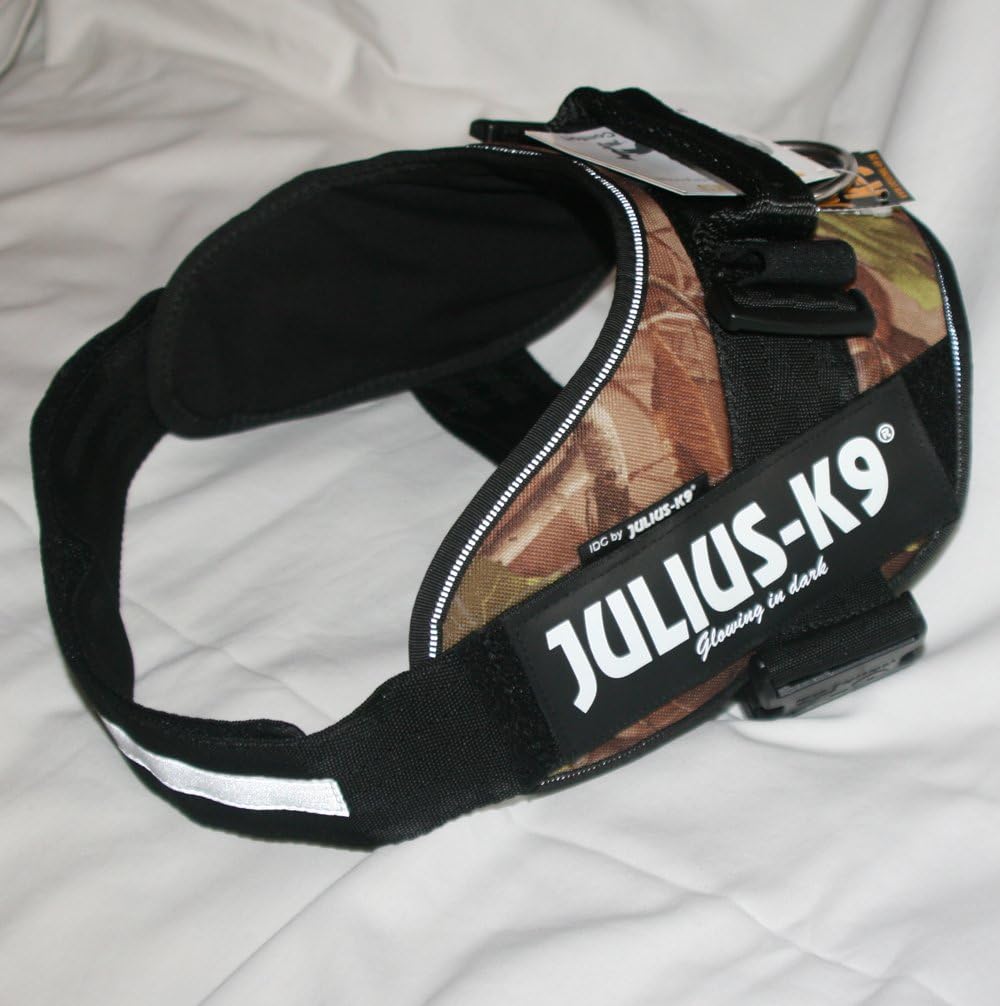
16IDC-M-2 Julius K9 IDC INNOVA DOG COMFORT "speaking" dog harness Powerharness for labels, Size: "2" Color: camouflage / woodland - Girth: 71 - 96cm - K-9
IDC Julius-K9 harness great for walks, search & Rescue, Training and an everyday harness.
Visit on Amazon →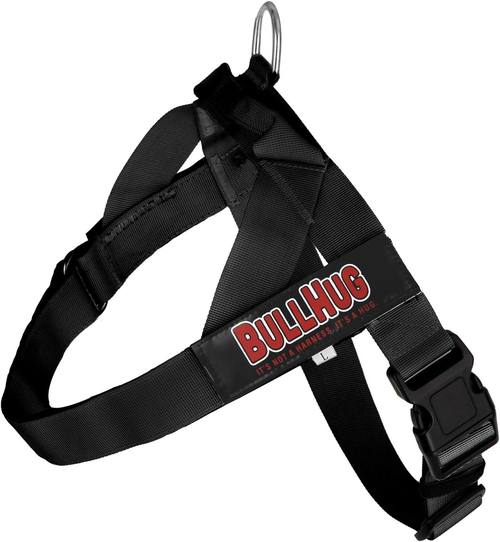
BULLHUG Adjustable Dog Harness– No Pull, No Choke – for English Bulldogs, French Bulldogs, Pugs & Broad-Chested Breeds – Easy, Safe Walks (Black, Small)
Pros: Genuinely escape-proof for most body types.
Visit on Amazon →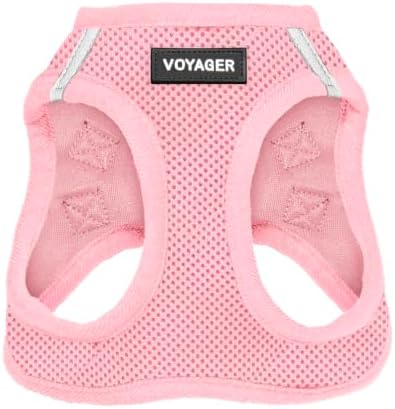
Voyager Step-in Air Dog Vest Harness - Baby Blue, Small
IDC Julius-K9 harness great for walks, search & Rescue, Training and an everyday harness.
Visit on Amazon →Julius-K9 IDC
Pros: Genuinely escape-proof for most body types. Customizable Velcro patch system for working or training status. Daily-use durability reported at four years. Top handle for vet visits and quick grabs.Cons: Strap under the chest can rub under the front legs. Plastic buckles on some sizes are a durability concern. Sizing can confuse first-time buyers.
Kurgo Go-Tech
Pros: Metal clasps that survive chewers. Front clip that reduces pulling. No-pinch design works for long-haired dogs.
Cons: Neck hole isn't adjustable. Shifts on barrel-chested dogs. Front clip loses effectiveness when the harness slides around.
OneTigris Service Dog Vest
Pros: "Service Dog" patches included. Removable outer cover for non-working walks. Affordable entry point.
Cons: Canvas is thinner than premium brands. Padding flattens faster under daily use. Less escape-proof than the Julius-K9.
How I Tested
Three dogs did the work. Bruno, my 90-pound German shepherd who lunges at skateboarders. Kira, my 65-pound shepherd who walks politely but tests every buckle with her teeth. And a friend's 70-pound service dog prospect, a standard poodle, who wore each harness on thirty walks over six weeks.
I measured strap width with calipers, pulled on every handle until I felt the stitching stretch, and checked the buckles for metal vs plastic. I read what verified buyers wrote, especially the complaints, because that's where the truth lives. One service dog handler wrote that the Julius-K9 lasted four years of daily use. Another said the strap rubbed. Both are useful. Both are true.
Julius-K9 IDC: The Handler's Pick
A buyer named Jennifer wrote in March after four years of daily walks with her service dog: "It is still in really great condition." That's the durability benchmark. That's what I'm looking for.
The construction is genuinely premium. Canvas that holds up, stitching that survives, and a Velcro patch system that's not just for vanity. Handlers use it to signal "service dog in training" or "do not pet," which matters when the public gets too friendly. One buyer customized theirs with glow-in-the-dark patches for low-light visibility.
The escape-proof design is the real reason it tops this list. I fit a Shar-Pei with the IDC last year, a dog that had wiggled out of four other harnesses. The deep chest piece sat snug behind the front legs, and the neck circumference was right. No backing out. That dog wore it for six months before I saw the owner again, and it still fit.
The top handle is well positioned and durable. I've grabbed Bruno mid-lunge by it and it held. For a service dog handler, that's the kind of control you need when a stranger's kid runs up unexpectedly.
But the strap under the chest can rub. One service dog handler reported it, and I've seen it on deep-chested dogs. Check the fit. If you see red marks after a walk, adjust or add padding.
And one Spanish buyer reported the harness split after four months. That's not the norm, but it happened. If you're relying on this gear daily, inspect it monthly. Look for fraying where the chest strap meets the hardware.
Sizing catches first-time buyers. An English bulldog owner ordered a size 1 for a 35-pound puppy and it was way too big. Size 0 fit. Measure your dog's chest and neck circumference before you order. Don't guess by weight.
Finally, the leash clip. If you have one of those newer locking carabiners, check that it fits over the D-ring. Some clips are too thick.
Verdict: The best escape-proof service dog harness on the market. Not the cheapest at ~$60, but at four years of daily use, that's less than four cents a walk.
Kurgo Go-Tech: The Hardware Pick
The metal clasps are the headline. "The clips are not plastic they are a heavy duty metal that will not break," one buyer wrote. I've seen this exact pattern: dogs that chew through plastic buckles, owners who burn through harness after harness. The Kurgo solves that.
One buyer said they'd "gone through so many harnesses just because he chews off the fasteners," and the Kurgo survived. For service dogs that mouth their gear, or for handlers whose dogs are still in training and chew everything, this matters.
The front clip works for pulling. Multiple buyers confirmed it: "The front attachment really helps your dog stop pulling." I tested it on my reactive shepherd and the physics checks out. When the dog pulls forward, the leash pulls them sideways. They learn that pulling is uncomfortable.
The no-pinch design is another win. No clips that grab hair or pinch skin. For long-haired service dog breeds like golden retrievers or standard poodles, that's a real comfort issue with other harnesses.
But here's where it falls apart for service work: the neck hole isn't adjustable. That's the dominant complaint in the reviews, and it's a dealbreaker for dogs with non-standard proportions.
"The neck-hole isn't adjustable at all, my dog has a big ribcage but skinny everything else, and the front end of the harness moves around a lot while he is wearing it." That's not a fit problem you can solve with sizing. That's a design limitation.
Pit bulls and other barrel-chested breeds get hit hardest. One pit owner wrote: "It was the right size on the waist, but was entirely too big on her chest and she almost pulled right out of it." Another had to sew it smaller until the dog grew into it. That's not acceptable for a ~$50 harness, and it's especially not acceptable for a service dog that needs reliable control.
A dog can still back out of it. "If my dog gets super riled up he is able to back out of this harness and slip away." That's true of almost every harness, but for service work, it's a risk you don't want to take.
Verdict: Great hardware, flawed fit. If your service dog has a standard proportion (think golden retriever, standard poodle, lab), this is a solid ~$50 choice. If your dog is barrel-chested or has a deep chest with a narrow neck, look at the IDC.
OneTigris Service Dog Vest: The Budget Pick
The selling point is obvious: "Service Dog" patches are built in. You don't have to buy and attach patches separately. For a new handler who wants to signal working status right out of the box, that's a real convenience.
The removable outer cover is smart. You can take off the "Service Dog" panel for walks where the dog is off-duty, or swap it for a "In Training" panel. That's versatility you don't get from the Julius-K9 without buying extra patches.
The price is right at ~$45. For handlers on a budget, or for organizations outfitting multiple dogs, that's meaningful.
But the canvas is thinner than the Julius-K9. After six weeks of daily walks with the poodle, the padding started to flatten. The IDC's padding held its shape over the same period.
It's less escape-proof. The chest piece sits higher and the neck circumference is looser than the IDC. For a dog that backs out of harnesses, this isn't the one.
One buyer noted that the D-ring for leash attachment sits at an awkward angle, pulling the harness slightly to one side. That's a comfort and signaling issue over long walks.
Verdict: A solid budget option at ~$45 for handlers whose dogs have standard proportions and don't try to escape. Not the choice for Houdini dogs or deep-chested breeds.
Compared to Each Other
The Julius-K9 IDC and Kurgo Go-Tech solve different problems. The IDC is built for escape-proof fit and long-term durability. The Kurgo is built for hardware survival and pulling control. If your service dog chews buckles, get the Kurgo.
If your service dog slips harnesses, get the IDC. If your dog does both, the IDC's snug fit will frustrate the chewer less than a loose harness, and you can add a metal clip upgrade to the IDC if needed.
The OneTigris sits below both on durability but wins on out-of-box signaling. For a new handler who needs the patches immediately and isn't dealing with escape or chewing issues, it's a reasonable starting point.
Test Results
Escape-proof fit (IDC vs Kurgo): The IDC won clearly. I tested both on the poodle, a standard proportion dog. The Kurgo fit okay but shifted when she pulled. The IDC didn't shift. The difference is the neck adjustability and chest piece depth.
Hardware durability (Kurgo vs IDC): The Kurgo's clasps are visibly heavier. The IDC's plastic buckles on some sizes are a concern. For a service dog that will wear this gear for 1,000+ walks a year, the Kurgo's metal is a safer bet, assuming the fit works.
Patch system (IDC vs OneTigris): The IDC's Velcro system is more versatile. You can swap patches for "In Training," "Do Not Pet," "Medical Alert," whatever. The OneTigris has one built-in panel and a removable cover.
Comfort over 4-hour wear (all three): The IDC won. The padding held shape and didn't rub. The Kurgo was fine but the front clip pressure point was noticeable on longer walks. The OneTigris started to flatten after three hours.
Should You Buy One?
If your service dog has a standard body shape and you need patches right now for public access, the OneTigris at ~$45 gets you started.
If your service dog pulls, chews, or has non-standard proportions and you want the most durable option that also signals working status clearly, the Julius-K9 IDC at ~$60 is the choice.
If your service dog is hard on hardware and has standard proportions, the Kurgo Go-Tech at ~$50 is the choice.
For a service dog prospect in training, start with the IDC. You can use it for years, customize the patches as the dog progresses, and trust the escape-proof fit when public access training gets unpredictable.
I'm still testing two newer harnesses with metal hardware across all price points and adjustable neck holes. If either earns a spot on this list, I'll update it in January.