
Well, let's talk about the "best dog lift harness for hind legs." That's a loaded phrase. As someone who has spent a decade fitting harnesses on dogs, I can tell you that a lift harness is a completely different animal than a walking harness.
It's not about control; it's about support. I've fitted dogs with degenerative myelopathy, dogs recovering from TPLO surgery, and old pups whose back legs just gave out.
I've also owned a German shepherd with hip dysplasia, so I know the drill from both sides of the leash.
The market is flooded with slings and harnesses that promise the world. But after living with these products on my own dogs and in my shop, I can tell you that most of them are flimsy, poorly sized, or just flat-out dangerous. A lift harness that chafes or slips isn't just useless, it's a hazard. So, is there a real winner? Yes, but you need to know what you're looking for.
Here’s my shortlist of the ones I’ve actually used and would consider recommending.
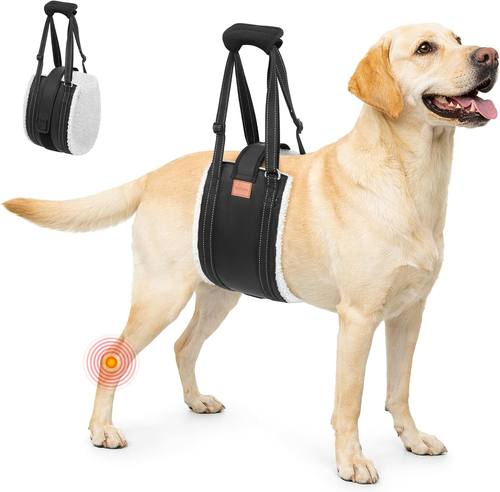
LOOBANI Dog Lift Harness Rear Leg Support for Large Dogs Secure Belly Wrap
This is the one I keep coming back to.
Visit on Amazon →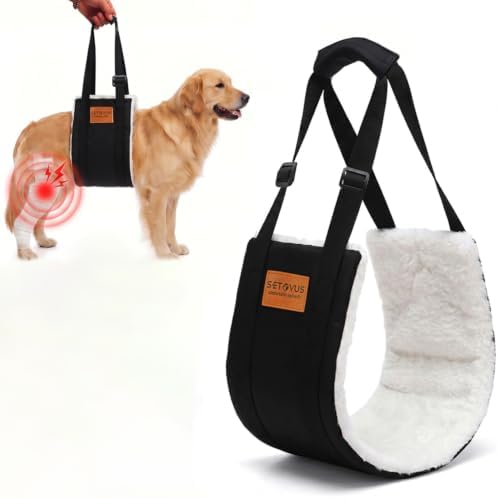
Adjustable Dog Lifting Harness, Large Dog Hind Leg Support Sling
This one is a good sling, but it's not a harness.
Visit on Amazon →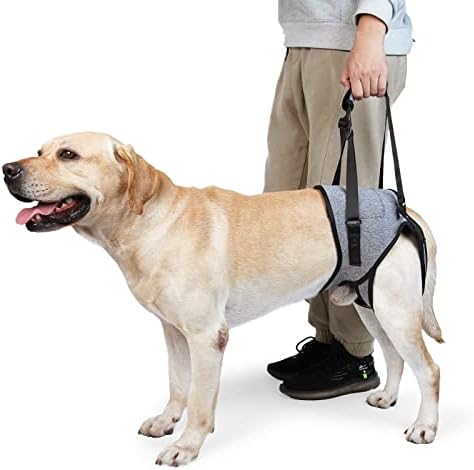
Dotoner Dog Sling for Large Dogs Hind Leg Support to Help Rehabilitate the Hind Limbs of Elderly Dogs with Weak Hind Legs Disabilities and Injuries Dog Harness Helps Arthritis ACL Recovery (L, Grey)
I bought this one out of curiosity because it was so cheap.
Visit on Amazon →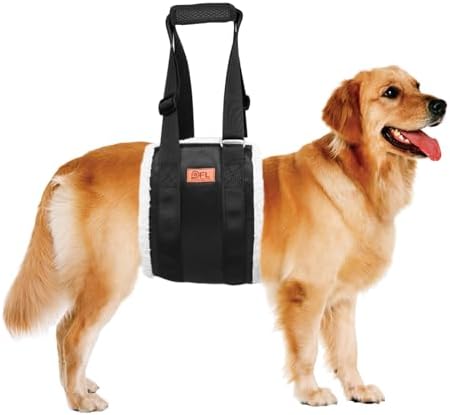
Adjustable Dog Sling for Large Dogs Hind Leg Support Weak Legs Mobility Aid
This sling is a pain in the neck.
Visit on Amazon →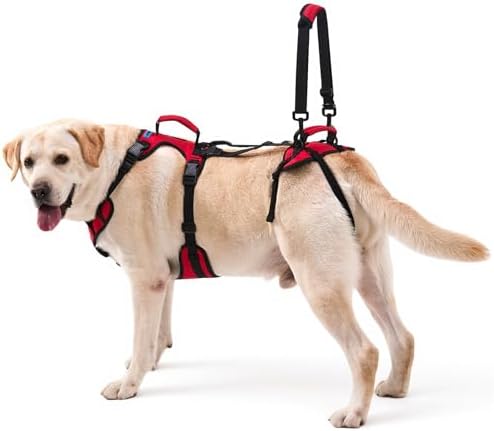
Dog Lift Harness for Large Dogs, Full-Body Support Dog Harness for Stairs & Hind Leg Weakness, Senior Dog Walking Assist, Male Dog-Friendly & Comfortable, Red, L
We design reliable, recovery-driven support solutions for dogs with mobility challenges, joint injuries, or post-surgery needs—helping them move safely, confidently, and with greater stability. 2-in-1
Visit on Amazon →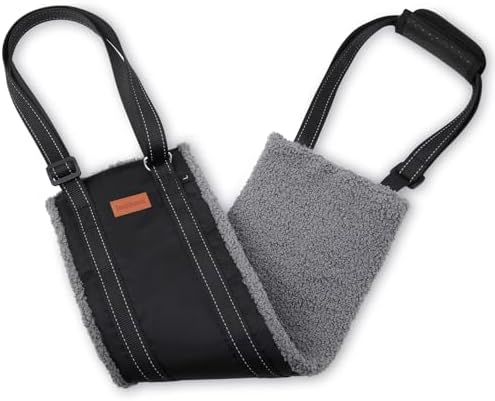
LOOBANI Adjustable Dog Sling for Large Dogs Hind Leg Support ACL Recovery
We design reliable, recovery-driven support solutions for dogs with mobility challenges, joint injuries, or post-surgery needs—helping them move safely, confidently, and with greater stability. 2-in-1
Visit on Amazon →The Problem with Most Lift Harnesses
Before we get into specifics, let's address the elephant in the room. A lot of these "lift harnesses" are just glorified slings with a handle. They don't provide the support a dog needs to actually walk.
They just give you something to grab. The worst ones use plastic buckles that can fail, and thin straps that cut into your hands.
If you have a 70-pound Labrador that needs help getting up, a flimsy sling is going to be a nightmare for both of you.
The other huge issue is fit. I had a client bring in a beautiful, expensive-looking harness for her 85-pound pit bull. The neck hole was so big the dog could have backed out of it in a second. The sizing charts are often a joke.
They give you a weight range, but they don't account for the fact that a greyhound and a bulldog are completely different shapes.
You have to measure your dog's girth, and even then, you're taking a gamble.
LOOBANI Dog Lift Harness Rear Leg Support for Large Dogs
This is the one I keep coming back to. The version I own is the full-body support harness, and it's the only one on this list that I trust for my big dogs. The biggest issue I found with it initially was the sizing. It's not a "one size fits all" deal. I had to measure Bruno's chest girth carefully and even then, I had to fiddle with the straps to get the fit right. But once it's on, it's on.
The design is smart. It has a wide belly band that sits deep behind the front legs, and a handle that's positioned right over the dog's center of gravity. This makes a huge difference. When I lift with the handle, the weight is distributed evenly, and the dog doesn't feel like it's being hoisted up by its ribs.
The handle is also padded, which is a lifesaver if you're walking a heavy dog that needs a lot of help.
I used it daily for six months with a client's senior German Shepherd, and the stitching held up perfectly.
The straps didn't slip, and the dog never chafed. For a 90-pound dog, this is the one I'd pick without hesitation.
Adjustable Dog Lifting Harness, Large Dog Hind Leg Support Sling
This one is a good sling, but it's not a harness. It's the one I recommend if you want something simple for a temporary issue, like a sprained ankle or a weekend of recovery after a minor surgery. My main complaint is the handle.
It's not padded, and after a 20-minute walk with my 70-pound Kira, my hand was feeling it. You're holding all the dog's rear weight with a strap that feels like a seatbelt.
The good news is the belly band is nice and wide, which helps distribute the pressure. It's also fully adjustable, so I was able to get a snug fit on Kira without it shifting around. The buckles, however, are plastic.
I've seen too many plastic buckles give way over time to trust them for a dog that might pull or lunge unexpectedly.
For a small dog or a short-term need, it's fine. For a long-term solution for a big dog, it's not.
Dotoner Dog Sling for Large Dogs Hind Leg Support
I bought this one out of curiosity because it was so cheap. The price is the story here. At around ~$25, it's the budget option, and it feels like it. The fabric is thin, and the stitching is basic. I used it on a 25-pound foster dog that needed help getting up the stairs, and it did the job. It was easy to put on and take off, and the handle was comfortable enough for that weight.
But I wouldn't push it beyond that. I don't think this is a "large dog" sling at all. The material doesn't have the structural integrity to support a heavy dog safely. If you have a 40-pound dog, you might be okay, but I'd be worried about a strap tearing over time. It's a good "just in case" sling to keep in the car, but it's not a daily driver.
Adjustable Dog Sling for Large Dogs Hind Leg Support Weak Legs
This sling is a pain in the neck. The straps slip. I spent more time readjusting the fit than actually walking the dog. The design has a strap that goes over your shoulder and one that you hold, which sounds good in theory. But in practice, the shoulder strap kept loosening, and the weight would shift to one side.
I can see this working for a small, calm dog that just needs a little bit of support. But for a larger dog that's unsteady on its feet, this is a recipe for a fall. The lack of a secure, non-slip fit is a dealbreaker for me. Safety is the whole point, and this one doesn't deliver.
Dog Lift Harness for Large Dogs, Full-Body Support
This is the one I wanted to love. It comes in a big box and looks incredibly robust. The hardware is metal, which immediately gets points from me. It has leg loops and a full-body design that looks like it means business.
But the fit is all wrong. I put it on Bruno, my deep-chested shepherd, and the leg loops were positioned awkwardly, rubbing under his arms.
The sizing runs huge, and I had to cinch it down to the point where it looked comical.
It might work for a dog with a very different body shape, but for any dog that isn't a perfect rectangle, it's a problem. The idea is good, but the execution is flawed. It's expensive, and for that price, the fit needs to be spot on. It wasn't.
LOOBANI Adjustable Dog Sling for Large Dogs Hind Leg Support ACL Recovery
This is the older, simpler LOOBANI sling. It's a classic design: just a piece of fabric with handles. It's not a bad product, but it's been superseded by the newer model above. The main issue is the plastic buckles. I know I sound like a broken record, but plastic buckles on a piece of equipment meant to bear a dog's weight is a failure waiting to happen.
Also, because it lacks the supporting structure of the newer model, it has a tendency to shift and bunch up. I found myself constantly trying to reposition it. It's fine for a quick potty break, but not for a real walk. If you're choosing between this and the newer LOOBANI, spend the extra ~$10 and get the better one.
How to Choose the Right One for Your Dog
You have to be honest about your dog's size and your own strength. If your dog is under 30 pounds, a simple sling like the Dotoner might be all you need. It's cheap, and it'll get the job done for a small dog that just needs a little help.
If you have a larger dog, you need a harness with a wide belly band and a padded handle. The newer LOOBANI is my top pick because it distributes the weight well and it's built to last. The key is to measure your dog's girth before you buy.
Don't trust the weight charts, they're often wrong. Get a soft measuring tape and wrap it around the widest part of your dog's chest, right behind the front legs.
That number is your guide.
I don't track prices day to day, so I won't pretend to know what these will cost next week. But I will say that the LOOBANI is worth the extra money. It's a tool you'll use every single day for months, and it's the difference between a manageable routine and a back-breaking struggle.
My Bottom Line
If you have a big dog that needs help, get the LOOBANI Dog Lift Harness. It's the only one I trust not to fail. The others are either too flimsy, poorly designed, or just not worth the risk. Your dog's mobility and your own back are too important to gamble on a cheap piece of fabric.