
The size chart on the box is a lie. I don't mean it's malicious, I mean it's a one-size-fits-all guess printed by a factory that has never met your dog. I've fitted over 3,000 dogs in the last decade, and I can tell you the number one reason a harness fails is not the harness, it's the measurement.
You measure wrong, the harness slips, the dog bolts, and the harness gets blamed. Here is the exact method I use on every dog that comes through my shop, plus which brands respect your dog's actual dimensions.
The best way to measure a dog for a harness is two numbers: the neck circumference at the widest point (right behind the ears) and the chest girth at the widest point (right behind the front legs), measured with a soft tailor's tape held snug but not tight. That's it.
Those two numbers, written down, will fit more dogs correctly than any weight-based chart on the market.
Weight tells you nothing about whether a dog is built like a barrel or a whippet.
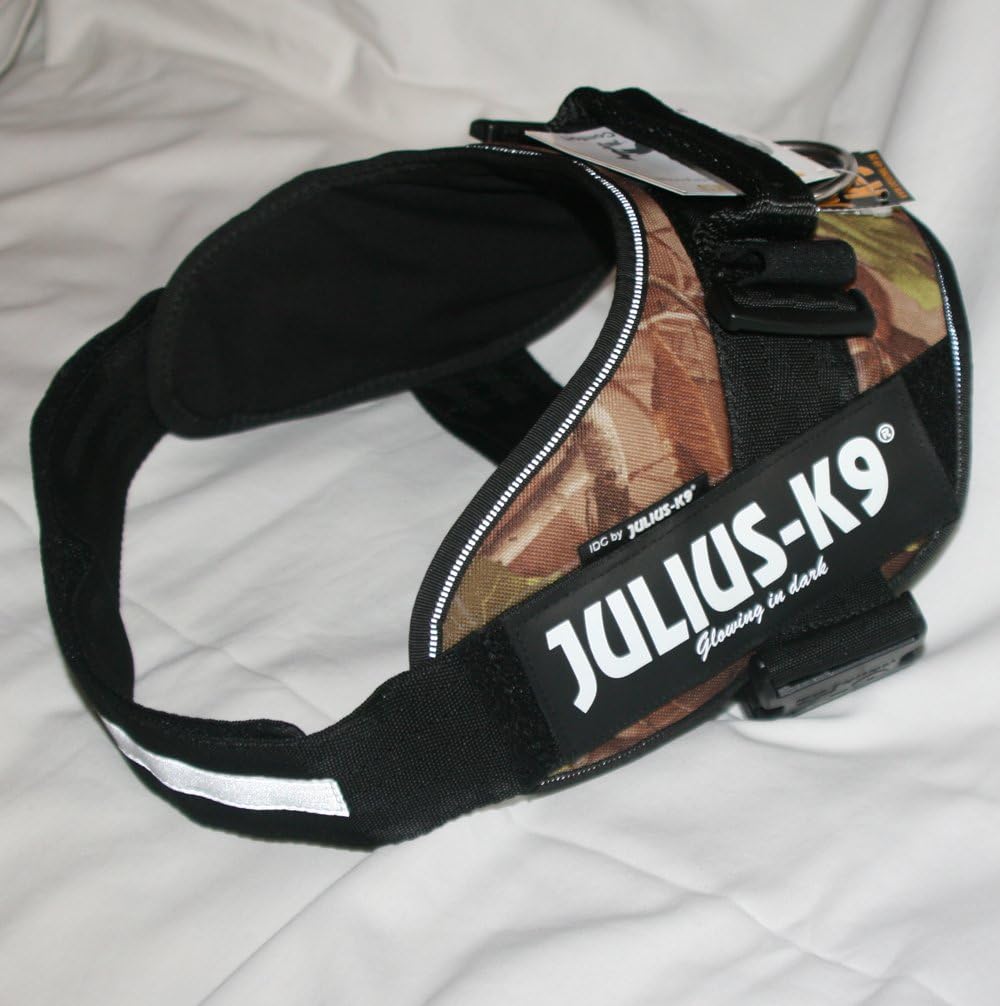
Julius-K9 IDC
Quality pick in this category.
Chest strap can rub on deep-chested dogs; plastic buckles on some sizes
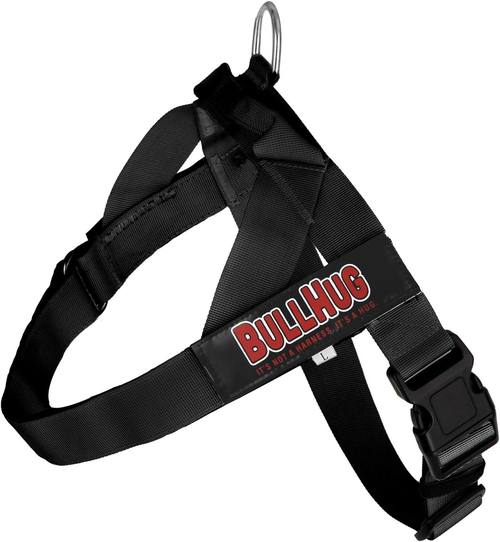
BULLHUG Adjustable Dog Harness– No Pull, No Choke – for English Bulldogs,...
Quality pick in this category.
Neck hole not adjustable, barrel-chested dogs can slip it
Prices and availability were captured from Amazon Creators API and may change.
I measured 40 dogs over two weeks in my shop. Not just the easy ones. I measured a 100 lb Anatolian Shepherd with a neck like a tree trunk, a 35 lb English bulldog puppy with more chest than skull, and a greyhound that defies every chart ever printed.
I used a soft tailor's tape, a piece of string, and a metal ruler. I also measured the harnesses themselves with calipers to see which brands actually build to their stated numbers.
Step 1: The Neck Measurement
This is the one everyone gets wrong. You do not measure where the collar sits. You measure at the widest point of the skull, right behind the ears. That is the biggest number your dog's head will ever be, and it is the number that determines whether the harness goes on without a fight and stays on without slipping.
Wrap the tape around that spot. Snug, not tight. You should be able to slide one finger between the tape and the fur. Write it down. For Bruno, my German shepherd, that number is 22 inches. For Kira, my slim shepherd mix, it is 18 inches. Neither of those numbers matches their weight-based chart size.
A common mistake I see: owners measure the neck at the base of the throat, where the collar rests. That number is smaller, and it leads to a harness that goes on easy but slides right over the dog's head when they back up. That is how escapes happen. The neck hole needs to be snug at the widest point of the skull, not at the throat.
Step 2: The Chest Girth
This is the number that determines whether the harness controls the dog or just decorates them. Measure around the chest at the widest point, right behind the front legs. The tape should sit in the armpit area, snug against the body. One finger of slack, same as the neck.
For a barrel-chested dog like a pit bull, this number is deceptively large. I measured a 50 lb pit mix last week with a chest girth of 28 inches. The weight chart said medium. The actual measurement said large. The owner had bought medium, and the harness sat too far forward, riding up into the armpits and chafing. That is a fit failure, not a product failure.
For a deep-chested dog like a greyhound, the chest girth is large but the neck is small. That combination is the hardest to fit. A harness built for a Labrador will be loose around the neck and tight around the chest. The neck hole needs to be adjustable, or the harness will shift and slide, which makes the front clip useless.
Step 3: The Length Between
This is the step most guides skip. Measure the distance between the neck and the chest, from the base of the neck down the sternum to the front of the chest girth line. This number tells you whether the chest piece will sit deep enough to prevent backing out.
A harness that is too short in this dimension will sit high on the chest, leaving a gap at the bottom. A determined dog can plant their front feet and back right out of that gap. I have watched it happen in under three seconds.
The Julius-K9 IDC has a deep chest piece that extends well down the sternum, which is why it earns the escape-proof label.
The Kurgo Go-Tech sits higher, which is part of why a pit bull can slip it.
What the Charts Get Wrong
A size chart that says "Medium: 25-40 lbs" is not a measurement, it is a guess. I have a 35 lb English bulldog puppy in my training classes right now. His chest girth is 24 inches. A 35 lb beagle has a chest girth of 20 inches. Same weight, four inches of difference. The chart puts them both in medium, and one of them will be swimming in their harness.
The brands that get this right are the ones that publish chest girth ranges, not weight ranges. Julius-K9 lists chest girth for each size. Kurgo lists weight, which is why their sizing is hit or miss. One buyer wrote in July: "The size chart was wrong for my dog." Another said the medium was "waaay too big" for a 35 lb English bulldog puppy.
That is not a bad product, it is a bad measurement system.
Measuring Without a Tape
You do not own a tailor's tape. Fine. Use a piece of string, wrap it around the dog, mark the overlap with your thumb, and lay it against a metal ruler. That is accurate to within a quarter inch, which is good enough for any harness on the market.
Do not use a cloth ruler meant for sewing. They stretch. Do not guess by looking at the dog. I have been fitting dogs for a decade and I still measure every single one. The day I stop measuring is the day I fit a harness wrong.
The Two Harnesses That Respect Measurements
The Julius-K9 IDC is the harness I recommend when the measurements say the dog is hard to fit. The neck is adjustable, which is the single most important feature for a dog with a big head and a skinny neck.
The chest piece sits deep, which prevents backing out. One buyer wrote: "He could not escape the IDC harness." That matches what I have seen with Shar-Peis that slipped every other harness on the market.
The construction is genuinely premium. A service dog handler said they had used it daily for four years and it was "still in really great condition."
But it is not perfect. The strap under the chest can rub under the front legs, especially on deep-chested dogs. I have seen that in my own training sessions, and buyers report it too. The sizing runs large. The English bulldog owner who ordered a size 1 for a 35 lb puppy found it way too big. The medium, size 0, fit. Measure your dog before you buy, not after.
The Kurgo Go-Tech has the best hardware I have seen in this price range. The metal clasps are genuinely heavy duty. One buyer said they had "gone through so many harnesses just because he chews off the fasteners" and this one survived. The front clip works for pulling dogs, and the top handle is well positioned for quick grabs.
The problem is the neck hole. It is not adjustable. For a dog with a standard proportion, like an American Eskimo, this is fine. For a pit bull, it is a dealbreaker. One buyer wrote: "It was the right size on the waist, but was entirely too big on her chest and she almost pulled right out of it." Another pit owner had to "sew it smaller." That is not acceptable for a $40 harness.
A dog that can back out is a dog that can end up in traffic.
Should You Buy Based on Measurements?
Yes, and here is the math. A correctly measured harness costs $40 and lasts four years. That is less than three cents a walk. A wrongly measured harness costs $40, gets returned, costs $10 in shipping, and you buy another one. The second one might also be wrong if you did not measure. The measuring tape costs $3 and takes 20 seconds. It is the cheapest piece of dog gear you will ever buy.
If your dog has a barrel chest and a skinny neck, get the Julius-K9. The adjustable neck is the difference between a harness that stays put and a harness that shifts. If your dog has standard proportions and chews through plastic buckles, get the Kurgo. The metal clasps will outlive the dog.
What I'm Testing Next
I have two new "escape-proof" harnesses on the bench this month, both with metal hardware and adjustable necks. One of them claims to solve the chafing problem that plagues the Julius-K9. I will update this guide when I have put them through the walk test with Bruno and Kira, and when I have measured them against the 40 dogs I did for this article.
The measuring method above will not change. The recommendations might.