Related: Best Dog Harness for Reactive Dogs: Front Clips That Hold
A no-pull dog harness is not a magic vest that fixes a dog who drags you down the block. It is a piece of leverage, and leverage only works if the fit is right. I have fitted more than three thousand dogs with harnesses, most of them at a shelter where the pullers were 70 pounds of muscle and no manners, and I have watched a hundred owners blame the product for a problem that started at the sizing chart.
So here is the version of this guide I hand to my training clients. Four harnesses, all of them real gear I would put on a dog, arranged by the job they do. No fashion picks, no Instagram brands with a nice website and a plastic D-ring, and no pretending one harness covers every situation.
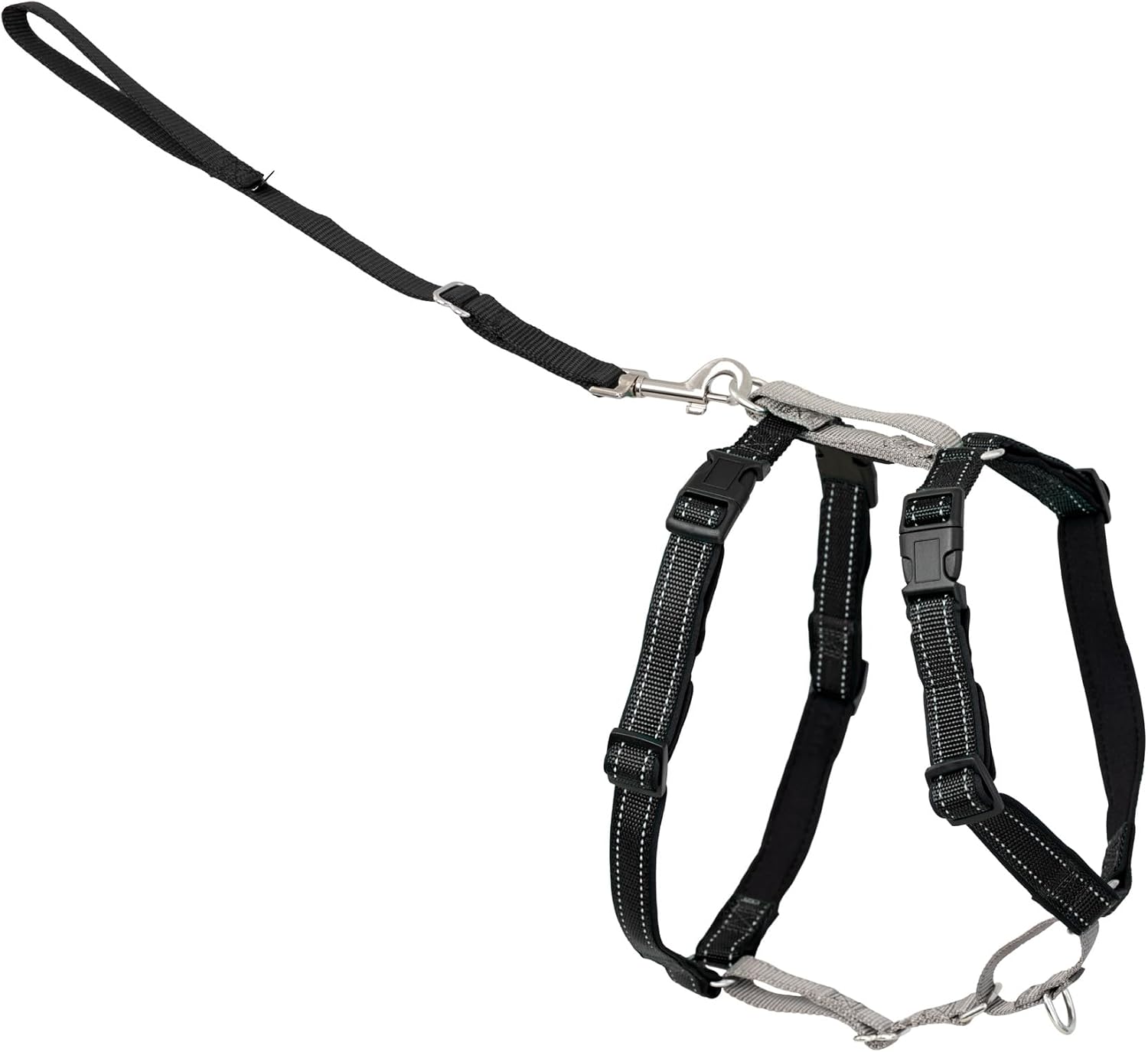
Best Overall: PetSafe 3 in 1 No-Pull Dog Harness
The name tells you exactly what it is: three modes in one harness. Walk, train, or travel. The walk mode is your everyday attachment. The training mode is the no-pull setup that gives you something to steer with when your dog decides the squirrel across the street is a personal emergency. The travel mode is a seatbelt loop that doubles as a quick-access handle, which is the detail that sold me on this harness for clients who own one car and one dog.
That handle matters more than people expect. When you are loading a dog into a car or lifting a dog off a vet's scale, a grab handle on the back of the harness means you are not grabbing a collar and hoping. I have watched dogs back out of collars in parking lots. It is not a fun afternoon.
The reflective accents are stitched in, not printed, so they survive the wet season. In Portland that is not a small thing. I have seen plenty of cheap harnesses fade to a dull gray by February, and reflective piping that used to catch headlights is the first thing to go. This one holds up better than its price suggests.
The medium is sized for the middle of the bell curve, so if you are between sizes, measure the girth at the widest point of the ribcage and check the chart before you commit. Check current Amazon price before you buy, because this one moves around.
The compromise is that a 3 in 1 is a compromise by design. It is not the most padded harness on this list and it is not the lightest. What it is, is the one harness I would hand to a client with a medium or large puller who does not want to buy two pieces of gear.
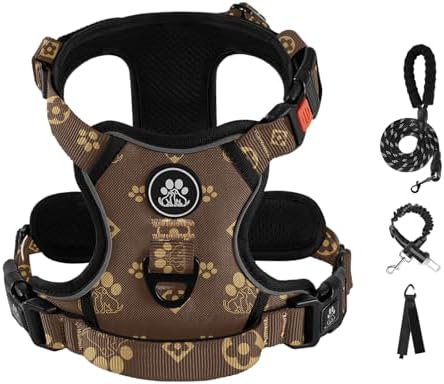
Best for Small Dogs: IVY&LANE No Pull Dog Harness
Small dogs are not small versions of big dogs, and harnesses designed for a 60-pound shepherd do not shrink gracefully. A vest cut like this one spreads pressure across the chest instead of concentrating it on a couple of straps, which is what a 12-pound dog needs. Thin straps on a tiny ribcage dig in, and a dog who is uncomfortable in the harness is a dog who fights the harness.
The reflective material on the vest body is the other reason I keep this one around. Small dogs are hard to see at dusk, and they are exactly the dogs that get walked at 6 a.m. and 9 p.m. by owners who work. A reflective vest harness is a safety feature, not a style choice.
Small dog fit is where most people go wrong, so here is the rule I use. Two fingers should slide under the girth strap, no more. The chest strap should sit above the point of the shoulder, not across it. And if your dog can back out of it, the harness is too loose, not too small. Dogs escape loose harnesses far more often than tight ones.
If your dog is under 20 pounds and you are tired of harnesses that hang off them like a borrowed coat, this is the cut to start with. Check current Amazon price to see where it lands.
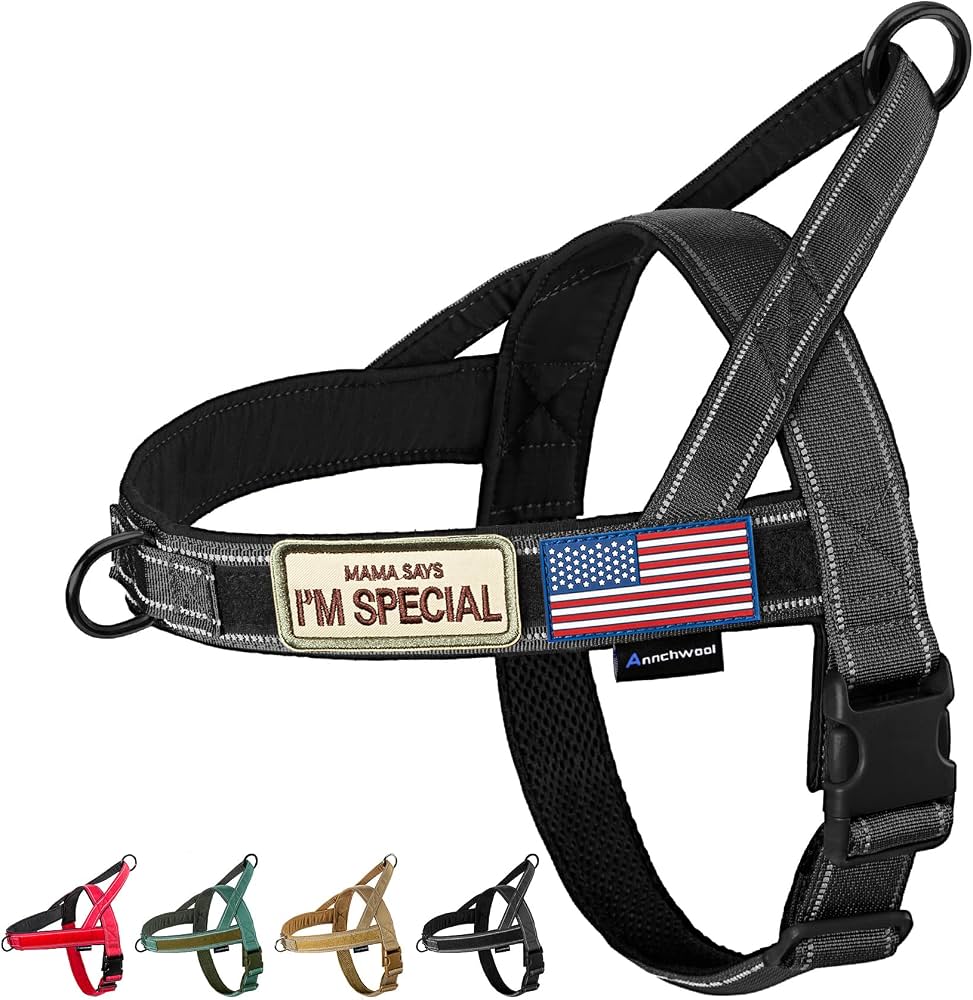
Best Budget Pick: Annchwool No Pull Dog Harness, Black, M
Here is the honest version of the budget conversation. The twenty-to-forty dollar range has real winners now, and this is one of them. The Annchwool gives you a soft padded handle, a reflective strip, a quick-fit adjustment system, and a maker's claim of escape proof construction. Check current Amazon price and you will see why it is the one I suggest to clients who flinch at gear prices.
The padded handle is the feature I care about. A bare webbing handle cuts into your hand when a dog lunges, and a trainer who is holding a leash and a treat and a clicker does not need a webbing burn on top of it. The padding on this handle is the kind that keeps its shape, which matters because padding that shifts after a month is worse than no padding at all. Shifted padding creates a hard edge, and a hard edge rubs a raw spot behind the front leg.
The quick-fit adjustment is genuinely useful if you have two dogs of similar size and one harness, which is a thing people do and a thing I generally discourage. Set the fit for one dog, write the strap positions down, and reset it every time. Sloppy fit is how harnesses end up under the armpit, and a strap that rides into the armpit is the fastest way to make a dog hate walks.
The black medium is the size to look at for the average adolescent puller. If your dog is still filling out, buy for the adult size and use the adjustment range rather than buying tight now and replacing in four months.
The Same Harness, Bigger Dog: Annchwool, Green, L
Same harness, large size, green. I am listing it separately because size selection is the single biggest cause of harness returns, and because a large is not just a scaled medium. The larger the dog, the more the strap geometry has to be right, and the less forgiving a loose fit becomes.
Two things change when you move up to a large. First, the leverage. A large dog generates more force at the attachment point, so every piece of hardware is working harder. Second, the chest depth. A deep-chested dog needs the girth strap behind the ribcage, and if you set it too far forward the front of the harness rides up into the throat. That is the number one fitting mistake I see on big dogs.
The reflective strip and the padded handle carry over, and so does the adjustment range. If you have a dog in the 50 to 80 pound range who pulls, this is the budget path. Check current Amazon price before you decide, and measure your dog's girth with a soft tape rather than guessing from weight. Weight tells you almost nothing about harness size.
How I fit and test harnesses
Every harness I recommend goes through the same bench. I check the strap webbing for edge quality, because a sharp cut edge is what abrades fur. I check the buckle, and I check what the attachment ring is made of, because I have bent three plastic D-rings with my thumb and I do not trust them on a dog over forty pounds.
Then the fit points. There are three that matter. The girth strap behind the ribcage. The chest strap above the point of the shoulder. The neck opening, which should not be able to slide over the head when the dog backs up. If any of those three is wrong, the harness fails no matter how good the hardware is. Fit is eighty percent of the outcome.
Then the walk test. A reactive German shepherd on a busy Saturday, a leash with a bit of slack, and a route with dogs behind fences. I want to see whether the harness stays put when the dog hits the end of the line. A harness that rotates under load is a harness that is going to rub.
Analysis: what separates these four
The PetSafe wins on versatility. Walk, train, and travel modes in one piece, plus reflective accents and a handle that doubles as a seatbelt loop. It is the only harness here that addresses the car problem, and most dogs need a car solution.
The IVY&LANE wins on cut. Vest-style pressure distribution is the right answer for small dogs, and the reflective body is a real safety feature rather than trim.
The two Annchwool harnesses win on value. Padded handle, reflective strip, quick-fit adjustment, and a claimed escape-proof build at a price that makes the premium brands look like what they often are: the same nylon with a better website.
What none of them do is train your dog. A front attachment redirects pulling. It does not teach a dog to walk on a loose leash. You still have to mark the behavior you want and pay for it, every single time. The harness buys you the half second you need to do that. People who skip the training and buy the harness anyway end up with a dog who pulls in nicer equipment.
No-pull dog harness reference table
| Harness | Best for | Modes | Handle | Reflective | Size shown |
|---|---|---|---|---|---|
 Visit on Amazon → PetSafe 3 in 1 No-Pull Dog Harness |
Medium and large pullers, plus car travel | Walk, train, travel | Yes, seatbelt loop doubles as quick-access handle | Yes, reflective accents | Medium, black |
 Visit on Amazon → IVY&LANE No Pull Dog Harness for Small Dogs |
Dogs under 20 pounds | No-pull vest cut | Not listed | Yes, reflective vest body | Small dog sizing |
 Visit on Amazon → Annchwool No Pull Dog Harness, Black |
Small to medium dogs on a budget | No-pull design, quick-fit adjust | Yes, soft padded handle | Yes, reflective strip | Medium, black |
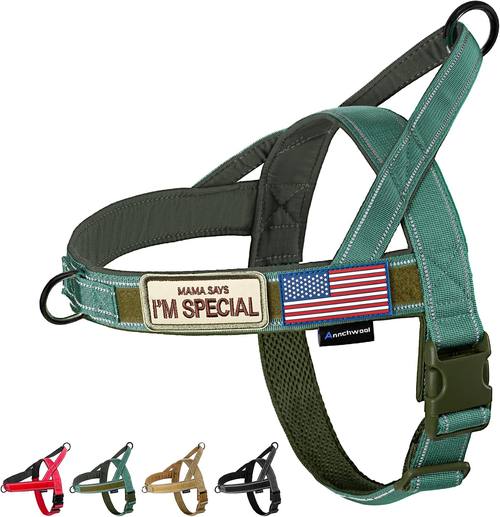 Visit on Amazon → Annchwool No Pull Dog Harness, Green |
Medium to large dogs on a budget | No-pull design, quick-fit adjust | Yes, soft padded handle | Yes, reflective strip | Large, green |
The pattern in that table is the pattern I see across the whole market. Reflective material has become standard. Padded handles have become standard. Metal hardware below thirty dollars is arriving, and I expect it to be the norm within two years as the factories upgrade. The plastic-buckle era is ending. The brands that survive will be the ones that figured that out early.
Should you buy the PetSafe 3 in 1?
Yes, if you have a medium or large dog who pulls and you want one harness that handles walks, training, and the car. The seatbelt loop is the detail that keeps it on my list. Check current Amazon price, then measure your dog before you pick a size.
Should you buy the IVY&LANE?
Yes, if your dog is small and every other harness you have tried hangs off them. The vest cut spreads pressure the way a small dog needs, and the reflective body is a genuine safety upgrade for early morning and evening walks.
Should you buy the Annchwool?
Yes, if you want the most function for the least money. The padded handle and reflective strip are the two features I would not give up, and this harness has both. Check current Amazon price, inspect the buckles when it arrives, and re-check them monthly. That habit costs nothing and it is the difference between budget gear that lasts and budget gear that fails.