Related: Best Dog Harness for Reactive Dogs: Fit Points That Hold
I have fitted no-pull dog harness sizing on more than 3,000 dogs, and most of them were pullers. Here is the sentence I say to almost every client on the first visit: the harness is not the fix, the fit is. A $25 harness sitting on the right fit points beats a $90 harness riding up into the throat, every single time. I have watched owners return good gear because it slid, and keep bad gear because it happened to sit right on their dog's body.
I keep a shelf of harnesses in my garage in Portland. My two German shepherds have worn most of them into the ground, they have been washed more times than I can count, and the ones that survive are the ones with metal where it counts and webbing that does not go soft. This is not a list of the flashiest harnesses on Amazon. It is the short list I actually fit, in the order I fit them, for the four body types and four jobs I see most often.
How I judge a harness before it goes on a dog
Four things, in this order.
Fit points. Where does the chest strap land? A strap that crosses the sternum, well below the windpipe, spreads force across the chest. A strap that rides high cuts into the throat, and that is a collar with extra steps. The second fit point is the armpit. If the rear strap sits inside the armpit instead of behind the shoulder blade, you will see rub marks within a week.
Strap webbing. I want webbing that holds its shape after a wash cycle. Soft, floppy nylon folds under load and the hardware starts to twist. Stiff webbing with a proper edge stays flat against the body.
Buckle quality. This is the entire product. I have seen a plastic buckle burst on a leash pop, which is why I do not put plastic buckles on dogs over 40 pounds. Metal hardware is becoming standard below $30, and that is the best thing to happen to this category in a decade.
Attachment point. If the leash clip ends up under the armpit after a lunge, the harness has failed, no matter what the box says.
Three body types cover almost everything: the deep-chested shepherd, the barrel-chested bully mix, and the narrow sighthound. If a harness only fits one of those, it is a costume, not a training tool.
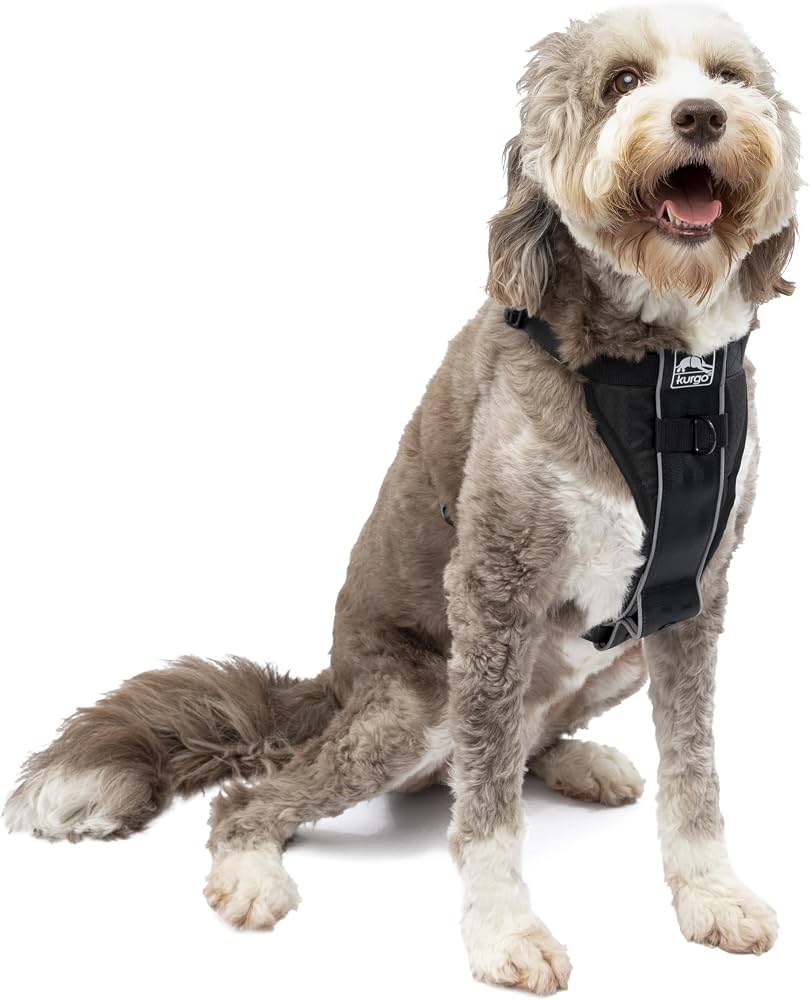
Best Overall for the Daily Walk: Kurgo Tru-Fit Smart Harness, Black, Large
This is the harness I reach for first when someone walks in with a 50 to 80 pound dog and no strong opinion about gear. The Tru-Fit Smart Harness in Large is the size that covers the biggest slice of that group, and it is the one I use to teach owners how to fit a harness at all: girth strap snug, chest strap clear of the throat, two fingers of slack and no more.
What I like about it as a training tool is that it gives you a stable platform. There is no slack in the system when the dog loads it, so when you cue a turn, the dog feels the turn. Loose, floppy harnesses absorb that signal and you end up nagging with the leash instead of communicating.
The honest caveat: a Large is not a universal size, and a black harness on a black dog in a Pacific Northwest winter is a visibility problem. Add a reflective tag or a light clip if you walk at dusk, which in Portland is roughly October through May.
Fit note: measure the girth at the widest point behind the front legs, then measure again, because owners guess small. If your dog is between sizes and has a deep chest, size to the larger girth and tighten the chest strap. If your dog is narrow and long, this is not the shape for you, and I would look at a harness with a longer chest panel.
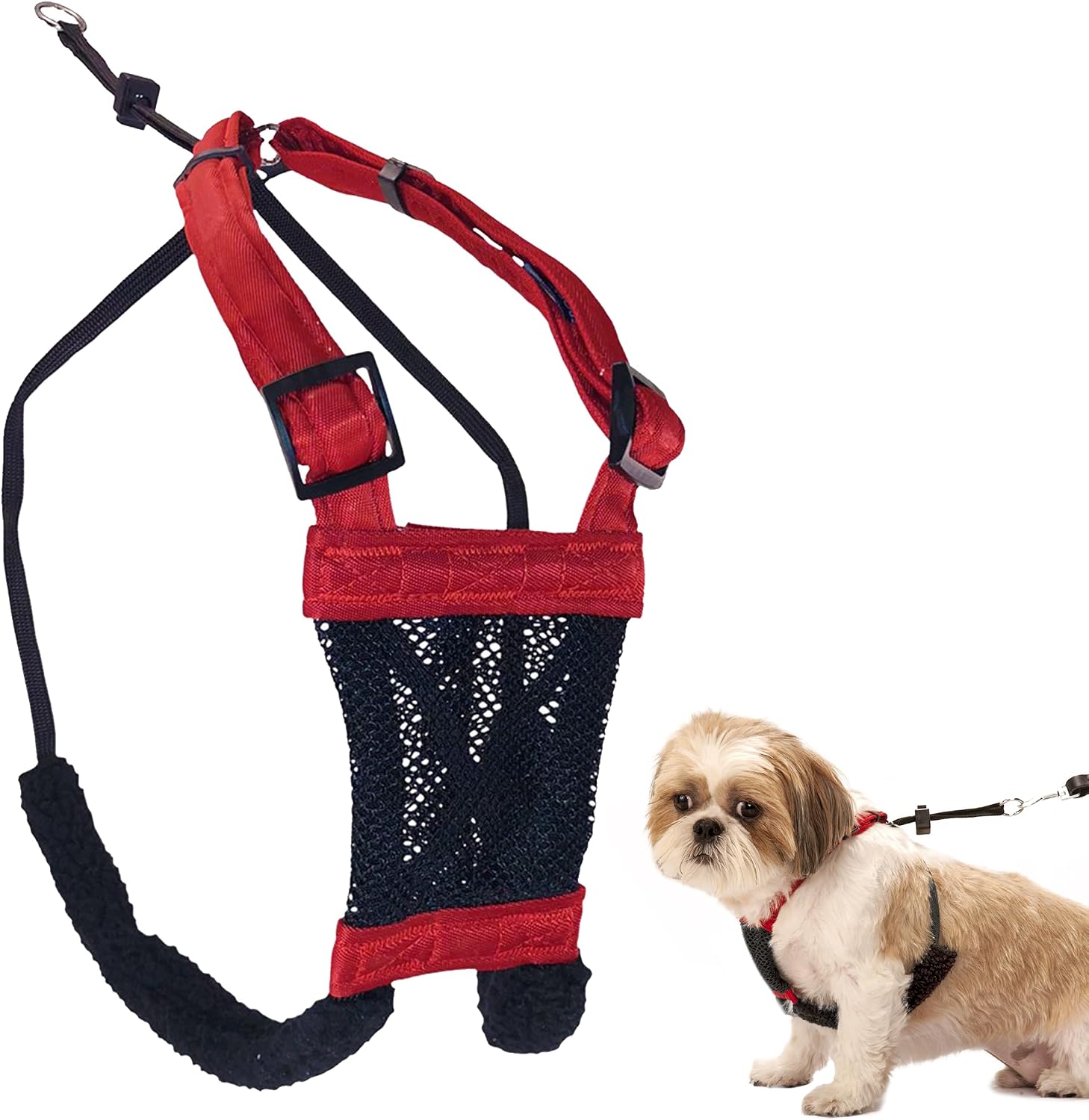
Best for Small Dogs Who Pull: Sporn No Pull Dog Harness, Red
Small dogs are where fit goes wrong most often, and the Sporn is built for that exact problem. It is a nylon mesh harness sized for small breeds, with a no choke design and padded restraint sleeves, and those two features are the ones that matter. When a 12-pound dog hits the end of the leash, the force is small but the geometry is terrible, because a poorly fitted harness slides straight up into the throat and the dog coughs for ten minutes.
Padded restraint sleeves are not decoration on a small dog. They are the difference between a dog that accepts the harness and a dog that pancakes when you pick it up. Easy on and off matters too, because small dogs get handled more, and every extra buckle is another chance to pinch skin.
Adjustable fit is the part I want you to actually use. Fit it snug, check the armpit clearance, then check it again after the first walk, because mesh stretches slightly once it is warm and wet. If your dog is a small breed that pulls, this is the harness in this list I would start with. If your dog is a 70-pound shepherd, this is not your harness, and the mesh will not save you.
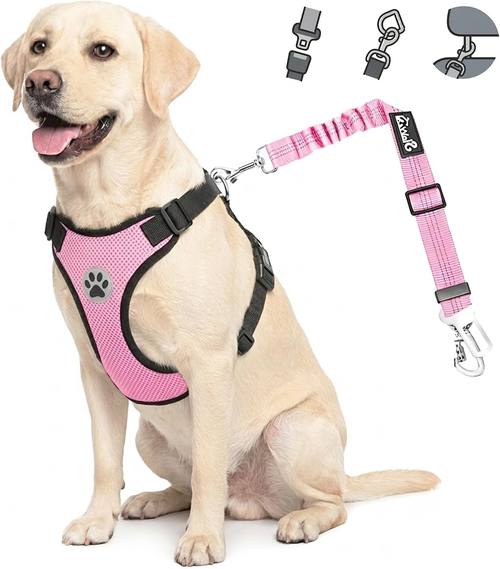
Best Car Setup: Lukovee Dog Car Harness Seat Belt, Harness and Seatbelt with 2 in 1 Buckle
Most dogs need two harnesses: a walking one and a car one. The industry pretends one does both, and that is how you end up with a harness that fits badly in the car and rubs badly on the trail. A car harness has one job, which is to keep the dog from becoming a projectile, and a walking harness has a different job, which is to give you steering and pull control.
The Lukovee is a car harness with a seat belt built in, connected through a 2 in 1 buckle. That buckle is the feature I care about. I have watched owners fight with carabiners and clip adapters at the trailhead in the rain, and every one of those fights ends with someone driving with the dog loose. A single buckle that connects the harness to the seat belt means the setup actually gets used on a Tuesday, not just on the big road trip.
Two rules for car harnesses, from someone who has seen what happens in a hard stop. First, the dog rides in the back seat, never on your lap, and never in the front where an airbag deploys at the dog's head. Second, the harness has to be fitted snug before you clip in, because a loose harness in a crash is a loose dog.
This is not a walking harness and I would not fit it as one. If you need pull control, get the walking harness first, then get this for the car.
Best for the Biggest Dogs: Julius-K9 IDC Powerharness, Size XL/2, Dark Purple
There is a point on the size chart where the cheap harnesses stop being an option. XL/2 is past that point. On a dog this big, the load on the hardware is real, and this is the harness in the group that is built around that fact rather than around a photo shoot.
If you own a giant breed, you already know the pattern. The harness that fit at eight months does not fit at eighteen months. The chest deepens, the neck thickens, and the straps that used to sit behind the shoulder start riding into the armpit. That is why I want a harness with a wide range of adjustment in the chest panel, and why I want you to re-check the fit every few months for the first two years.
The Powerharness in XL/2 is the one I bring out for the dogs where a plastic buckle would be a joke. Dark purple is also a practical color choice in a house with more than one dog, because it does not show every bit of trail mud the way a light color does, and it does not fade to gray in one wet winter the way cheap reds do.
Fit note for giants: put the harness on, then have someone hold the leash and walk the dog away from you while you watch from the side. You are looking for the rear strap to stay behind the shoulder blade and the chest strap to stay low. If either one migrates under load, tighten that strap and walk again. Five minutes of this saves you a month of rubbing.
The reference table I use at fittings
This is the short version of the shelf. Role first, then the body it suits.
| Harness | Role | Suits | Fit note |
|---|---|---|---|
 Visit on Amazon → Kurgo Tru-Fit Smart Harness, Black, Large |
Daily walking harness | Medium and large dogs with a steady pull | Measure the girth behind the front legs and size up on a deep chest |
 Visit on Amazon → Sporn No Pull Dog Harness, Red |
Small-breed no-pull walking harness | Small dogs that lunge at the end of the leash | Re-check the mesh fit after the first walk, it relaxes slightly when warm |
 Visit on Amazon → Lukovee Dog Car Harness Seat Belt |
Car restraint, not a walking harness | Any dog that rides in the back seat | Fit it snug before you clip the 2 in 1 buckle into the seat belt |
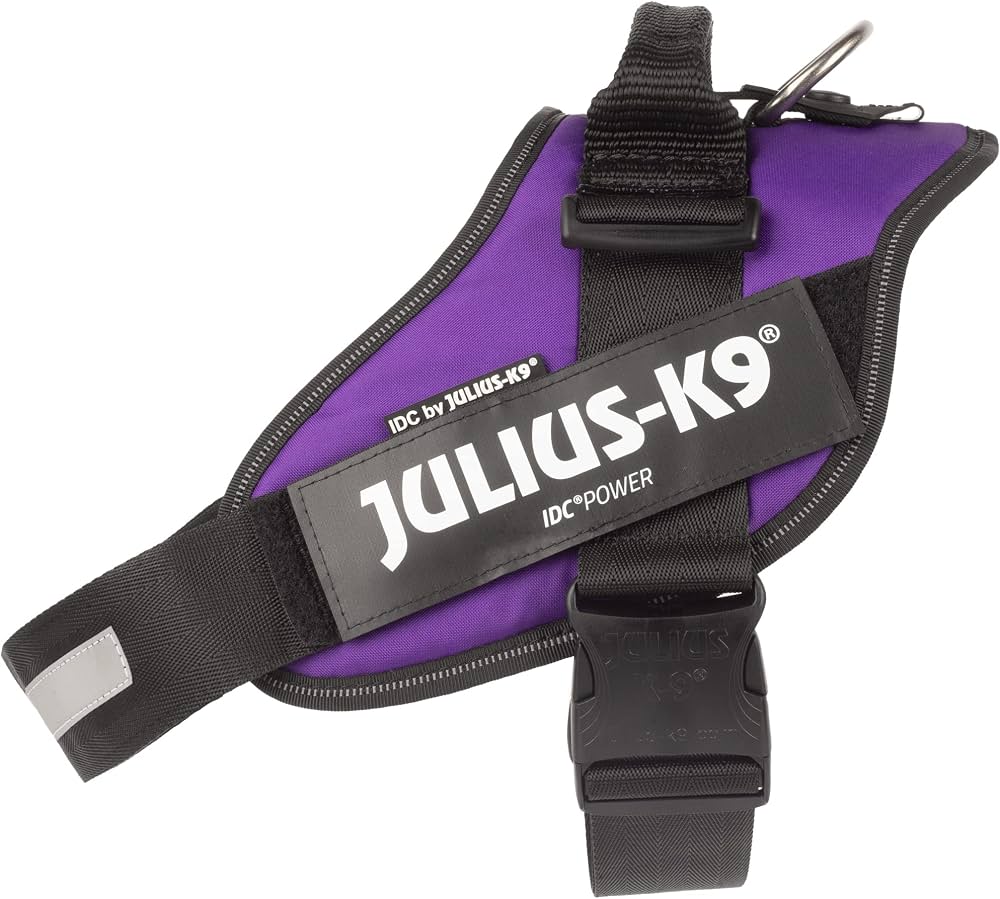 Visit on Amazon → Julius-K9 IDC Powerharness, Size XL/2, Dark Purple |
Heavy-duty walking harness | Giant breeds and dogs past the cheap-harness size range | Watch the rear strap from the side under load and tighten what migrates |
What I would buy, and in what order
If you are standing in your kitchen with one dog and one budget, here is the order I would spend it in.
One: the walking harness that fits your dog's body. For most medium and large dogs, that is the Kurgo Tru-Fit Smart Harness in Large. For a small dog that pulls, that is the Sporn. For a giant breed, that is the Julius-K9 in XL/2. One harness, fitted properly, will change your walks more than any training gadget.
Two: the car harness. The Lukovee. This is the purchase people skip and then regret, usually on a hard brake with the dog standing on the console.
Three: nothing else. You do not need a second walking harness in a different color. You need the one you have, fitted right, with a leash you trust and a buckle made of metal.
That is the whole argument against the $80 Instagram harness with the beautiful photography. It is often the same nylon as a $25 harness with a better website, and it does not fit any better. The training brands earned their reputation by surviving dogs, not by surviving photo shoots.
Should you buy the Kurgo Tru-Fit Smart Harness?
Yes, for most medium and large dogs on a daily walk. It is the harness I use to teach owners what a fitted harness should feel like, and Large covers the biggest group of dogs I see. Measure before you order, and if your dog is narrow and long-chested, keep looking, because this shape will slide on that body.
Should you buy the Sporn No Pull Dog Harness?
Yes, if you have a small dog that lunges. The no choke design and the padded restraint sleeves solve the exact problem small-breed owners come to me with. It is sized for small breeds, so keep it there. Do not buy it for a 60-pound dog because it is on sale.
Should you buy the Julius-K9 IDC Powerharness?
Yes, if you own a dog big enough that a plastic buckle is a liability. XL/2 is the size for the dogs that outgrew everything else. Re-check the fit every few months while your dog is still filling out, and watch the rear strap from the side under load.
Should you buy the Lukovee Dog Car Harness?
Yes, as your second harness, not your first. The 2 in 1 buckle makes it the setup people actually use instead of the setup they leave in the trunk. Back seat, snug fit, every trip.
One last thing, and it is the part that annoys me most about this category. A harness reduces neck injuries and gives you steering, and it does not train your dog. If your dog pulls, the harness buys you control while you teach the behavior. Skip the training because the harness "fixes" it, and you will be buying a bigger harness next year for a bigger dog with the same problem.