I have fitted harnesses on more than 3,000 dogs in eight years of shelter work and training, and the single most common reason a client comes back saying the harness "doesn't work" is that nobody checked the fit points before they bought it. This no pull dog harness comparison is the conversation I have about four times a week in Portland, minus the coffee and minus the dog trying to eat my treat pouch.
The four harnesses below are the ones that keep coming up in that conversation. Two are built around comfort and escape resistance, one is cut specifically for long-backed dogs, and one exists for a single job: keeping a dog from dragging you down the block.
Related: How to Measure Your Dog for a Harness
My pick for most people with a puller is the PetSafe Easy Walk Harness, because it is the one harness in this group designed as a no-pull training tool rather than a walking vest, and front-clip mechanics are what actually interrupt pulling. For escape artists I reach for the Annchwool, and for dachshunds and corgis the Huntboo is the only one here cut for that body.
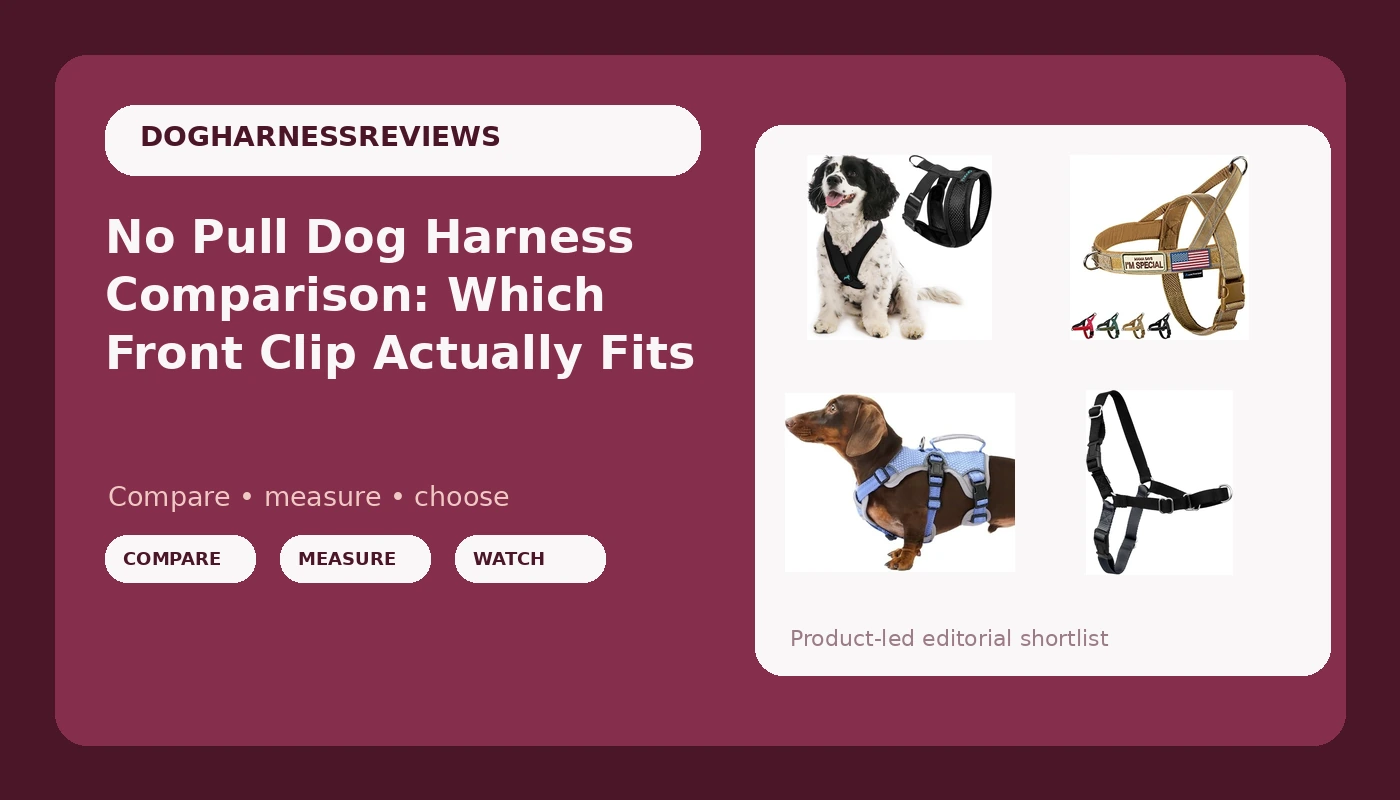
Gooby Comfort X Head-in Dog Harness, Choke-Free, Black, Medium
Takes all pressure off the throat, and the head-in opening means you are not wrestling paws into leg loops
No leash mechanics for a serious puller, and Gooby sizing does not translate to other brands
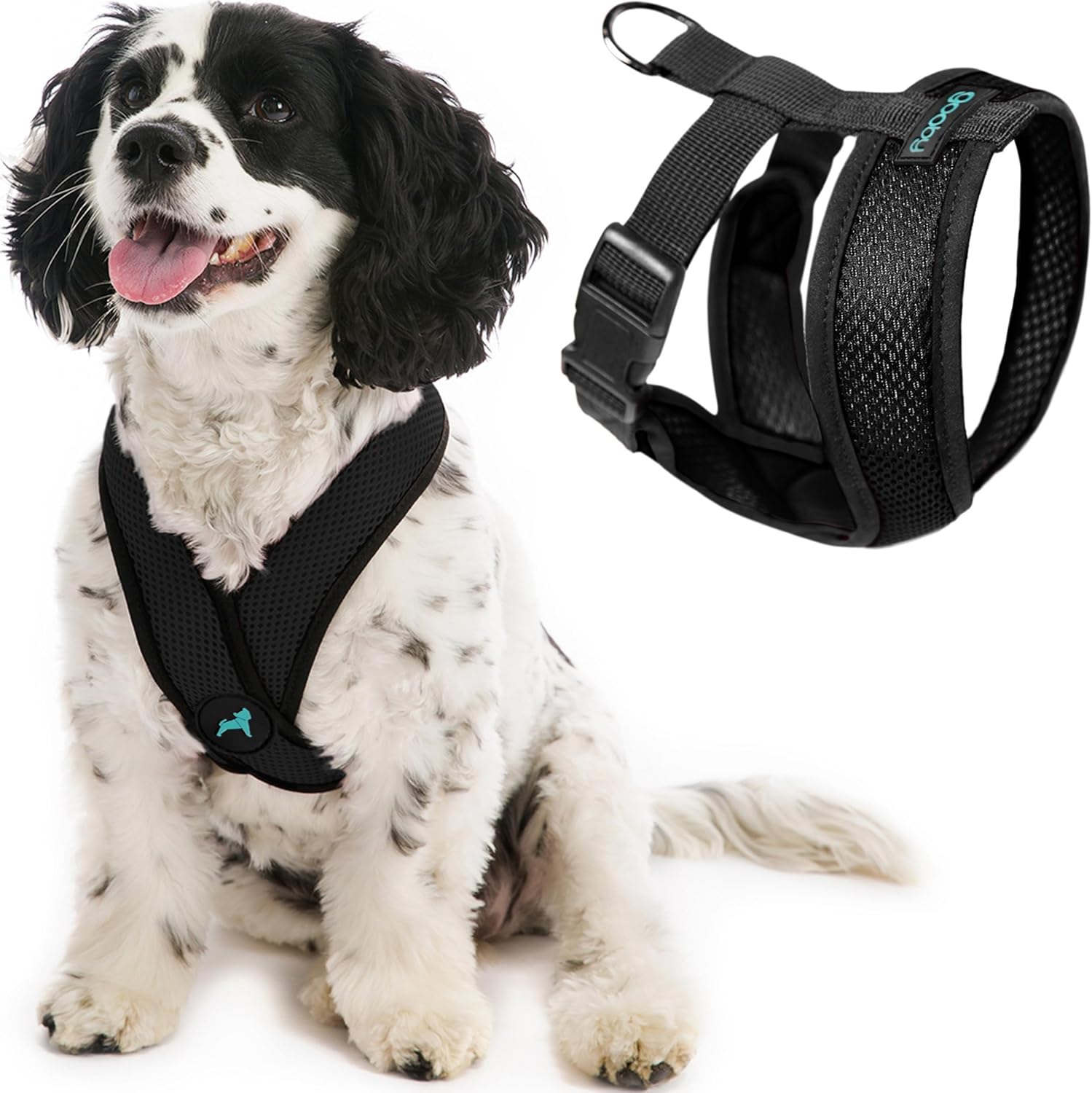
Annchwool No Pull Dog Harness with Soft Padded Handle, Reflective Strip, Escape Proof, Brown, XL
Quick-fit adjusters plus a padded handle, which is the difference between lifting a dog and dragging one
The XL carries a lot of harness, so a slim dog needs the straps pulled almost all the way down
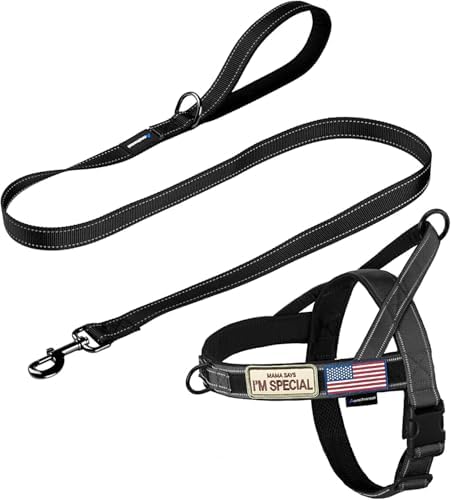
Huntboo Escape Proof Dog Harness, Dachshund Harness, Reflective Dog Harness with Handle, Technicolor Blue, Small
The long-body cut sits along the sternum instead of riding into the armpits, which is the whole fight with a dachshund
Small sizing and a lift handle make it a small-dog tool, not a big-puller solution
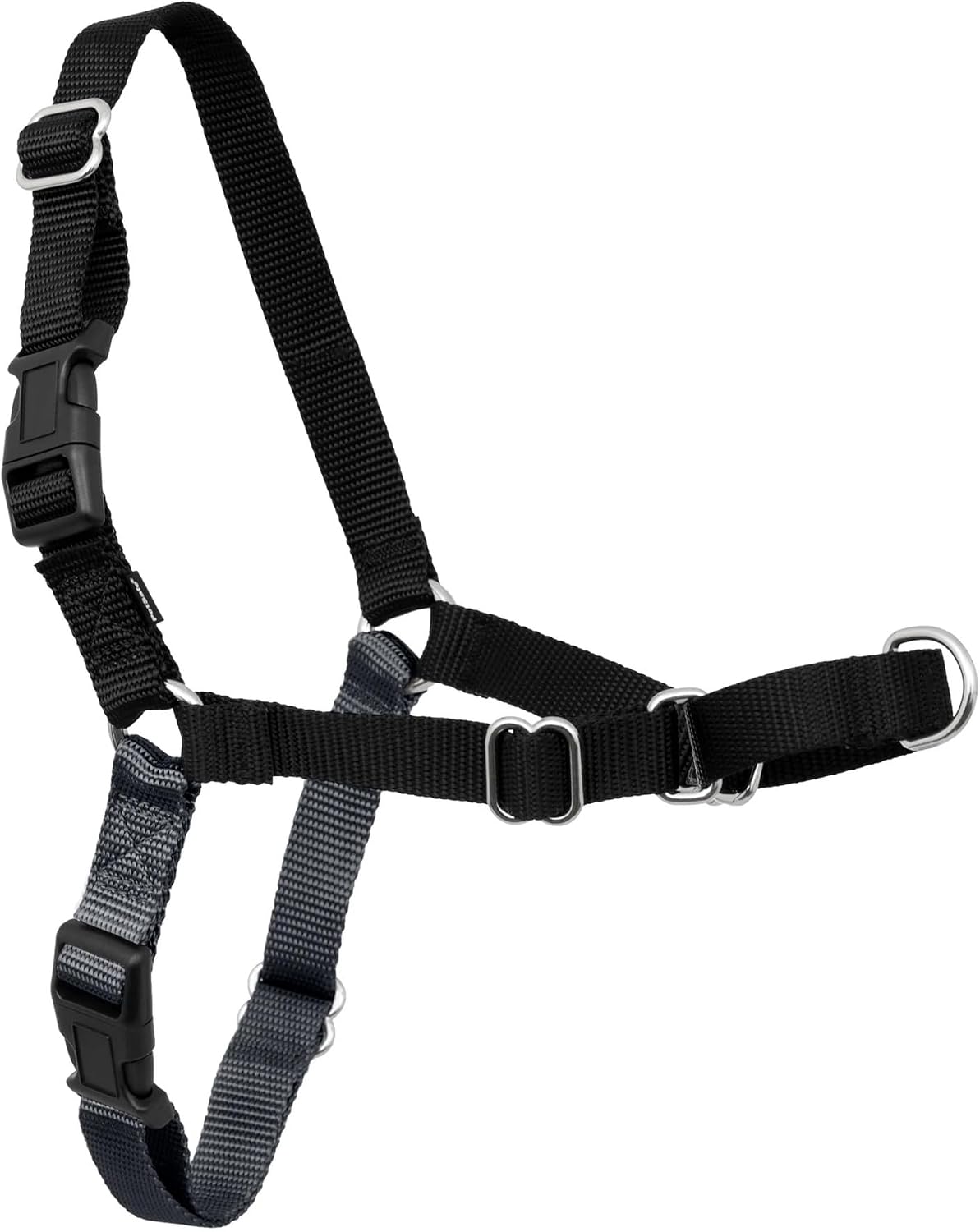
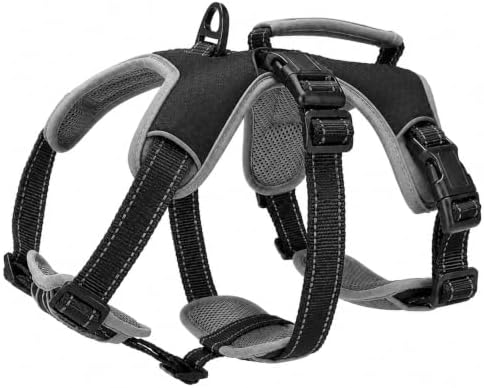
PetSafe Easy Walk Harness, No Pull Dog Harness, Charcoal Gray, Medium/Large
Built as a training tool from the ground up, from the brand trainers actually put on client dogs
Utilitarian, no padded handle and no reflective strip, so nobody calls it plush
Prices and availability were captured from Amazon Creators API and may change.
How I judge a harness before it goes on a dog
I check four things, in this order, and none of them is color.
Fit points first. The chest strap has to sit across the sternum, not across the throat. The girth strap goes behind the ribcage, and you should be able to slide two fingers under it without the whole harness rotating. If the shoulder opening pinches when the dog reaches forward, the harness is too small no matter what the size chart says. Fit is 80% of the outcome here, and the best harness in the world fails on a dog it doesn't fit.
Leash mechanics second. A back attachment is fine for a dog that already walks politely. It is a sled dog setup on a 70 pound dog that pulls. A front attachment changes the physics: when the dog surges forward, the chest strap turns him back toward you instead of letting him lean into the pull. That is why I care about where the leash connects more than I care about padding.
Hardware third. Buckle burst strength is the entire product. I have watched a plastic buckle explode on a leash pop, and I will not put one on a dog over 40 pounds. Strap webbing matters too. Thin webbing folds and cuts, thick webbing holds shape but adds weight on a small dog.
Padding last. Padding that shifts after a month is worse than no padding, because it rubs a raw spot and then you blame the dog. If the padding is not stitched down, it will move.
Gooby Comfort X Head-in Dog Harness
The Gooby is the harness I hand to owners of small dogs who cough or hack when they walk on a collar. Head-in means the dog's head goes through the opening and you close it behind the legs, so you are not fighting four paws into leg loops on a dog that has decided this is a wrestling match.
The choke-free framing is the real selling point. Pressure spreads across the chest instead of the throat, which is what you want for a dog with a collapsing trachea risk or a dog that has been leash-reactive and lunging for years. The Medium in Gooby sizing is not the Medium in any other brand on this page, so measure the girth and the chest depth with a soft tape and match those numbers rather than the letter on the tag.
Where it loses: this is a comfort harness, not a no-pull harness. On a dog that genuinely pulls, a head-in design without a front attachment manages the pull instead of redirecting it. For a 12 pound dog that mostly needs to stop choking, that trade is correct. For a 45 pound dog that tows, it is the wrong tool.
Annchwool No Pull Dog Harness
The Annchwool is the one I recommend to people who describe their dog as "an escape artist." The escape-proof shaping wraps the chest in a way that a deep-chested dog has trouble backing out of, and the quick-fit adjusters mean you can actually dial in the girth instead of guessing once and living with it.
The padded handle is the feature people underestimate. Lifting a dog over a log, into a car, or up a set of stairs is a daily event for a lot of owners, and a soft handle turns that into a one-hand job. It also gives you something to grab that is not the leash or the collar when a squirrel appears. Just understand that the handle is a lifting aid, not a steering wheel. Pulling on it does not teach a dog anything.
The reflective strip is not a gimmick in the Pacific Northwest. Between October and April, most of my clients are walking in the dark, and a reflective strip on the chest is the cheapest safety upgrade you can make. This one comes in brown in XL, and the XL runs generous, so a dog at the top of the size chart will need the straps pulled down hard.
One caveat: "no pull" in a product name describes a design intent, not a guarantee. If your dog is a hard puller, this harness is a good foundation, but the front-clip mechanics plus actual training do the work.
Huntboo Escape Proof Dog Harness
Long-backed dogs are the most badly served group in the harness market, and the Huntboo is the one on this list built for them. On a dachshund, a corgi, or a basset, a standard vest either rides forward into the throat or slides back into the armpits, and neither is a training problem you can fix with a tighter strap. The long-body cut runs the panel along the sternum, so the front edge stays where it belongs.
The escape-proof shaping matters more on this body type than on any other. A long, narrow chest with a deep ribcage is exactly the shape that backs out of a loosely fitted vest, which is why I see so many dachshund owners using a collar they should not be using. The reflective trim and the handle are the same practical additions as the Annchwool: visibility in winter, and a lift point for stairs and cars.
The Small sizing is the limit. This is a small-dog harness with a lift handle, and people keep buying it for medium dogs and then wondering why the chest panel sits too high. If you have a 50 pound dog with a long back, size up only after you measure, and check the armpit clearance with the dog standing, not sitting.
PetSafe Easy Walk Harness
This is the harness I put on client dogs first, because the Easy Walk is the training world's baseline no-pull design and the easiest way to find out whether front-clip mechanics work for your dog. The leash connects at the chest, and when the dog pulls, the strap across the front of the chest turns him back toward your leg. That is the whole mechanism. It is not magic and it is not a substitute for training, but it is the difference between a walk and a water-skiing session.
Fitting is where this harness lives or dies. It has to sit low on the chest, not up on the throat, and the girth strap needs to be snug enough that the whole thing does not rotate when the dog hits the end of the leash. A loose Easy Walk rubs under the armpits, which is the most common complaint I hear about it, and it is almost always a fitting problem rather than a design problem. The Medium/Large size fits a wide range of dogs, so take the time to get the straps right before you decide it does not work.
What you give up: comfort features. No padded handle, no reflective strip, no soft lining that makes a dog look like he is wearing a little jacket. Charcoal gray, utilitarian, built to do a job. That is the trade I would make every time for a dog that pulls.
Who should buy which
If you have a small dog that hacks or coughs on a collar, buy the Gooby Comfort X. It solves a neck-pressure problem, and that is the problem you actually have.
If your dog has slipped a harness twice and you have watched him trot down the sidewalk naked, buy the Annchwool. The escape-proof shaping and the padded handle cover the two moments that go wrong, which are the back-out and the lift.
If you have a dachshund, a corgi, or any dog with a long back and short legs, buy the Huntboo. Nothing else on this page is cut for that skeleton, and a harness that does not fit a long back will always end up under the armpits.
If you have a dog that pulls, buy the PetSafe Easy Walk, and then spend fifteen minutes a day teaching a loose leash. The harness buys you control while the training takes hold. It does not replace the training.
And if you need a harness for the car, buy none of these. A walking harness is not a crash-tested restraint, and the two jobs want different products. Most dogs I work with end up with two harnesses: a walking one and a car one. The industry pretends one does both.
Where all four fall short
None of these harnesses trains your dog. A no-pull design redirects force, and redirecting force is a management tool. The dog still has to learn what a loose leash feels like, and skipping that step is how people end up with a harness that "stopped working" six weeks in.
Padding is the second weak spot across the board. Padding that traps fur and mats it is a real problem on a double-coated dog, and a shifting pad rubs a spot faster than bare webbing does. Wash these by hand and check the stitching before the pad starts migrating.
Third, color. Every harness I have owned that was dyed a bright color has faded toward gray after one Pacific Northwest winter of rain and mud. If color matters to you, buy it for the first month and expect it to soften.
Last, plastic buckles. I will keep saying it: on a dog over 40 pounds, metal or nothing. Buckle quality is the entire product, and the failure mode is not gradual. It is a snap and a dog in the street.
What I'm testing next
I think metal hardware becomes standard on budget harnesses within two years. The factories are already upgrading, and the plastic-buckle era is ending. The segment I am watching hardest is car restraints, because as soon as published safety ratings arrive, owners will start buying those the way they buy car seats, and half the harnesses currently marketed for cars will not survive the testing.
On my bench right now is a fitting protocol I am building for clients: measure, fit, walk, re-measure after two weeks. Most of the harness returns I see are a sizing problem wearing a design-problem costume. Get the fit points right and almost any harness on this list will do the job you bought it for.