Somewhere in a shelter parking lot, a ninety pound shepherd mix named Duke taught me the difference between a harness that manages pulling and a harness that is just a vest. He towed me to the gate anyway, because the harness I had grabbed was a size too big and clipped at the back. Every no pull dog harness comparison I write starts from that lesson: the product matters, but where the leash attaches and how the straps sit matter more.
Related: Front Clip Vs Back Clip Dog Harness: Which One Stops Pulling
The best no pull dog harness for most owners in this group is the PHOEPET No Pull Dog Harness with Handle Front & Back Clip, Easy on, because it is the only one here whose own listing promises both a front attachment for training walks and a back attachment for the days your dog walks like a gentleman. The rest of this comparison is about why the other three still earn a place, and which dog each one actually suits.
Short answer out of the way. The long answer runs through clip placement, strap webbing, buckle burst strength, and the fit points that decide whether any of it works. If you have a dog that leans into the leash, the harness is the tool and the fit is the technique. Get either one wrong and you are back to being towed.
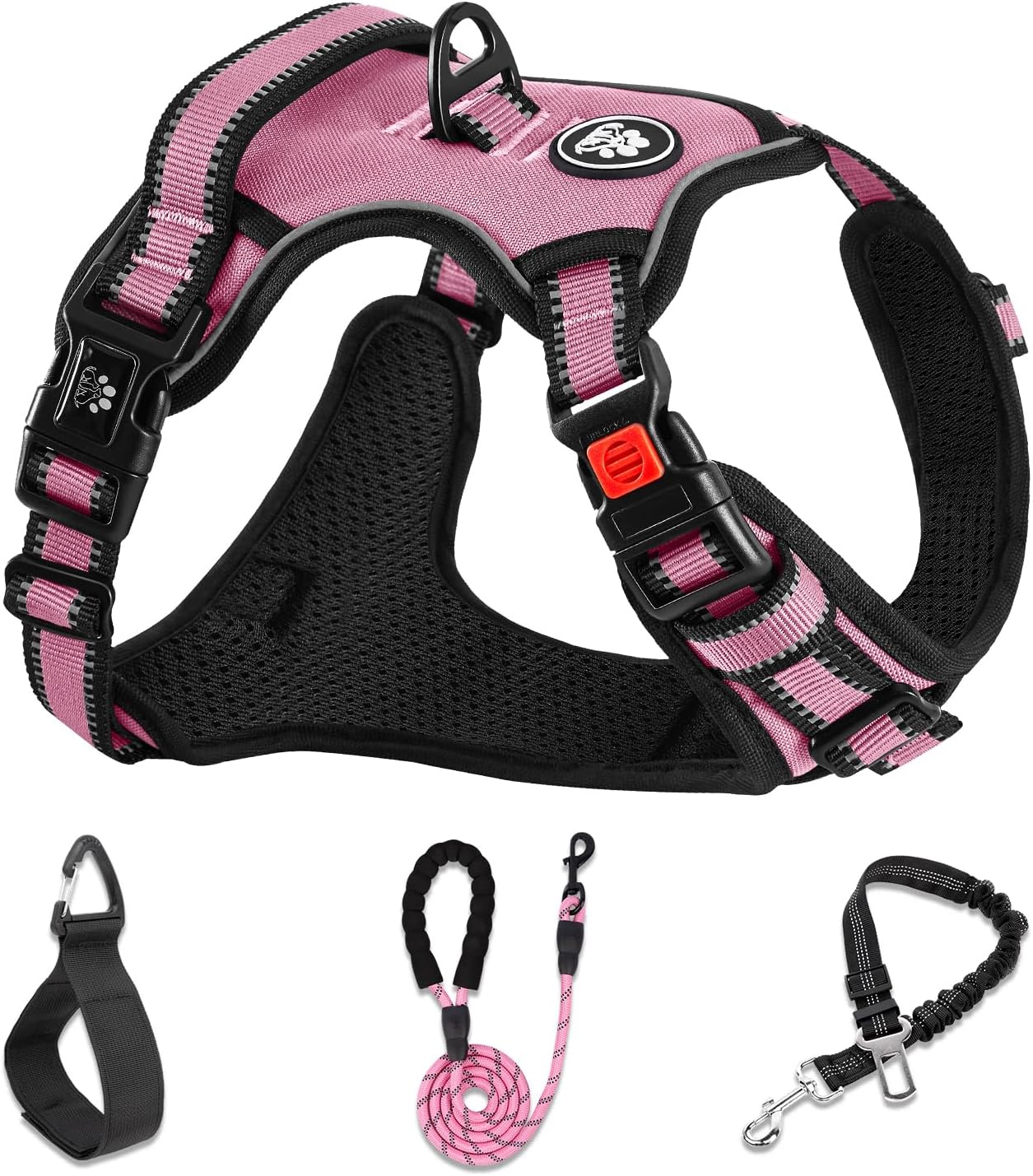
NESTROAD Dog Harness for Medium Sized Dog, No Pull Dog Vest Harness Set
The lowest cost vest style option in this group, sold as a set, and aimed at the medium dog band where most owners actually live
Sized for medium dogs, so it is the wrong starting point for a big puller, and a no pull claim only holds if the front ring is metal
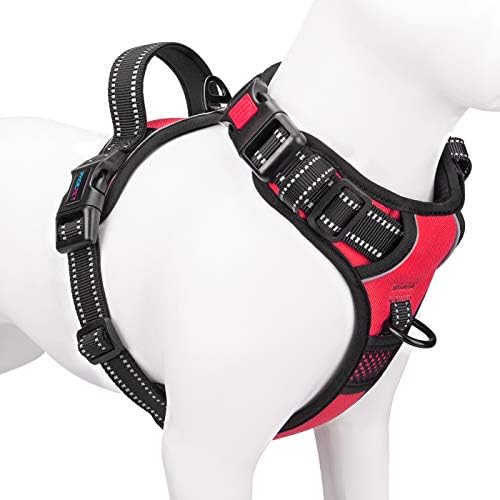
PHOEPET No Pull Dog Harness Reflective Adjustable Vest with Training Handle
Reflective trim that matters on dark winter walks, an adjustable vest cut, and a training handle for steadying a strong dog
The listing sells a handle and reflectivity rather than a clip layout, so confirm the attachment points if your dog is a committed puller
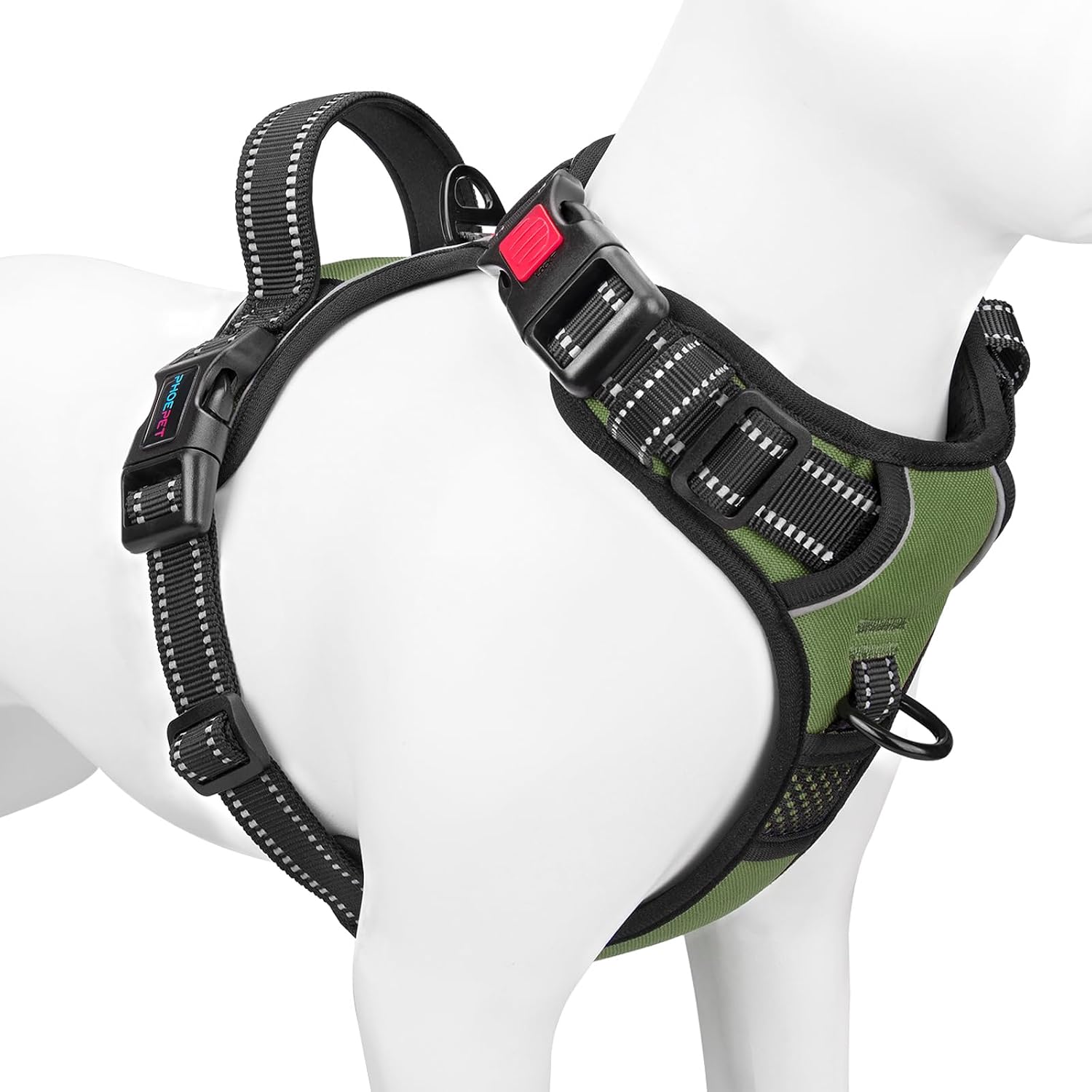
PHOEPET No Pull Dog Harness with Handle Front & Back Clip, Easy on
Two attachment points, one harness: front clip for training walks, back clip for relaxed ones, plus a handle and an easy on design
The most expensive harness in this comparison, and the second clip is wasted money on a dog that already walks politely
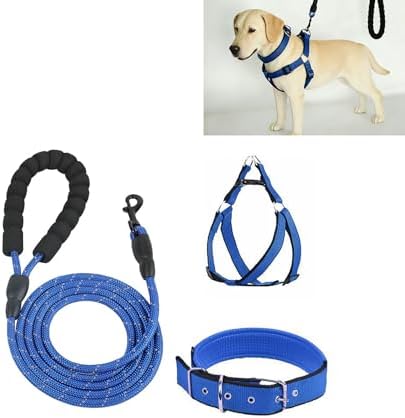
3-Pcs Dog Walking Set with Harness, Collar and Leash (Black)
Everything a new dog needs in one box at the lowest price here, which is exactly what a foster or a puppy needs on day one
Bundle harnesses are usually the simplest design in the box, so treat it as a starter kit rather than the final answer for a hard puller
Prices and availability were captured from Amazon Creators API and may change.
How I judge a harness
Start with the attachment point, because that is where pulling is either managed or ignored. A front clip sits on the dog's chest and redirects forward motion sideways, which breaks the straight line a dog uses to tow you. A back clip sits between the shoulder blades and gives the dog a clean line of pull, which is precisely what a sled dog wants. If your dog pulls and the harness only has a back ring, you have bought equipment that agrees with your dog.
Then hardware. Buckle burst strength is the number nobody prints on the box. Plastic side release buckles are fine on a twelve pound terrier. On a dog over forty pounds they are a liability, especially on the girth strap, which takes the full load of a lunge. I want metal on the load bearing ring, and I want a welded D-ring rather than bent wire. Bent wire opens under load. I have bent a plastic D-ring with my thumb, and that was enough for me.
Then webbing. Strap webbing should be wide enough to spread pressure and stiff enough not to fold into a rope. Thin, floppy webbing digs into the armpit, and armpit rub is the most common reason people abandon a harness they otherwise liked.
Then padding. Padding that shifts after a month is worse than no padding at all, because it bunches, traps fur, and rubs a raw spot under the front leg. If the padding is a loose sleeve you can slide along the strap with two fingers, expect it to move.
Then fit points, which get their own section below, because they decide more outcomes than the label does.
The two PHOEPET harnesses: one brand, two jobs
The PHOEPET No Pull Dog Harness Reflective Adjustable Vest with Training Handle is the one I would hand to an owner whose dog is strong but manageable, and who wants a grab handle. The reflective trim is not a gimmick in a place where it is dark by half past four in December. The adjustable vest shape spreads load across the chest instead of concentrating it on two narrow straps. The training handle is the part that earns its keep: it lets you steady a dog at the vet, guide him out of the car, or hold him close when an off leash dog rounds the corner. What the listing does not promise is a front clip, so if your dog is a committed puller, confirm the attachment points before you buy. If he walks well and you want visibility plus control, this is the sensible pick.
The PHOEPET No Pull Dog Harness with Handle Front & Back Clip, Easy on is the pick of this group for a dog that pulls. Two attachment points mean two jobs from one harness: front clip for training walks where you are actively working on loose leash skills, back clip for sniff walks and decompression time when you are not asking for anything. Easy on matters more than people admit, especially with dogs that dislike a strap coming over the head. A harness you dread putting on ends up on the hook instead of the dog. It costs more than the other three, and the honest question is whether you need both clips. If your dog walks politely on a back clip, you do not. If your dog has ever pulled you off a curb, you do.
The NESTROAD set for medium dogs
The NESTROAD Dog Harness for Medium Sized Dog, No Pull Dog Vest Harness Set aims at the middle of the market: a vest style harness with a no pull claim, sized for medium dogs, sold as a set. If your dog sits in that thirty to fifty pound band, this is a reasonable place to start, and it costs less than either PHOEPET. Two cautions. First, medium means different things to different factories, so measure the girth and compare it against the size chart rather than trusting the word on the listing. Second, a no pull claim is only as good as the ring it attaches to, so look at the clip material before you commit. A vest with a plastic front ring is a vest with a plastic front ring, no matter what the title says.
The three piece walking set
The 3-Pcs Dog Walking Set with Harness, Collar and Leash (Black) solves one specific problem well: a new dog arrives and you own nothing. Harness, collar, and leash in a single box, in black, at the lowest price in this comparison. For a foster dog, a puppy, or a backup kit that lives in the car, that is genuinely useful, and the black color hides the mud that a Pacific Northwest winter throws at it. What I would not do is treat it as the last harness you buy for a hard puller. Bundle harnesses tend to be the simplest design in the box, and simple is fine for a dog that already walks well. If your dog is still teaching you about physics, start with a front clip harness and keep this set as the spare.
Front clip is not optional on a puller
Here is the physics in one paragraph. A dog's power comes from the rear assembly, and a back clip harness lines that power up with your body weight. You are not stronger than a motivated seventy pound dog, and the harness is not asking you to be. A front clip turns the dog's chest toward you on every forward surge, which means the harder he pulls, the more he turns himself around. That is a lever, not a fix.
The lever only works when it is combined with something. Reward the moments when the leash goes slack, stop moving when it goes tight, and give the dog a job on the walk. A harness reduces the neck and throat injuries that flat collars cause on pullers, which is a real welfare win. It does not teach a dog anything on its own, and I get annoyed when marketing implies otherwise. If a harness alone fixed pulling, shelter return rates would look very different.
Fit is most of the outcome
The best harness in the world fails on a dog it does not fit, and most returns happen because of sizing rather than quality. Measure the girth, which is the widest part of the ribcage just behind the front legs, and check that number against the size chart for the specific harness. Never buy by breed or by the word medium.
Once it is on, check three fit points. The chest strap should sit across the sternum, above the point of the shoulder, not down in the armpit where it will rub. The girth strap should sit behind the ribcage with room for two fingers flat under it. The strap between the chest and belly should not hang loose enough to catch a front leg. Refit after a coat blow, after a clip, and every few weeks on a growing puppy. A harness sold in one size for all dogs is a harness that fits almost nobody, and that is one of my standing complaints about this category.
The trade-offs, in plain terms
If you have a dog that pulls, buy the PHOEPET with front and back clips. The second clip is the whole point, and it is the difference between training walks and being towed.
If your dog is strong but manageable and you want a handle plus visibility, buy the reflective PHOEPET vest with the training handle. It covers the dark months and the vet visits.
If you have a medium dog and want the lowest cost vest style option, buy the NESTROAD set. Just verify the hardware and measure before you order.
If you are bringing home a dog with nothing, buy the three piece walking set. Then plan a proper walking harness once you know how your dog behaves on leash.
Should you buy two harnesses?
Most dogs need two: a walking harness and a car harness, and the industry pretends one product does both. Even if you never drive with your dog, a spare earns its place. Harnesses get muddy, and a wet harness left in a bucket smells like a kennel by the second day. Rotating two means one is always dry, and it means you have a backup when a buckle fails at the worst possible moment, which is the only time buckles fail.
What I am watching next
Metal hardware is going to become standard below thirty dollars within two years. The factories are already upgrading, and the plastic buckle era is ending at the budget end first, which is where it always should have ended. Watch the car harness segment grow as safety testing gets published, and watch the Instagram brands fade as the trend cycle moves on. I keep a dated list of these predictions and score it every January. So far, the pattern holds.
If you take one thing from this no pull dog harness comparison, take the fit points. Measure the girth, clip in front for training, and pay attention to what the buckle is made of. The harness that works is the one that fits your dog and matches how you actually walk him.