Related: How to Measure Your Dog for a Harness That Actually Fits
I have fitted harnesses on more than 3,000 dogs, most of them pullers, and I have watched plenty of owners buy the wrong one twice before they get it right. A no pull dog harness is a training tool first and a piece of gear second. That order matters, because it changes what you should be shopping for.
I run a training business in Portland, Oregon, and I keep a shelf of more than 30 harnesses that I have washed, yanked on, and handed to owners of reactive shepherds, Labs that drag, and seniors who need a lift into the car. The four harnesses below cover almost every dog I meet. Two of them have front clips that actually change the physics of a pull. One is the cheapest thing here and still holds its shape. One is a step-in vest that is lovely on a small dog and has no business on a 70-pound puller.
The biggest thing I can tell you before you scroll: fit is about 80 percent of the outcome. The best harness in the world fails on a dog it does not fit, and most people blame the product when the strap was simply in the wrong place. So read the fit points in each section, measure your dog, and then choose.
Best Overall for Strong Pullers: Julius-K9 IDC Powerharness
This is the harness I reach for first when a client shows up with a dog that has been dragging them down the block for two years. The front control Y-belt is the reason. When your dog surges forward, the front attachment pulls the chest sideways and the dog has to correct its own line instead of leaning into the leash. That is the whole mechanism of a no-pull harness, and this one is built around it rather than treating it as an extra loop.
The build is what I expect from a working harness. The webbing is wide enough that it does not slice into the chest on a hard stop, and the hardware takes a leash-pop without complaint. This is the harness I do not worry about on a dog over 50 pounds.
The catch is sizing. This harness runs on its own scale, so you measure the chest girth and follow the chart rather than guessing from your dog's weight. Size 0 is a common landing spot for medium and large dogs, but a wrong size defeats the design entirely. 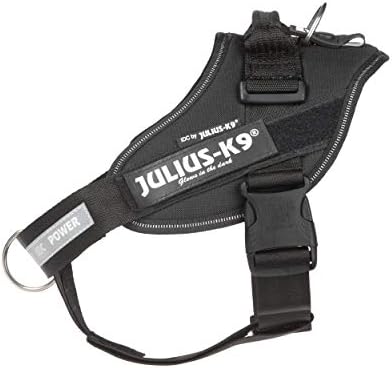 Visit on Amazon →.
Best Budget No-Pull Pick: rabbitgoo Escape Proof Dog Harness
This is the one I hand to clients who wince at training-brand prices but still need something that will not fall apart in a month. The escape-proof shape is the selling point: the belly straps sit close behind the ribs, so a dog that backs up and tries to slip out of a standard harness has a much harder time of it. For a dog that panics on the sidewalk, that alone is worth the money.
The lift handle is the feature I use most. It is not a carrying handle for a dog that can walk. It is a handhold for the moment your dog lunges at a cyclist, or the boost into the back of the car when the hips are getting old. I have used it exactly that way more times than I can count.
What it is not is a front-clip training harness. It manages a pull with a back attachment. That is a real difference in physics, and it is why I still keep a front-clip harness on the shelf for serious pullers. For a moderate puller, or for a dog that mostly needs containment, this is a lot of harness for the money. 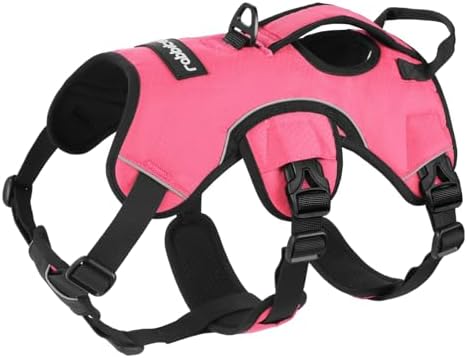 Visit on Amazon →.
Best Padded Everyday Harness: Annchwool No Pull Dog Harness
If you walk in the dark, in the rain, or on a road without a sidewalk, the reflective strip on this harness is not a gimmick. I have had clients in Portland tell me the difference in driver behavior on an early morning walk is obvious. That detail, plus the padded handle, is why this is my everyday recommendation for a medium or large dog in training.
The padded handle matters more than people expect. When you grab the handle during a reactive moment, you are not just steering, you are absorbing a jolt. A bare strap hurts. Padding spreads that load across your palm, and a soft handle is also easier to hold onto when your hands are cold and wet.
The quick-fit adjusters are the other thing I like. You can dial in the chest and belly straps independently, which is how you get a harness to sit on the fit points instead of sliding around. The escape-proof shaping helps with a narrow-chested dog that likes to reverse out of gear. Just check the padding monthly. Padding that shifts is worse than no padding at all, because it rubs in a new spot every week. 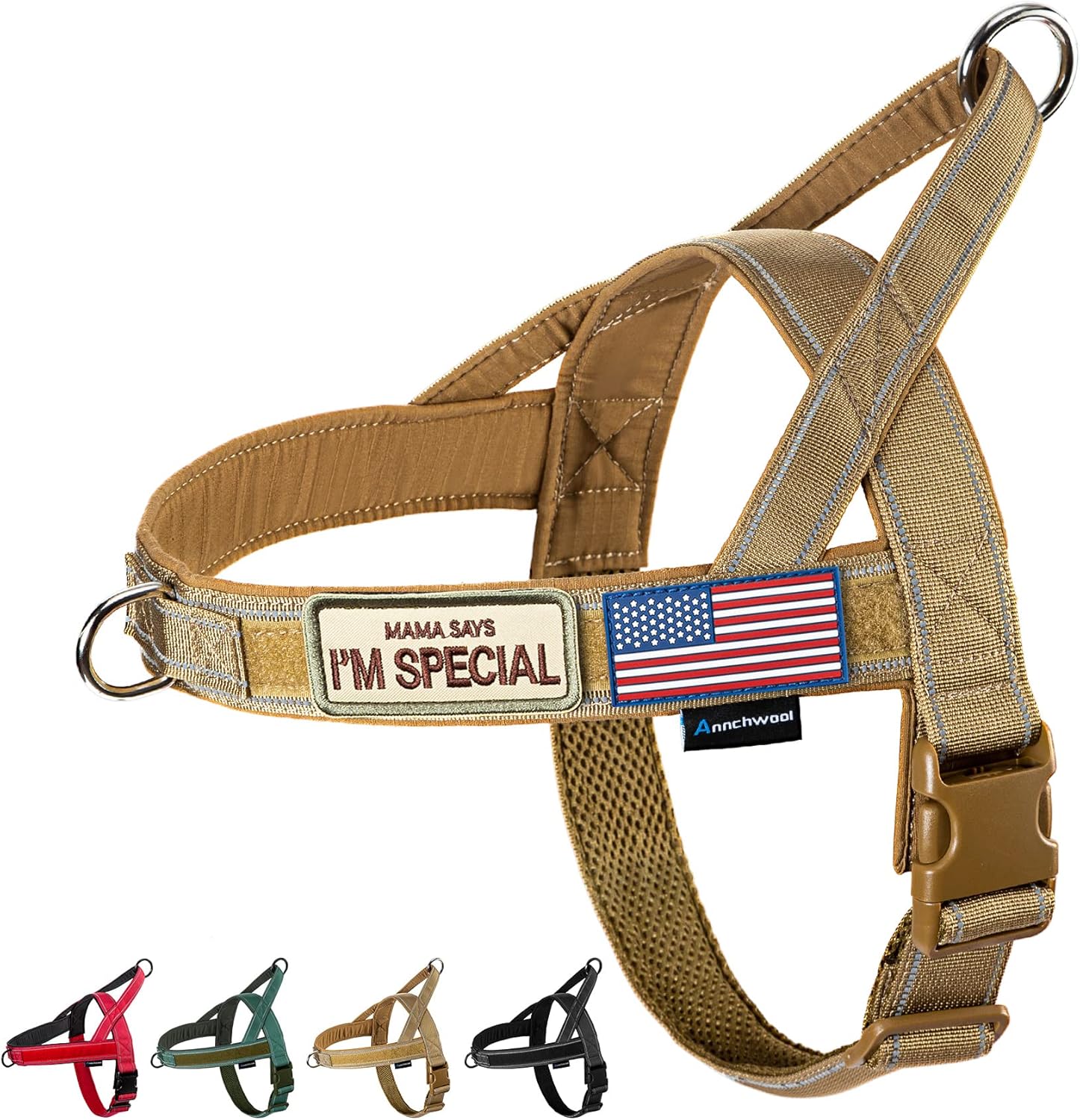 Visit on Amazon →.
Best for Small Dogs and Seniors: Voyager Step-in Air Dog Vest Harness
Some dogs hate having anything pulled over their heads. They duck, they freeze, and getting out the door turns into a wrestling match you lose every morning. The step-in design solves that. The dog steps into the vest, you bring the straps up, and you are done. For a small dog, a senior, or a dog with a neck issue, that is a genuine quality-of-life improvement.
The air vest is light, which matters on a dog that overheats easily or one with a thin coat that rubs easily. It sits flat and does not bunch up behind the front legs, which is the failure point I check first on any vest style harness.
Be honest about what it is. This is a back-clip vest. It will hold a small dog securely and it is comfortable for long stretches, but it will not fix a pulling habit. Put it on the right dog and it is the easiest harness in this group to live with. Put it on a hard puller and you will be shopping again in a month. 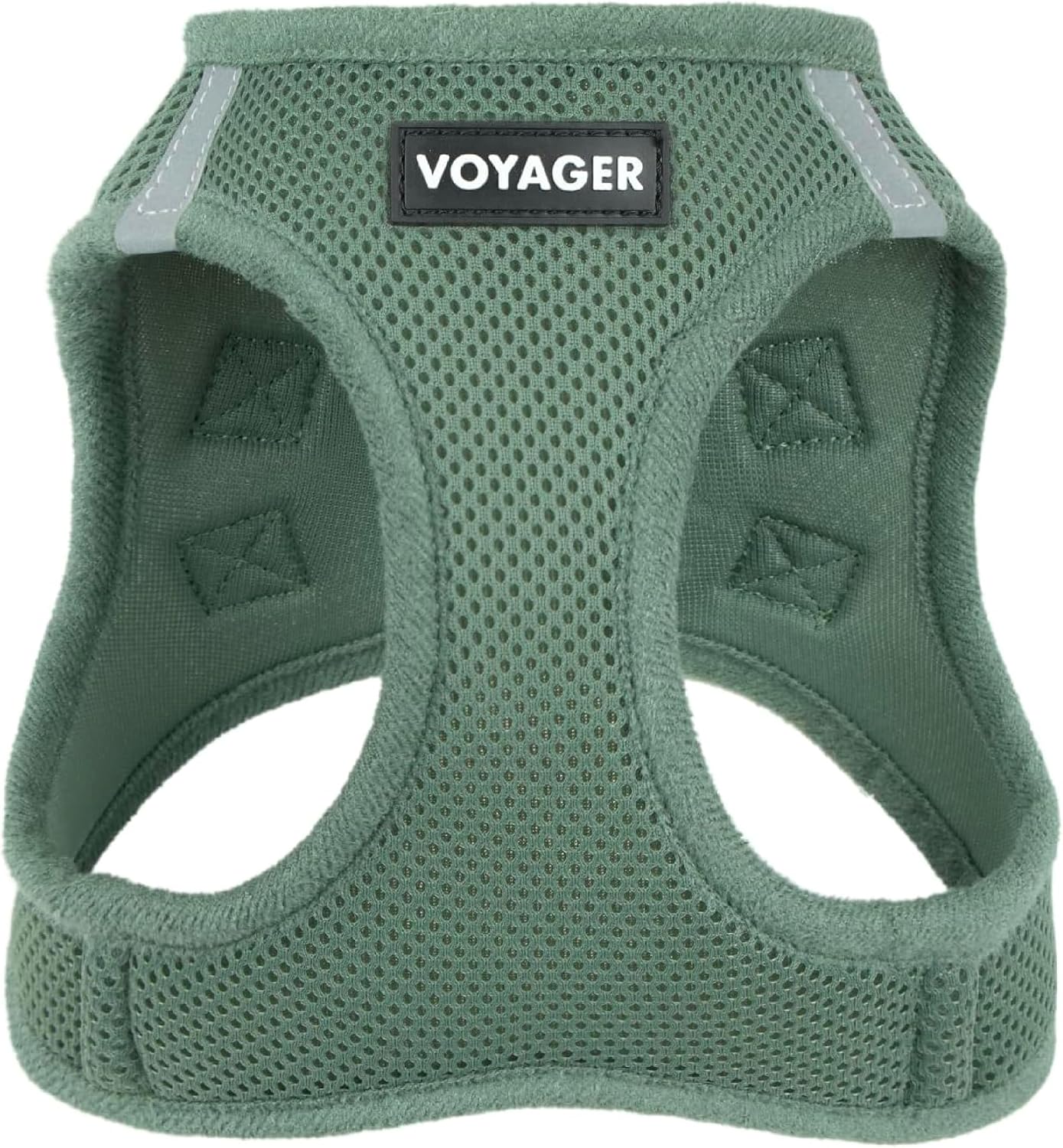 Visit on Amazon →.
How I fit and test a harness
I do this in three passes, and I do it the same way for every harness that lands on my shelf.
The fit bench comes first. I check the strap webbing for width and stiffness, I look at how the hardware attaches, and I put the harness on three different body types: a deep-chested shepherd, a barrel-chested Lab, and a narrow, long-legged mixed breed. The question is not whether it fits one dog. It is whether the adjustment range actually covers real dogs.
Then the walk test. A busy Saturday, a reactive shepherd, and a route with bikes, strollers, and other dogs. I want to know where the harness shifts when the dog loads the leash, whether the chest strap rides into the armpit, and whether anything loosens over an hour.
Finally, the buyer's chair. I sit down and ask what a normal owner with a puller should actually spend. A harness is a training tool. If it does not reduce the pull, it is a fancy collar.
The harness comparison table
This is the table I keep for clients. It is about role, not about a single winner, because the right harness depends on the dog in front of you.
| Harness | Best for | Attachment style | Notes |
|---|---|---|---|
| Visit on Amazon → Julius-K9 IDC Powerharness |
Strong pullers over 50 lb | Front control Y-belt | Measure the chest, sizing runs on its own scale |
| Visit on Amazon → rabbitgoo Escape Proof |
Budget buyers, moderate pullers | Back clip with lift handle | The lift handle is the best part |
| Visit on Amazon → Annchwool No Pull |
Everyday walking and training class | No-pull design, padded handle | Reflective strip for dark walks |
| Visit on Amazon → Voyager Step-in Air |
Small dogs, seniors, head-shy dogs | Back-clip vest, step-in | Not for hard pullers |
The pattern in that table is the pattern I see in real life. Front attachment for the dog that pulls hard. Back attachment for the dog that needs containment, a handle, or a fast exit out the door. Nobody needs four harnesses, but plenty of owners need two: one for the walk and one for the car.
What the fitting bench and walk test showed
Strap placement is where these four separate. The front-clip designs load the chest when the dog surges, and that sideways correction is what interrupts a pull. Back-clip harnesses, including the rabbitgoo and the Voyager, let a committed puller lean in and use their whole body weight. That is not a flaw in those harnesses. It is a mismatch between the tool and the dog.
Buckle and hardware quality is the second thing I check, and I check it hard. I have seen a plastic buckle let go on a leash-pop, and I have bent cheap D-rings with my thumb. Anything on a dog over 40 pounds needs hardware that will not deform. This is the single most common place budget harnesses fail, and it fails at the worst possible moment, usually near a road.
Padding is the third. Padding that stays put is useful. Padding that shifts after a month is worse than none, because it migrates and rubs a raw spot under the front leg. When you get any padded harness home, check it weekly for the first month and see whether the padding is still where you put it.
Reflective trim is the fourth. It does nothing at noon and everything at 6 a.m. in October. If your walks happen in the dark, treat it as a requirement rather than a bonus.
Should you buy the Julius-K9 IDC Powerharness?
Yes, if you have a dog over 50 pounds that genuinely pulls. The front control Y-belt is the reason to buy it, and the build holds up to a strong dog and a hard stop. Measure the chest girth first, because this harness runs on its own sizing scale and a wrong size makes the front clip useless. If you get the fit right, this is the closest thing to a solution for a serious puller in this group.
Should you buy the rabbitgoo Escape Proof Dog Harness?
Yes, if you want a lot of harness for a small budget. The escape-proof shape and the lift handle are the two features that earn it a place in my kit, and it handles a moderate puller fine. Just be clear about the limits: it is a back-clip harness, so it manages a pull rather than solving it. For a hard puller, pair it with a front-clip harness instead of expecting this one to do both jobs.
Should you buy the Annchwool No Pull Dog Harness?
Yes, for most medium and large dogs in training. The padded handle protects your hand on a jolt, the reflective strip covers dark walks, and the quick-fit adjusters let you place the straps on the actual fit points. It is the harness I would buy if I could only buy one for a dog that pulls moderately and walks in the rain. Check the padding monthly, and re-check the chest strap after every wash.
Should you buy the Voyager Step-in Air Dog Vest Harness?
Yes, for a small dog, a senior, or a head-shy dog that fights a standard harness. The step-in design is the fastest thing here to put on, and the light air vest is comfortable for long stretches. No, for a hard puller of any size, because a back-clip vest cannot redirect that kind of force. Buy it for the dog it suits and it will be the harness you grab every morning without thinking.