Related: Front-Clip Harness Fit Points: Where the Straps Should Actually Sit
I have fitted harnesses on more than 3,000 dogs. Eight of those years were at a shelter, working almost entirely with reactive dogs and serious pullers, and now I run a training business in Portland where a lot of first appointments turn into a fitting instead of a walk. My own two German shepherds wear gear out for me, and I keep a shelf of more than 30 harnesses that I have washed, yanked on, and handed to dogs of every shape.
The most useful thing I can tell you is this: a no-pull dog harness does not train your dog. It buys you a mechanical advantage while you teach the dog what you actually want. That trade only works when the harness fits, and fit is 80 percent of the outcome. The best harness on the market fails on a dog it does not fit, and a cheap harness that fits properly beats a premium one that slides around. I have watched owners return a perfectly good product because they ordered the size that matched their dog's weight instead of the size that matched his chest.
The four products below cover the jobs I see most often. A walking harness for the dog who pulls. A support harness for the older dog who needs help on the stairs. A light harness for the dog who already walks politely and goes a long way. And a car seat, because the car is a separate job and the industry keeps pretending one product does both. Most dogs I fit end up with two of these, not one.
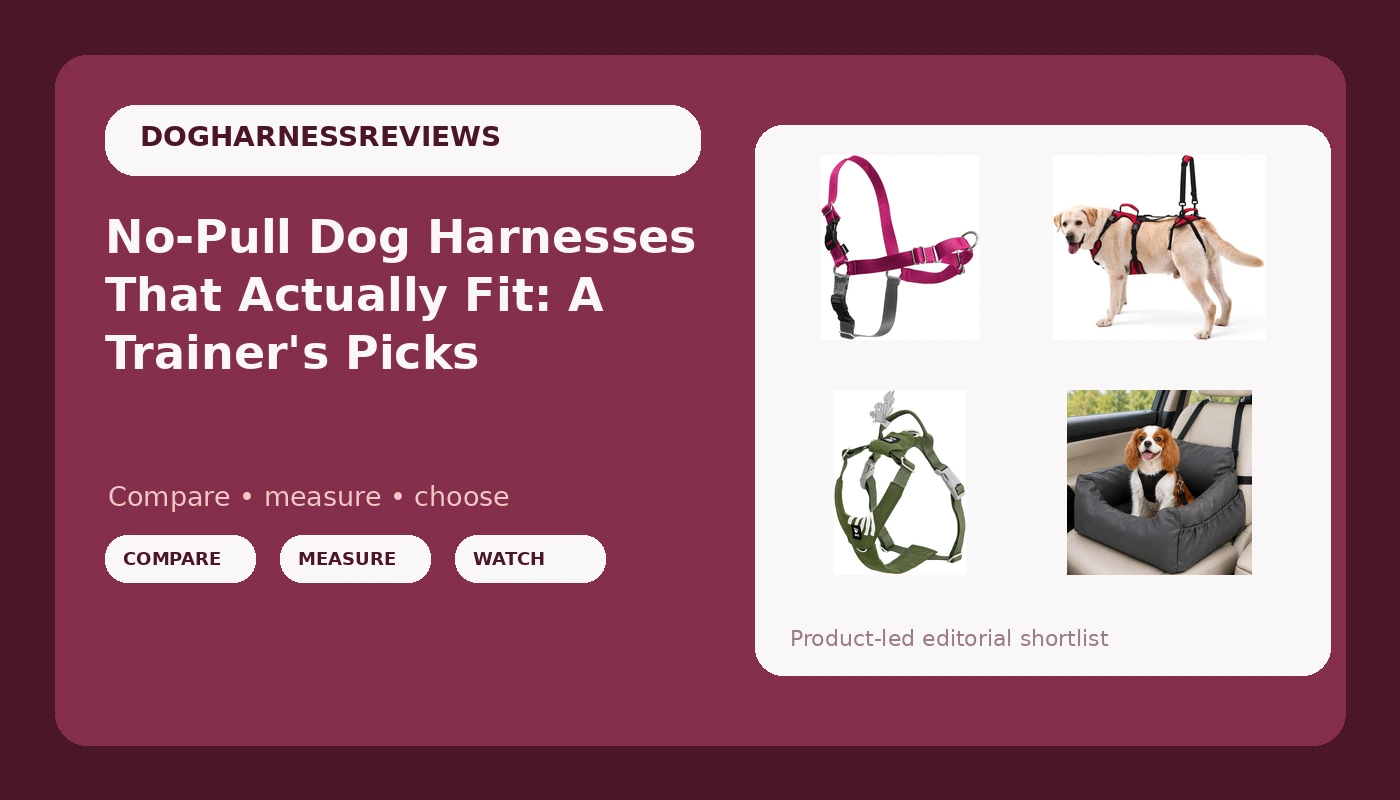
Best for hard pullers: PetSafe Easy Walk Harness
This is the harness I name first when a client calls about a 70 pound dog who has turned every walk into a sled race. The leash attaches at the chest. When the dog surges forward, the front clip redirects him back toward you instead of giving him a solid anchor to lean into. That is the whole idea behind front-clip mechanics, and on a determined puller it is the difference between a walk and a drag.
Fit is where this harness lives or dies, and fit is where most people go wrong. The chest strap has to cross the sternum, not sit low over the shoulders where it can rub a raw spot behind the front legs. The front clip should land at the base of the neck, roughly where a collar sits, not down under the chest. And the girth strap needs to be snug enough that you can slide two fingers under it and no more. Measure your dog's chest at the widest point behind the front legs before you order, because weight tells you almost nothing about which size a deep-chested dog needs.
I keep recommending this one to clients because it sits in the price band where I have found the real winners, and because the training brands earned their reputation over years rather than over a photo shoot. When someone tells me they spent premium money on a harness from a brand they found on social media, my first question is always whether they measured the dog first. Usually they did not.
One more thing. This is a walking harness for a dog in training. Once your dog is on a loose leash most of the time, move him into something lighter for long distances. A front-clip harness is a teaching tool, not a lifetime uniform.
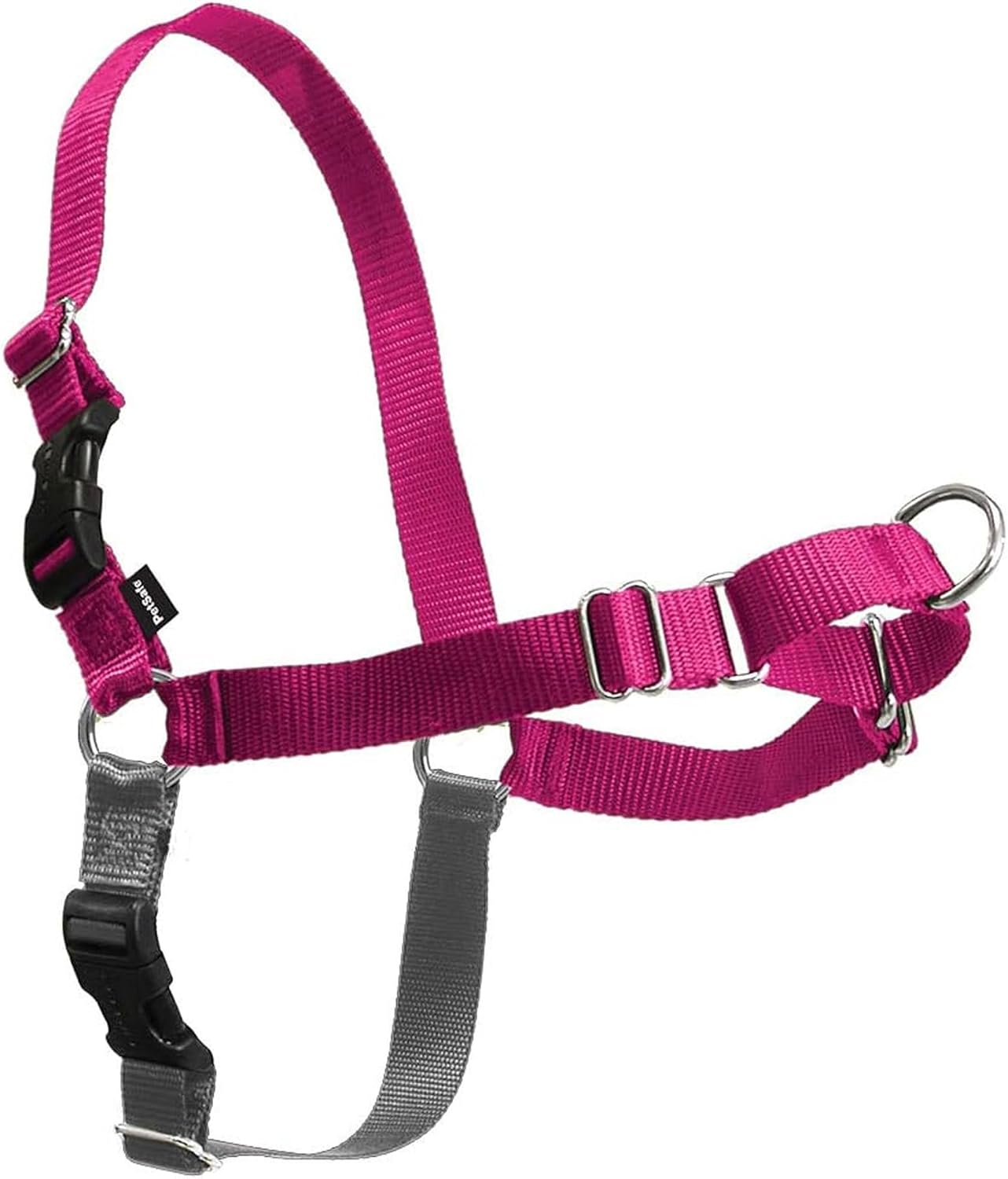
Best for senior dogs: Dog Lift Harness for Large Dogs
This is not a walking harness. It is a full-body support harness with a lift handle, built for stairs, hind leg weakness, and the years when a big dog needs help getting into the car or up the porch steps. The cut is listed as male dog friendly, and that detail matters more than most people realize. A support strap that crosses the wrong part of a male dog's underside is the fastest way to make him refuse the harness entirely, and once a dog refuses, you have lost the tool.
The way I use a harness like this is short and deliberate. You take the rear handle and lift just enough to take weight off the hips while the front legs do the work, one step at a time. Ten minutes of assisted movement, not a three mile hike. It comes in Red in size L, and it is sized for large dogs, so a 45 pound shepherd mix will swim in it.
Before you buy this, one honest note. If your dog is knuckling, dragging a back paw, or struggling to rise after a nap, that is a conversation with your veterinarian first and a gear conversation second. A lift harness makes the day easier. It does not tell you why the hind end is failing, and that answer changes what you do next.
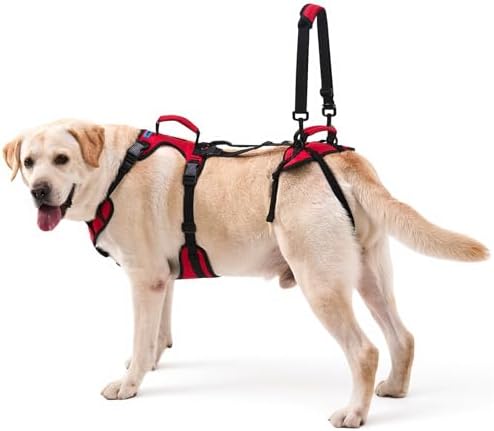
Best for long walks and trail days: Hurtta Seeker Harness
The Seeker is for the dog who already walks on a loose leash and just needs something comfortable for a long day. It comes in Forest and it is sized by chest measurement, 18 to 24 inches, which is the only sizing method I trust. Weight-based sizing is marketing. Girth measurement is fit.
Measure your dog's girth at the widest point behind the front legs, standing, with the tape snug but not tight. If the number lands inside that range with room on both ends, you have a harness that can be adjusted as the seasons change and as a young dog fills out. If your dog is at the very top of the range, size up or pick a different product rather than trusting the last half inch of webbing.
I like this style of harness for the dogs who no longer need redirecting. There is no front attachment point doing the training work, so it is not the tool for a lunger. What it does well is sit quietly on a dog for hours without shifting, and that is a real compliment. Padding that moves after a month is worse than no padding at all, because it rubs. A harness that stays put does not.
Best for the car: PAWZ Road Dog Car Seat
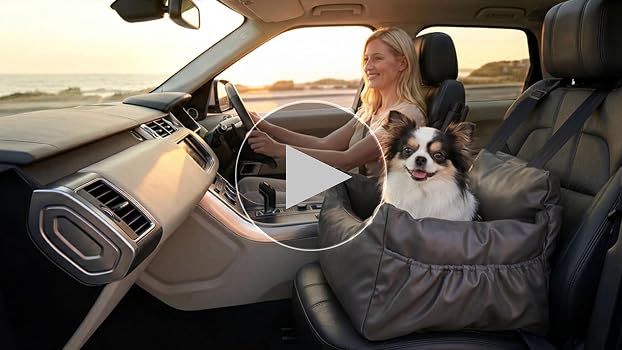
A waterproof booster bed for small and medium dogs, and a genuinely different job from everything above. It keeps a small dog from climbing into your lap at 60 miles an hour and it keeps him from sliding across the seat every time you brake. The waterproof surface is the part I care about, because a car seat that traps odor or soaks through is a car seat you stop using by the second month.
I want to be clear about what this is not. It is a comfort and containment product, not a crash tested safety device, and I will not pretend otherwise. My rule with clients is simple: most dogs need two harnesses, one for walking and one for the car, and a small dog in a booster bed covers the car half of that. Do not ask your walking harness to do a restraint job it was never designed for.
How I judge a harness
I judge four things, in this order: strap webbing, hardware, fit points, and how the padding behaves after a month.
Strap webbing is the first thing I run between my fingers. Thin webbing rolls and cuts into a dog under load. I want a strap that holds its shape when you fold it.
Hardware is second, and it is the part I am least forgiving about. I have seen a plastic buckle explode on a leash pop, and I have bent three plastic D-rings with my thumb. On a dog over 40 pounds, the load-bearing hardware should be metal. That is not a preference, it is a safety standard I have watched get ignored for years.
Fit points come third. A harness has three places it has to land correctly: across the chest, behind the front legs, and along the back. Miss one and the dog tells you with his body language before he tells you with a limp.
Padding is last and most misunderstood. Padding that shifts after a month is worse than no padding, because the shifting edge is what rubs a raw spot. I wash harnesses hard and repeatedly, and the ones that survive keep their padding where it started.
What the picks have in common
Every product here is sized by a measurement rather than a guess, and that is the thread running through all four. The Easy Walk is ordered by girth, not by the weight on the bag. The Hurtta is ordered by chest measurement in inches. The lift harness is built for large dogs specifically, which means a medium dog should not be wearing it. The booster bed is built for small and medium dogs, which means a 70 pound dog should not be in it.
That is the whole game. The industry sells harnesses in one size or in vague size letters, and then owners blame the product when it rubs or slips. I have fitted the same harness model on three body types in one afternoon: a deep-chested shepherd, a barrel-chested bully mix, and a narrow whippet. The same size letter does not fit all three, and no marketing copy will ever change that.
I also want to be honest about what these picks cannot do. None of them teach a dog to stop pulling. None of them replace a training plan. What they do is keep the pressure off the throat, give you a mechanical advantage while you work, and make the daily routine possible for a dog who is old, or small, or strong enough to tow a car.
Harness reference table
| Product | Best for | Size to order | Notes |
|---|---|---|---|
 Visit on Amazon → PetSafe Easy Walk Harness |
Dogs who pull, dogs in training | Large, by girth measurement | Front clip redirects the pull |
 Visit on Amazon → Dog Lift Harness for Large Dogs |
Seniors, hind leg weakness, stairs, the car | Large | Rear lift handle, short assisted moves |
 Visit on Amazon → Hurtta Seeker Harness |
Long walks, trail days, polite walkers | 18 to 24 in chest | Sized by measurement, not weight |
 Visit on Amazon → PAWZ Road Dog Car Seat |
Small and medium dogs in the car | Small to medium | Booster bed, not a crash harness |
What to measure before you order
Measure the girth at the widest point behind the front legs, with the dog standing on all fours. That number decides the size for the walking harness and the Hurtta.
Measure the neck, roughly where a collar sits, for the chest strap placement on a front-clip harness.
Measure the length from the base of the neck to the base of the tail if you are ordering a full-body support harness, because a rear lift has to reach the hips.
Weigh the dog, but only as a tiebreaker. Weight tells you which end of a size range you are in. It does not tell you which size to order.
Should you buy the PetSafe Easy Walk Harness?
Yes, if you have a dog who pulls and you are willing to measure before you order. The front clip redirects a dog back toward you instead of letting him lean into the leash, and the price sits far below the premium harnesses that do the same job with a better website. It is a training tool for walks, not a harness for long trail days. Get the girth right and the chest strap lands on the sternum where it belongs.
Should you buy the Dog Lift Harness for Large Dogs?
Yes, if your large dog needs help with stairs, the car, or rising from the floor because of hind leg weakness. The rear lift handle takes weight off the hips so the front legs can do the work. Use it for short assisted moves, not long walks, and talk to your vet about the underlying problem before you spend money on gear.
Should you buy the Hurtta Seeker Harness?
Yes, if your dog already walks politely and you want one harness that stays comfortable over a long day. It is sized by chest measurement in the 18 to 24 inch range, so measure the girth before you order. It is not the harness for a dog who still lunges, and it is not the harness I hand a client whose dog is dragging them down the block.
Should you buy the PAWZ Road Dog Car Seat?
Yes, for a small or medium dog who climbs into your lap or slides around on the seat. The waterproof booster bed keeps the dog contained and settled for the drive. It is a comfort and containment product, not a crash tested safety device, so treat the car as its own job rather than something your walking harness handles.