Related: Best Front-Clip Harness for Dogs That Pull
Most of the harness problems I see in Portland have nothing to do with the harness. A client shows up with a new rig, the dog is still dragging them down the sidewalk, and they want to know which brand to try next. That is a dog harness buying guide problem, not a product problem: wrong size, wrong clip placement, wrong strap tension, and a leash attachment that has slid under the armpit where it does nothing but rub.
I have fitted harnesses on more than 3,000 dogs, most of them at a shelter where reactive and pulling dogs came through in waves. I keep a shelf of 30-plus harnesses that I have washed, yanked on, and handed to my own two German shepherds. The short version of what I have learned: fit is 80% of the outcome, buckle quality is the rest, and almost every dog I work with needs two harnesses, one for walking and one for the car.
That last point is where most buying advice falls apart. The industry sells you one harness and pretends it does both jobs. It does not.
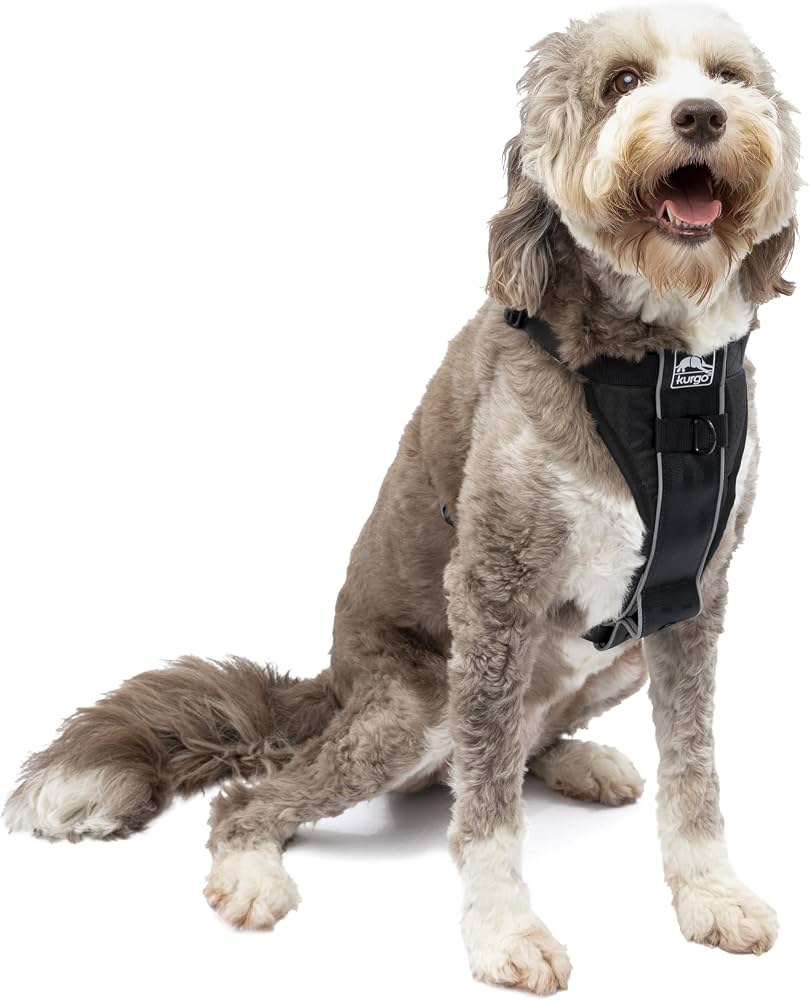
Best Overall: Kurgo Tru-Fit Smart Harness
 Visit on Amazon → | Visit on Amazon →
This is the harness I hand to most clients with a dog that pulls, and it is the one I would buy first if I were starting over. It is a walking harness with a front attachment point for no-pull work and a back point for an ordinary leash clip, and it comes with a tether you can run through a seat belt for short trips. That combination is what makes it the default recommendation rather than a specialty pick.
The reason the front clip matters is mechanics, not marketing. A leash attached at the chest turns the dog's forward drive sideways when they hit the end of it. The dog corrects itself instead of fighting you. A leash attached at the shoulder blades, which is where most harnesses put it, gives a committed puller a clean line of force and a comfortable place to lean into. I have watched a 70-pound shepherd tow a grown man across a parking lot on a back-clip harness and walk politely in the same parking lot on a front clip ten minutes later. Same dog, same day, same handler.
The Tru-Fit is not the fanciest harness on the market and it does not pretend to be. The padding is modest, the straps adjust where they need to, and the hardware has held up to years of my abuse. If your dog is between sizes, size down and use the adjustment range, because a harness that is too loose slides forward into the armpit and rubs.
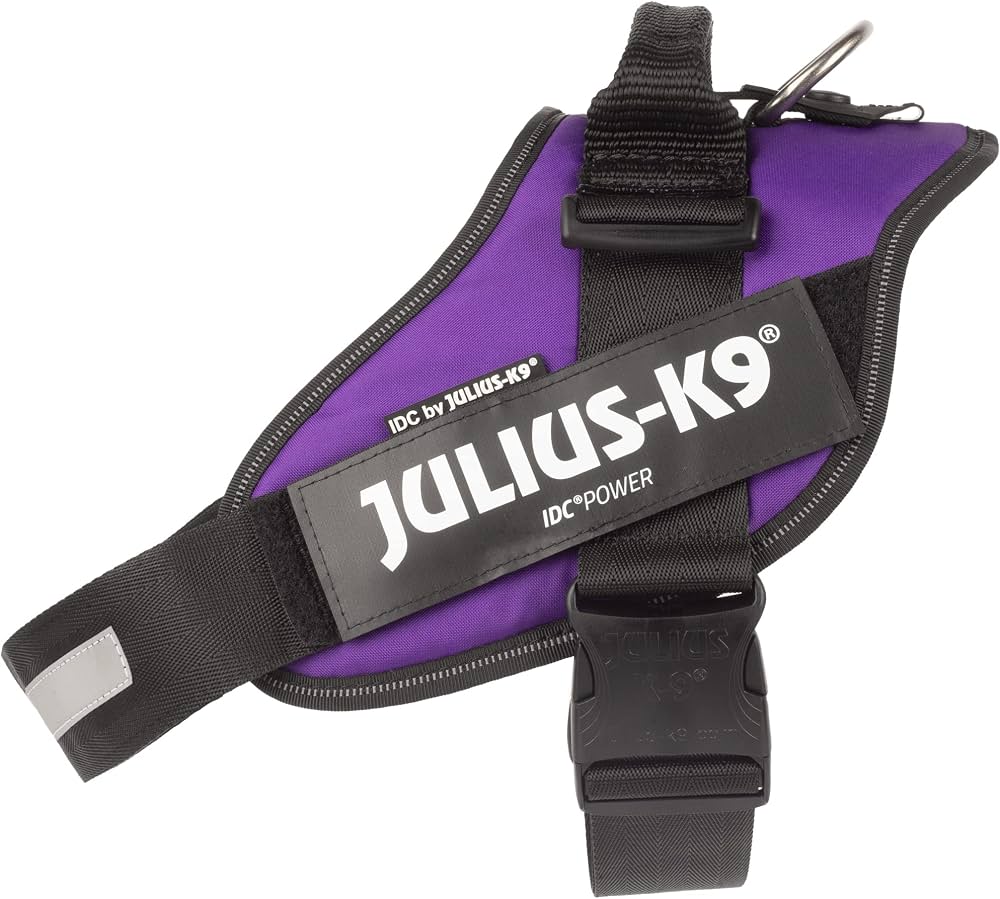
Best Built: Julius-K9 IDC Powerharness
 Visit on Amazon → | Visit on Amazon →
If you want the harness that will still be on the hook in ten years, this is the one. The European working-dog brands built their reputation on gear that gets used by police and service handlers, and this harness feels like it. Wide webbing, a grab handle on the back that I use constantly with a dog that needs to be steadied at a curb, and a size range that actually accommodates a big-chested dog without the straps maxing out.
Here is the honest part. It is a back-clip harness. On a dog that already walks on a loose leash, that is fine, and the durability is worth the money. On a dog that lunges, a back clip is a sled dog setup, and no amount of stitching quality fixes that. I have had clients buy this harness because it looks serious, then come back two weeks later with a sore shoulder. If your dog pulls, put this harness on the shelf for the day your training catches up, or use it for hikes where the dog is off-leash most of the time.
Buy it for the build, not for the pull control. That is the whole review.
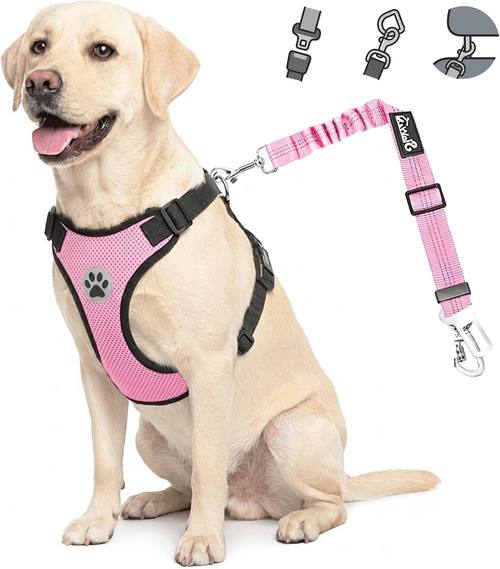
Best for the Car: Lukovee Dog Car Harness Seat Belt
 Visit on Amazon → | Visit on Amazon →
A dog loose in a car is a projectile. I have heard every argument against that sentence and none of them survive a hard stop. This harness exists to solve that problem specifically: it is built to clip into a seat belt buckle so the dog stays in one seat instead of becoming a lap dog at 45 miles an hour.
The two-in-one buckle is the practical detail I care about. You can click the harness into the car's seat belt receiver without hunting for a separate tether, which means you will actually use it every time instead of only when you remember. It also means one less strap to lose under the seat.
Two rules for car harnesses. First, fit it snug, because a loose car harness lets the dog rotate in a crash and that is worse than a snug one. Second, do not use the same harness for long walks. A car harness is adjusted to hold a dog in a seat, not to give a walking dog a full range of shoulder movement. This is why I keep telling clients to stop looking for one harness that does everything. The Lukovee does the car job well. Let it do the car job.
Best for Recovery: LOOBANI Adjustable Dog Sling
 Visit on Amazon → | Visit on Amazon →
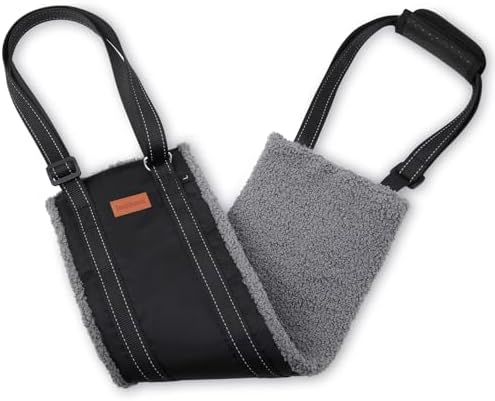
This is not a walking harness and I do not want anyone buying it as one. It is a hind leg support sling for a large dog recovering from ACL surgery or dealing with rear-end weakness, and for that job it is one of the most useful pieces of gear in this article.
The problem it solves is the trip outside at 6 a.m. on a wet deck. A dog with a repaired knee has to go out, has to squat, and has to come back in, and one slip on a wet surface can undo months of recovery and thousands of dollars of surgery. The sling takes weight off the hind end so you can walk beside your dog and hold them steady through the whole trip. Adjustable straps matter here because the fit has to change as the dog's body changes, and a recovering dog's body does change.
Use it for the bathroom break, the hallway, the vet visit, and the stairs. Do not leave it on all day, and do not use it as a substitute for a real harness once your dog is cleared for normal walks. It is rehab equipment, and it is good rehab equipment.
How I test a harness
I run every harness through the same bench, and none of it is glamorous.
Fit points come first. I check where the straps land on three body types: a deep-chested shepherd, a barrel-chested bully breed, and a slim, leggy dog that most harnesses are not built for. A harness that only fits one of those three shapes gets a note in my book, not a recommendation. I check whether the chest strap clears the windpipe when the dog pulls, whether the girth strap sits behind the ribcage instead of on it, and whether the shoulder straps bind when the dog reaches forward at a full stride.
Hardware comes second. I want metal where the leash attaches and metal at the adjustment points that take load. I have bent three plastic D-rings with my thumb, and I have watched a plastic buckle let go on a leash pop. Buckle burst strength is not a spec most brands publish, so I judge by feel, by the sound the buckle makes when it closes, and by how much the tabs flex under a hard squeeze. Plastic buckles on a dog over 40 pounds are a no for me.
Then I wash it. A hundred times is the goal for a harness that lives on a dog. I want to know if the padding stays where it was sewn or migrates into a lump that rubs a raw spot. Padding that shifts after a month is worse than no padding at all, because a flat strap spreads load and a bunched pad concentrates it.
Last is the walk test, which is a reactive shepherd on a busy Saturday. Pulling, lunging, sudden stops, and a lot of leash pops. That is where the marketing language falls off.
What the bench and the walk test actually show
Three patterns come out of all that testing, and they should shape how you buy.
Pattern one: the expensive harness is often the same nylon with a better website. The $20 to $40 range has real winners now, and I fit more of them than I do the premium tier. What you pay extra for at the top end is usually finish, colorways, and a brand story. Sometimes you get genuinely better hardware. Sometimes you do not.
Pattern two: fit beats features every single time. I have watched a well-made harness fail on a dog it did not fit and a cheap harness work beautifully on a dog it did. If you only do one thing with your money, measure your dog and buy for the measurement, not the badge.
Pattern three: the car segment is the part of this market that is changing fastest. Safety standards for pet travel are starting to show up in reviews and testing, and the cheap plastic buckle era is ending. Metal hardware below $30 will be standard within a couple of years. Watch that space if you drive a lot with your dog.
The harness reference table
This is the same table I keep in my training bag, updated every time I fit a new dog. It is not a ranking. It is a matching exercise: what job, which harness.
| Harness | Primary job | Attachment style | My note |
|---|---|---|---|
| Visit on Amazon → Kurgo Tru-Fit Smart Harness, Black, Large |
Everyday walking and no-pull work | Front and back leash points, plus a seat belt tether | The default recommendation for a dog that pulls |
| Visit on Amazon → Julius-K9 IDC Powerharness, Size: XL/2, Dark Purple |
Long-term durability for a dog that already walks politely | Back clip with a grab handle | Built like working gear. Not a pull-control tool |
| Visit on Amazon → Lukovee Dog Car Harness Seat Belt, Harness and Seatbelt with 2 in 1 Buckle |
Car travel and seat belt restraint | Clips into the seat belt receiver | Keep it in the car. Do not walk in it |
| Visit on Amazon → LOOBANI Adjustable Dog Sling for Large Dogs Hind Leg Support ACL Recovery |
Post-surgery and hind leg support | Adjustable sling, not a leash point | Rehab equipment, not a walking harness |
Where people go wrong with the table
Two mistakes show up constantly. The first is buying the car harness as the walking harness because it was already in the house. The second is buying a back-clip harness for a puller because the color was right.
There is a third mistake that has nothing to do with the product: expecting the harness to do the training. A front clip buys you leverage and it reduces the force on your shoulder and your dog's neck. It does not teach a loose leash by itself. The harness makes the training possible on a bad day. You still have to do the training on the good days.
One more thing on padding. Padding that traps fur and mats it is a real problem on a double-coated dog, and in a Pacific Northwest winter it stays damp underneath. If your dog has a thick undercoat, look for padding that drains and dries rather than padding that is thickest. Thickness is a sales feature. Drying time is what you live with.
Should you buy the Kurgo Tru-Fit Smart Harness?
Yes, for most people reading this, and especially if your dog pulls. It gives you a front point for control and a back point for a normal walk, the hardware is metal where it takes load, and it survives washing. It is the harness I fit first because it solves the most common problem in the fewest steps.
Should you buy the Julius-K9 IDC Powerharness?
Yes, with one condition. Your dog needs to already walk on a loose leash. If they do, this is the last harness you will buy for a long time, and the grab handle earns its keep at curbs and in parking lots. If they do not, buy the Kurgo instead and come back to this one later.
Should you buy the Lukovee car harness and the LOOBANI sling?
Yes to both, for the jobs they were built for. The Lukovee is your car harness, tightened for travel, and the LOOBANI is your recovery sling for the wet-deck bathroom trips that threaten a repaired knee. Neither one is a walking harness, and both of them do work that a walking harness cannot.
The two-harness rule
Buy a walking harness that fits and a car harness that holds. Then fit the walking harness again in a month, because your dog's body will change and the straps will stretch. That is the whole guide, and it is the advice I give every client before they spend a dollar. A harness is a training tool. If it does not help you control the dog in front of you, it is a fancy collar with extra straps.