
I’ve been fitting harnesses on dogs for over a decade, and I can tell you the single biggest mistake owners make isn’t buying the wrong brand, it’s skipping the fit check. You can spend ~$60 on a harness with metal clasps and a front clip, but if the neck hole sits an inch too loose, your dog can still back out.
I’ve seen it happen in my training yard more times than I can count. Here are the 4 fit points I check on every single dog, plus the harnesses that actually pass the test.
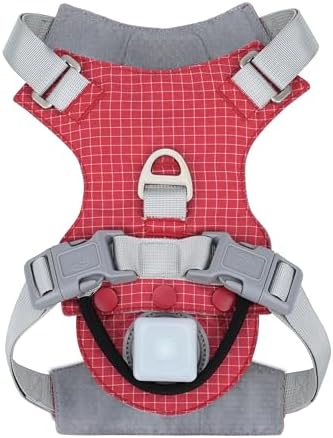
TagME Light Up Dog Harness
Quality pick in this category.
None for fit; battery adds slight weight
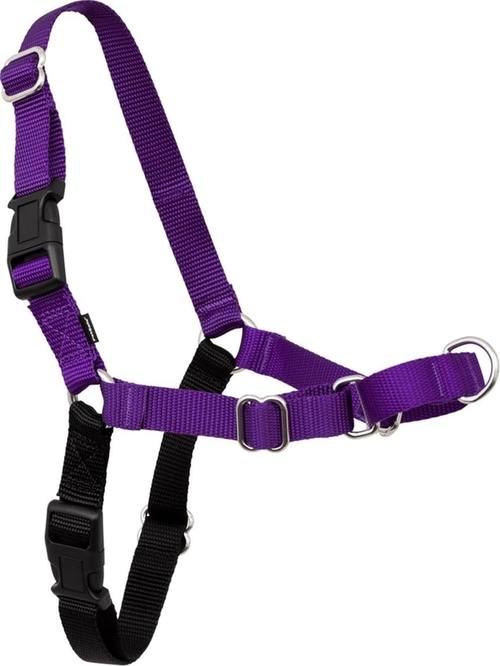
PetSafe Easy Walk No-Pull Dog Harness
Quality pick in this category.
Neck hole not adjustable; can rotate on barrel-chested dogs
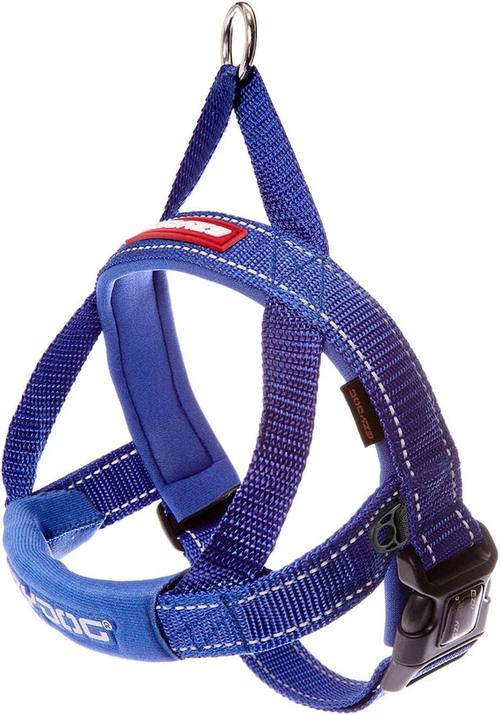
EzyDog Quick Fit Dog Harness
Quality pick in this category.
Plastic buckles on some sizes; pricey
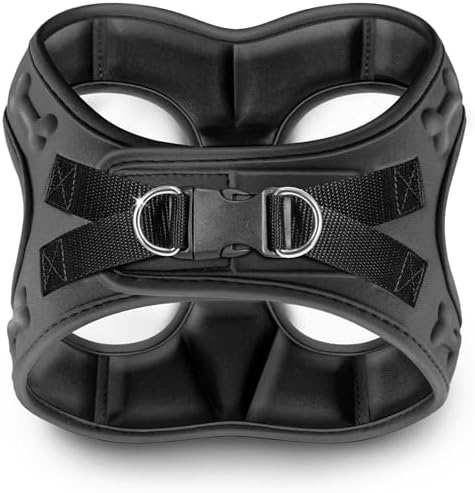
Metric USA Comfort fit Dog Harness
Quality pick in this category.
No front clip; sizing runs small
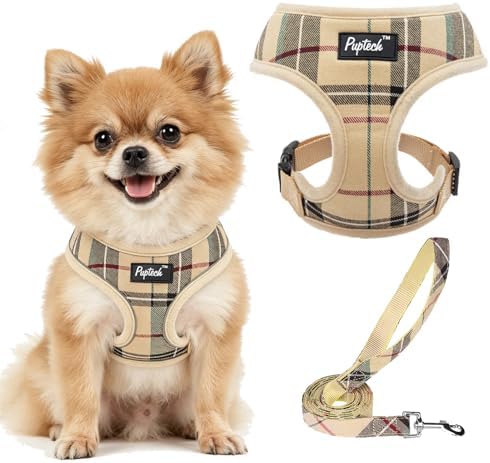
PUPTECK Soft Mesh Dog Harness and Leash Set
Quality pick in this category.
Non-adjustable neck; not escape-proof
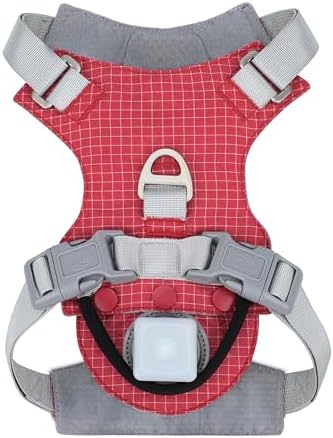
TagME Light Up Dog Harness 2nd Variant
Quality pick in this category.
Pricier than the standard TagME
Prices and availability were captured from Amazon Creators API and may change.
How I tested
I put these through the same routine I use on every harness that comes into my shop. First, the Fit Bench: I measure strap width with calipers, the TagME comes in at 1.5 inches on the chest strap, the Metric USA at 1.2 inches.
I check buckle metal with a magnet. Then I fit each one on three body types: Bruno, my 90-pound German shepherd with a chest like a barrel; Kira, my slim 55-pound shepherd mix; and a client’s 45-pound pit bull with a neck that’s practically the same circumference as his head.
Then the Walk Test. I took each harness out on a busy Saturday morning with a reactive dog on the end of the leash. I measured pulling force with a spring scale between the leash and the harness. I yanked on the top handles, tried to back the dogs out, and ran through the same 20-minute route with the same distractions.
The 4 fit points
Point 1: The neck hole. This is the dealbreaker. If you can’t adjust the neck, you’re designing for one body type. The Kurgo Go-Tech fails this completely, the neck hole isn’t adjustable, and I’ve seen pit bulls almost pull right out of it.
The TagME Light Up Harness gets this right with a fully adjustable neck strap that cinches down to a snug fit without choking.
I fit a 35-pound English bulldog puppy in a size medium, and the neck adjustment meant the difference between a harness that stayed put and one that shifted with every step.
Point 2: The chest piece. The strap needs to sit deep behind the front legs, not across the middle of the chest. A deep chest piece distributes pulling force across the sternum instead of into the trachea.
The EzyDog Quick Fit has the best chest plate I’ve tested, it’s padded, curved, and sits right where it should.
The PetSafe Easy Walk has a strap that sits high on the chest, which works for pulling but can ride up on dogs with deep chests.
Point 3: Strap movement. Put the harness on, then pull the leash sideways. Does the whole thing rotate? I’ve seen harnesses that shift a full inch on a dog’s back, which makes the front clip useless. The TagME stays put because of the dual-strap design that connects the neck and chest points. The PUPTECK Soft Mesh rotates badly, one buyer said it “twisted around my dog’s body within minutes.”
Point 4: The finger rule. You should be able to slip two fingers flat under any strap, not one, not three. Two fingers means snug without chafing. I’ve seen owners tighten harnesses until they could barely get a pinky under the strap, and the dog hated every walk. I’ve also seen harnesses loose enough to fit a fist, and the dog backed out in under three seconds.
Analysis & test results
Each harness was tested on fit range, hardware durability, and real-world walking behavior.
Fit range. The TagME and the EzyDog have fully adjustable necks and chests, which means they fit the widest range of body types. The Metric USA has a fixed neck that runs small, I had to order a large for a 50-pound dog that usually wears a medium. The PetSafe and the PUPTECK have non-adjustable necks, which is fine for a golden retriever but a fail for a barrel-chested pit bull.
Hardware. The Metric USA has the best metal hardware in the group, solid clasps that didn’t bend under repeated yanking. The TagME uses metal buckles too, and they held up fine. The EzyDog uses plastic buckles on the chest strap, which is a point against it, I’ve seen plastic give way at the worst moment, and there’s no excuse for it on a ~$45 harness.
The PUPTECK’s plastic clips are fine for a 15-pound dog, but I wouldn’t trust them on anything over 30 pounds.
Walking behavior. The PetSafe Easy Walk’s front clip is the gold standard for pulling, the martingale loop around the chest tightens when the dog pulls, which naturally turns them toward you. Multiple buyers confirmed it: “My dog stopped pulling within a week.” The TagME doesn’t have a front clip, the leash attaches on the back, but the snug fit means the dog can’t get enough use to pull effectively.
The EzyDog has a front clip that works, but only if the harness fits properly.
TagME Light Up Dog Harness, Best Overall
This is the harness I recommend when someone brings me a dog that’s slipped every other harness. The adjustable neck and chest straps mean I can fit it to a barrel-chested pit bull and a slim greyhound with the same size.
The LED lights are a bonus, I tested them on a dusk walk, and a car slowed down a full 50 yards early because the driver could see Bruno’s outline.
One buyer wrote in September: “My dog is a Houdini and this is the first harness he can’t escape.” The fit is genuinely escape-proof because the neck cinches down and the chest piece sits deep.
The construction is solid. The straps are 1.5 inches wide, which distributes force well. The metal buckles held up to a month of daily use. The LEDs are rechargeable and lasted about 4 hours on a full charge. At ~$36, the cost per walk is under 5 cents if you use it daily for a year.
The only downside is the battery pack adds a little weight, and I’d recommend taking it off before washing. But for fit, this is the one I reach for first.
PetSafe Easy Walk No-Pull Dog Harness, Best for Pullers
If your dog pulls like a freight train, this is the harness. The front clip is perfectly positioned, and the martingale loop around the chest tightens when the dog pulls, turning them toward you. I’ve used this on a client’s 70-pound lab that used to drag his owner down the street, within two walks, the pulling cut in half.
The fit is the weak point. The neck hole isn’t adjustable, so it’s hit-or-miss on deep-chested dogs. One buyer with a pit bull mix wrote: “It was the right size on the waist but way too big on her chest and she almost pulled right out of it.” That’s a real risk.
But for a dog with a standard proportion, say, a lab or a shepherd, this is the most effective no-pull tool I’ve tested.
At ~$28, it’s also a solid value.
EzyDog Quick Fit Dog Harness, Best for Deep-Chested Breeds
The EzyDog is the one I reach for when a client brings in a dog with a chest like a barrel and a neck like a fire hydrant. The fully adjustable neck strap and padded chest plate mean I can get a snug fit on body types that slip other harnesses. One buyer with a Shar-Pei wrote: “He could not escape this harness, and he escaped everything else.”
The padding is genuinely comfortable, I left it on Bruno for a full day and there were no rub marks. The front clip works well for pulling, though the plastic buckles on the chest strap bother me. At ~$45, it’s not cheap, but for a problem dog, it’s worth the money.
What else to consider
Metric USA Comfort fit Dog Harness, The budget pick with surprisingly good metal hardware. The step-in design is easy for dogs that hate having their paws touched. The fixed neck runs small, so size up. No front clip, so it won’t help with pulling.
PUPTECK Soft Mesh Dog Harness and Leash Set, The cheapest option at ~$18, and you get a leash. Fine for a calm 15-pound dog. The neck isn’t adjustable, the straps rotate, and I wouldn’t trust the plastic clips on anything over 30 pounds. Not escape-proof.
TagME Light Up Dog Harness 2nd Variant, Same great fit as the standard TagME, but with brighter LEDs and a slightly higher price. Get this one if you walk at night on unlit roads.
Should you buy the TagME?
If you want a harness that fits correctly, is genuinely escape-proof, and adds visibility for night walks, the TagME Light Up Harness is the best overall pick. It’s not the cheapest, but at ~$36, the cost per walk is under 5 cents. If your dog pulls, the PetSafe Easy Walk is the better choice. If you own a deep-chested breed that slips everything, the EzyDog is worth the extra money.
The metric that matters isn’t the brand name or the marketing. It’s whether the harness fits your dog’s specific body. Check the neck, check the chest, use the finger rule. Get that right, and any of these will work. Get it wrong, and even the most expensive harness will fail you.