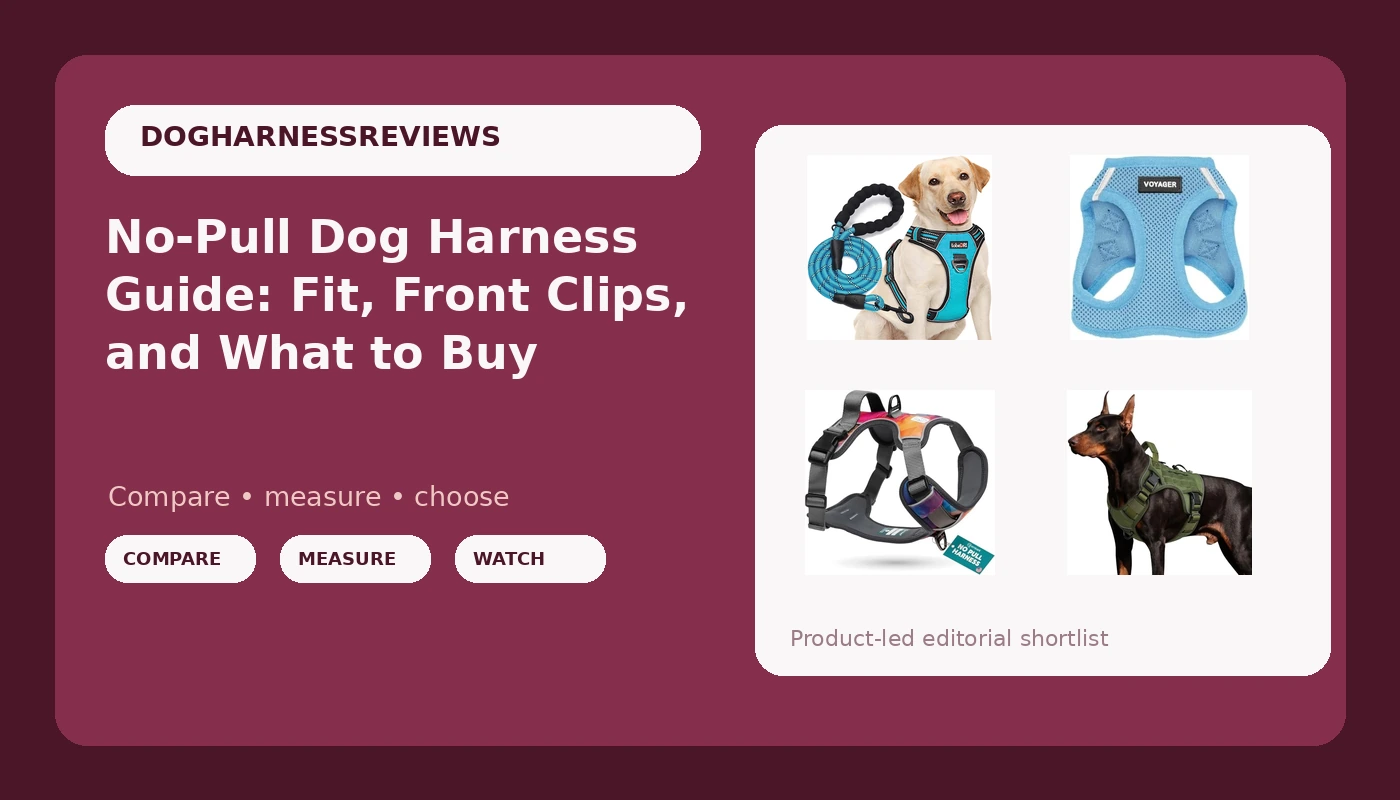
Related: Best No-Pull Dog Harness for Large Dogs
I have fitted more than 3,000 dogs with a harness. Most of that was at a shelter in Portland, Oregon, with dogs who pulled like they were training for the Iditarod, and the rest is my own training business. Eight years of that work teaches you something fast: a no-pull dog harness either changes how the leash feels in your hand, or it is a fancy collar with extra straps and a nicer box.
I keep a shelf of 30-plus harnesses. I have washed them, yanked on them, and let my two German shepherds wear them into the ground. What I have learned is that fit is roughly 80 percent of the outcome and hardware is most of the rest. The best harness in the world fails on a dog it does not fit, and a plastic buckle will eventually tell you the truth on a leash-pop.
This is the short list I give clients. Four harnesses, covering the dogs I actually see: the puller in training, the small dog who just needs a vest, the owner who wants one purchase to solve the whole walk, and the big dog who treats every walk like a weight-pulling competition.
Best Overall for Training: Embark No Pull Dog Harness
The Embark is the one I hand to clients with a dog who pulls. The no-choke design spreads load across the chest instead of the throat, and that matters, because a dog who coughs on every walk learns to hate the walk. The vest shape gives you adjustment points in more than one place, and that is the whole game. A harness that only adjusts at the girth will slide on a deep-chested dog, and a sliding harness rubs the armpits raw.
The reflective trim is not decoration where I live, in a city that rains from October to May and goes dark at 4:30 in the afternoon. Reflective webbing is the difference between a driver seeing your dog and a driver seeing nothing.
What I tell people to check in the listing photos: where the leash attaches, and how many points you can tighten. On a no-pull design you want an attachment that redirects the dog's forward motion sideways rather than pulling straight back against the throat. Then verify the size chart against your dog's girth measurement, not against the breed on the box. Harnesses are sold by measurement for a reason.
Best Value: tobeDRI No Pull Dog Harness with Leash
This one sits in the budget range and it comes as a set: the harness plus a heavy duty 5ft leash, in blue, size L in this listing. For a client buying their first harness who does not own a decent leash, that is one purchase instead of two, and the Oxford webbing is the same family of material the more expensive harnesses use.
The adjustability is what makes it a real training tool rather than a strap. Reflective stitching runs through it, which is the feature I care about most in the Pacific Northwest. The leash being included also means the setup matches, and that sounds like a small thing until you are standing in the rain holding a leash that is too long for a dog who lunges.
Two cautions. Size L is a specific size, so measure the girth before you click, because a large harness on a medium dog is a harness that slides. And check the stitching on the webbing when it arrives. That is the first place a budget harness fails, and it is easy to spot in the first week.
Best Heavy-Duty Pick for Large Dogs: WINGOIN Tactical Dog Harness
The WINGOIN is built for large dogs and heavy pullers, and the build shows it: heavier webbing, a sturdier frame, a tactical layout with more structure than a simple walking vest. When a client has a big dog who pulls, this is the category I look at, because the harness has to survive the dog, not just fit the dog.
My rule for the big dogs is simple. A back-attachment harness on a big dog who pulls is a sled dog setup, and you are the sled. So if you buy a heavy-duty harness like this one, use it with a no-pull attachment or plan on training with it, not just walking on it and hoping the dog calms down. Hardware is where the money goes, and heavier hardware is the reason this one is heavier on the shelf.
Sizing runs generous on tactical builds, so measure and then measure again. And be clear about what you are buying: a walking harness for a big, strong dog, not a car restraint and not a fashion piece. Most dogs I work with need two harnesses, one for the walk and one for the car. This is the walk one.
Best for Small Dogs: Voyager Step-in Air Dog Vest Harness
The Voyager is a step-in vest in baby blue, size small, and it does a different job than the other three. Step-in means the dog steps into the harness and you close it over the back, which is fast, and for a small dog who does not pull hard, fast and comfortable is most of what you need. It is a lightweight vest shape, the kind of thing that works for a short walk, a trip to the vet, or a dog who is still learning that the harness means good things are coming.
Here is where I am honest with clients. A vest like this is not a training tool for a puller. It is comfortable, easy equipment for a small dog who walks politely. If your small dog drags you down the block, the fix is a few sessions with a front-clip design and a trainer, not a different color vest. Buy the Voyager for convenience, and buy one of the harnesses above if the walk itself is the problem.
How I judge a harness
Every harness I recommend gets checked the same way, and you can run this checklist in your own living room.
Strap webbing first. I look at the thickness and how the edges are finished. A sharp, unfinished webbing edge rubs fur off a dog's shoulders over a month of daily walks, and the dog cannot tell you why he is suddenly reluctant to go out.
Hardware second. Metal where the leash clips on, ideally metal at every load-bearing point. I have bent plastic D-rings with my thumb. A plastic buckle on a dog over 40 pounds is a gamble I will not take with a client's dog. Buckle burst strength is the number nobody publishes, and it is the number that decides whether the harness survives a startled lunge at a squirrel.
Fit points third, and this is where most people get it wrong. The girth strap sits behind the ribcage, snug enough for two fingers underneath and no more. The chest strap sits on the sternum, not across the throat. The shoulder opening has to let the front legs rotate through a full stride. If a strap crosses the point of the shoulder, you will see a shortened stride within a week, and you will blame the dog.
Padding last. Padding that shifts after a month is worse than no padding, because it bunches and rubs raw spots under the armpit. I would rather see a well-fitted unpadded harness than a padded one that migrates.
What the walk test tells me
I test harnesses the way my clients live with them: a reactive German shepherd on a busy Saturday morning, which is the closest thing to a stress test I can run without a lab. What I watch is pulling force, stride length, and where the straps end up after 20 minutes of real walking.
The pattern is consistent. Adjustment points beat padding. A harness with four or five adjustment points fits more dogs than a harness with two, regardless of price. Front-clip mechanics beat everything else for a dog who lunges, because the leash redirects the dog's momentum sideways and the dog corrects himself. That is not a trick, it is physics, and it works without hurting the dog's neck.
The other pattern is that the training brands earned their reputation. Ruffwear, Balance, and PetSafe cost more because the hardware costs more. The cheap end of the range has real winners now, which is why the tobeDRI is on this list, but you have to inspect the buckles and the stitching yourself instead of trusting a product photo.
One prediction I will put in writing: metal hardware becomes standard at the budget end within two years as the factories upgrade. The plastic-buckle era is ending, and the harnesses still shipping with plastic load-bearing buckles are the ones to avoid.
The no-pull dog harness reference table
This is the table I keep for clients, and it is the same one I use when a fitting appointment runs long. Match the dog to the row, then measure the girth.
| Harness | Best for | What stands out | Fit notes |
|---|---|---|---|
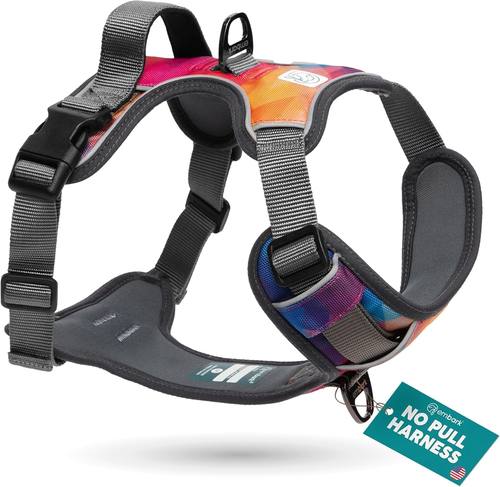 Visit on Amazon → Embark No Pull Dog Harness Visit on Amazon → |
Dogs in training who pull, medium to large | No-choke vest design, reflective adjustable webbing, multiple fit points | Measure the girth, then confirm where the leash attaches in the listing photos |
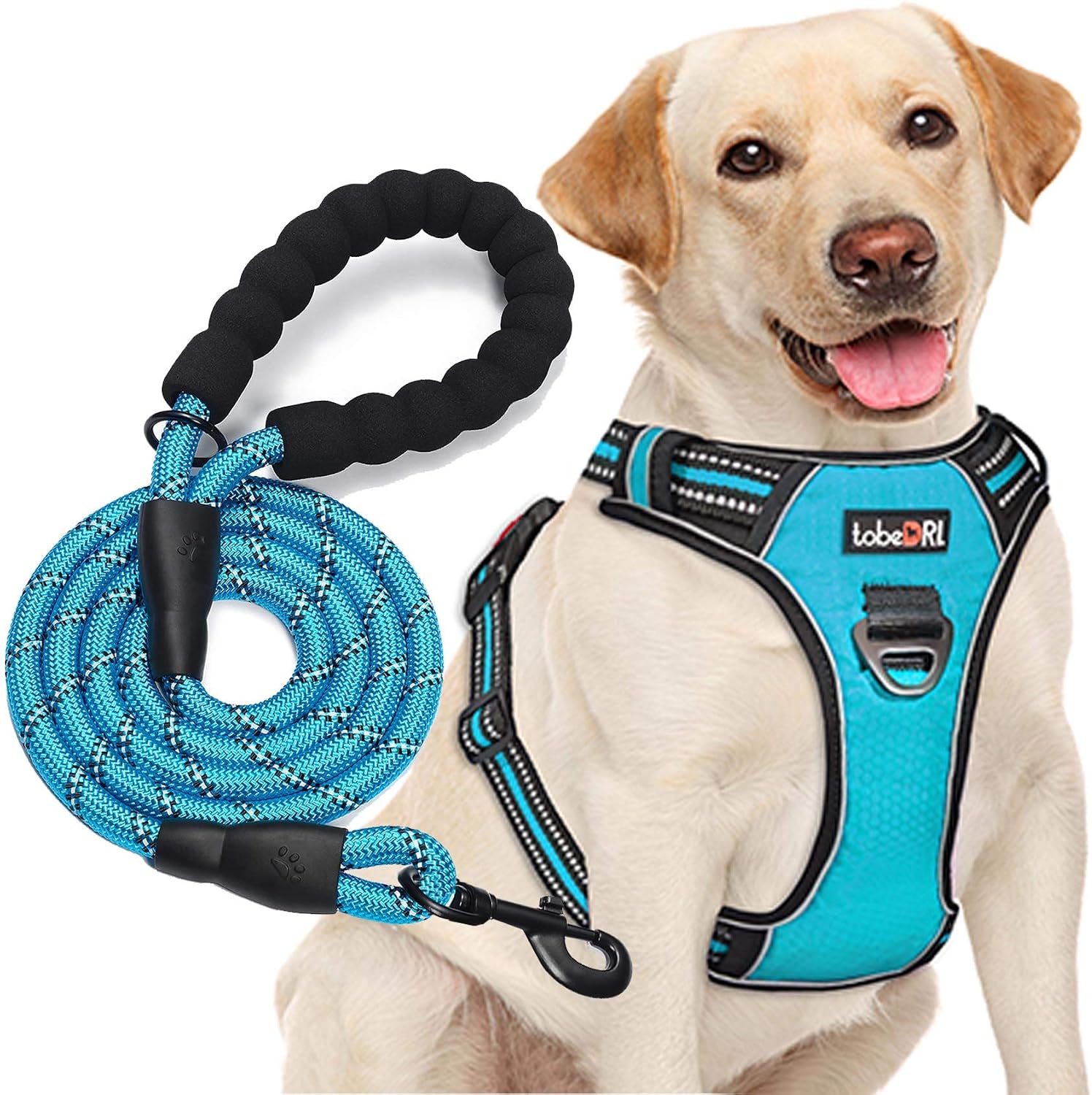 Visit on Amazon → tobeDRI No Pull Dog Harness with Leash Visit on Amazon → |
First-time buyers and budget setups | Oxford webbing, reflective stitching, heavy duty 5ft leash included, size L in this listing | Size L only here, so measure first; inspect the stitching on arrival |
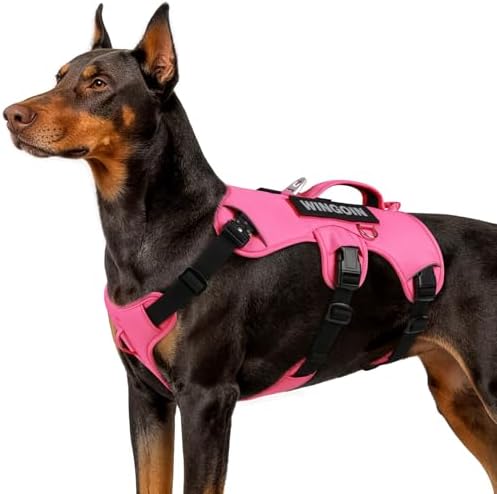 Visit on Amazon → WINGOIN Tactical Dog Harness Visit on Amazon → |
Large dogs and heavy pullers | Heavy-duty tactical build, sturdier frame, more structure than a walking vest | Tactical sizing runs generous; pair it with a no-pull attachment |
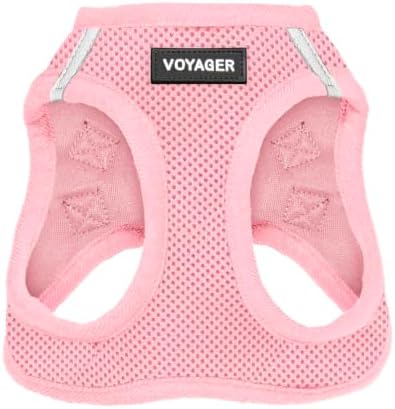 Visit on Amazon → Voyager Step-in Air Dog Vest Harness Visit on Amazon → |
Small dogs who walk politely, quick trips | Step-in vest, lightweight build, baby blue, size small | Convenience equipment, not a training tool for a hard puller |
The table is a starting point, not a verdict. A harness that fits badly will fail no matter which row it came from, and a harness that fits well will do its job even if it is the cheapest one on the list. Fit is the product.
Should you buy the Embark No Pull Dog Harness?
Yes, if your dog pulls and you are willing to train with the harness instead of just wearing it. The no-choke design protects the throat, the reflective webbing keeps you visible on dark mornings, and the adjustment range means it can be fitted properly to a real dog instead of a size chart.
The one thing to verify before you order is the attachment layout, because that is what makes a no-pull harness work. Look at the listing photos, then measure your dog's girth and order from that number.
Should you buy the tobeDRI No Pull Dog Harness?
Yes, if you want a complete setup in one purchase and your dog fits size L. The included heavy duty 5ft leash makes it the cheapest path to a matching, functional walking kit, and the reflective stitching and Oxford webbing are the features I look for first.
Measure before you order, because size L is the only size in this listing. Then check the stitching when it lands. If the webbing is sewn cleanly, you got a real harness at a budget price.
Should you buy the WINGOIN Tactical Dog Harness?
Yes, if you have a large dog and a strong pull, and you want hardware that does not care how big the dog is. This is the harness I would put on a big, powerful dog before I would put a lightweight vest on him.
Just be honest about the job. It is a walking harness for a heavy dog, and a heavy dog needs a no-pull attachment and a training plan, not a harness that magically ends the pulling. Gear supports training. It does not replace it.
Should you buy the Voyager Step-in Air Dog Vest Harness?
Yes, if you have a small dog who walks nicely and you want something fast to put on for short trips. Step-in designs are the easiest harnesses for a small dog to wear and for a human to manage in a hurry.
No, if your dog pulls. A vest is not a training tool, and buying a new one will not change the walk. Fix the walk with fit, a no-pull attachment, and a few sessions of actual training, then buy the vest for the easy days.