Related: Best Dog Harness for Pullers: Front-Clip Picks That Actually Hold
I have fitted a lot of dogs. Eight years at a shelter working with reactive and pulling dogs, then my own training business, and a shelf at home with more than thirty harnesses on it. The lesson that repeats every week is simple: a no-pull dog harness does not teach your dog anything by itself, and it cannot do its job at all if it does not fit.
Owners bring me a harness that slides sideways, twists under the chest, or rubs a bald patch behind the front legs. They blame the brand. Almost every time, the problem is fit. A harness that sits wrong will pull wrong, no matter what the tag says.
So this is the fit-first guide I hand to clients. Four pieces of gear: three walking harnesses at different price points, plus one support sling that is not a walking harness at all and should never be treated as one. I will tell you what each one is for, what to check before you order, and where the cheap hardware hides.
Best for Strong Pullers: SlowTon No Pull Dog Harness and Leash Set
Some dogs pull because they are excited and some pull because the world is scary, and both types need the same thing: a harness that redirects forward motion instead of rewarding it. A back-clip harness on a seventy-pound dog that leans into the leash is a sled dog setup. That is physics, not opinion.
The SlowTon set is built for that job. It is a no-pull harness with heavy duty webbing and soft padding at the contact points, and it ships as a set with a matching leash, which matters more than people think. A leash and harness designed together means the hardware matches and the attachment point sits where the maker intended it to sit.
Padding is the part I check first on any harness. Padding that stays put is a comfort feature. Padding that shifts after a month is worse than no padding, because it bunches, traps fur, and rubs raw spots under the armpit. Squeeze the chest panel when it arrives and see whether the foam moves inside its channel.
For a dog that hits the end of the leash, this is the category to shop in: no-pull geometry, wide webbing, padded chest.
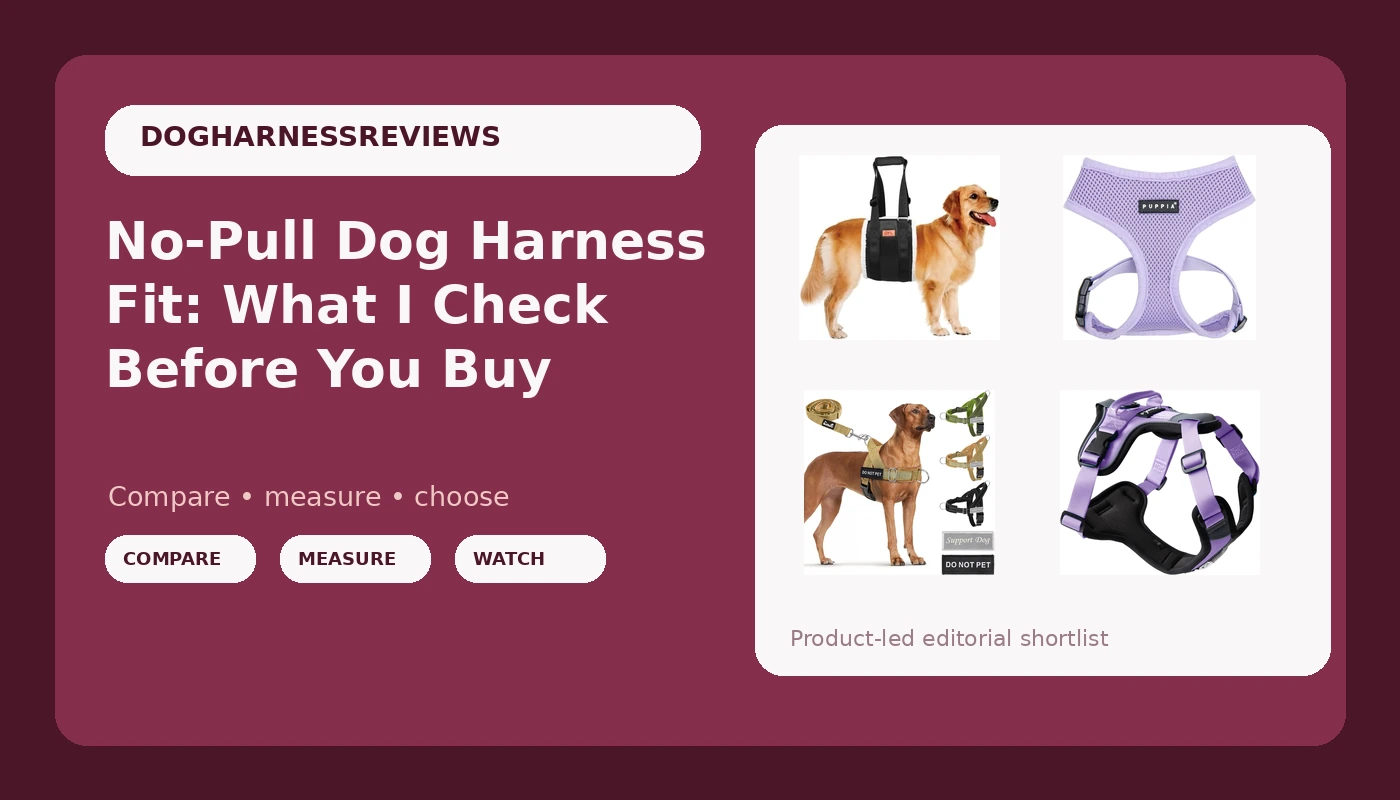
Best for Small Dogs and Polite Walkers: Puppia Soft Dog Harness
Not every dog needs a no-pull rig. If your dog already walks on a loose leash, or if you have a small dog who mostly needs something soft and light, a mesh over-the-head harness is a better daily choice than a heavy vest.
The Puppia is the classic version of that harness. It goes over the head, it uses triple layered breathable mesh, the chest belt adjusts, and it closes with a quick-release buckle. Violet, medium, in the version I am pointing at.
Here is the honest caveat. This is a back-attachment harness. On a dog that pulls hard, a back attachment gives the dog leverage and gives you nothing. It is a walking harness for dogs who already walk, and a good one. It is not a training tool for a dog who drags you down the block.
The mesh also means less structure. On a small dog that is fine, and often kinder than a stiff vest. On a forty-pound dog who lunges, it is simply the wrong tool.
Best Budget No-Pull Vest: ShawnCo Basecamp Dog Harness
The Basecamp is the low-risk end of the no-pull category: a no-pull pet vest in a small size, ICY Lilac. If you want to try front-attachment redirection without a big spend, a vest cut like this is where I send clients who are not ready to commit.
A vest spreads pressure across the chest instead of concentrating it on two straps, which is why it suits dogs with thin coats or sensitive skin. The tradeoff is coverage. More fabric means more places to check for rub, and it means the fit has to be right or the vest will shift when the dog turns.
Check the chest panel first. It should sit flat and stay flat when the dog moves, and it should not creep up toward the throat on a hard stop.
The Sling Is Not a Walking Harness: Adjustable Dog Sling for Large Dogs
This one belongs in the guide because people buy it expecting a harness and then wonder why it does not stop pulling. It is not that product. It is an adjustable sling for large dogs that supports the hind legs, for weak legs, for recovery, for a dog who needs help getting up the back steps.
Used correctly, it takes weight off the rear end while the dog walks. Used incorrectly, it is a strap around a dog's belly and a lot of confusion.
If your dog is losing strength in the hind end, this is a support tool, and it pairs with a walking harness rather than replacing one. You still need a proper harness for the front half of the dog, and you still need to fit that harness the same way you would fit any other.
How I check fit before anything else
Fit is 80 percent of the outcome, so I run the same five checks on every dog.
- Chest strap placement. It goes behind the front legs, not across the shoulder blades. If it crosses the shoulders, it restricts the stride.
- The two-finger rule. Two fingers should slide under every strap. One finger means too tight, a whole hand means too loose.
- Shoulder clearance. Watch the dog take three steps. If the strap slides into the armpit, the harness is sitting too far back or the chest belt is too long.
- Sternum plate position. On a no-pull harness, the front attachment should sit at the center of the chest, level with the point of the shoulder.
- Buckles. Metal on anything over forty pounds.
That list takes ninety seconds and prevents most of the problems people write to me about. If you only do one thing, do number three. A harness that slides into the armpit is a harness that rubs.
One more rule: most dogs need two harnesses, a walking one and a car one. The industry pretends one does both. It does not, and a harness that is great on a Saturday walk is not automatically a safe restraint in a crash.
The harness reference table
This is the table I keep for clients, sorted by the job rather than by price. Every row names the attachment type and the fit notes that matter most.
| Product | Type and attachment | Best for | Fit notes | Price |
|---|---|---|---|---|
 Visit on Amazon → Visit on Amazon →SlowTon No Pull Dog Harness and Leash Set |
No-pull, heavy duty, soft padded, with leash | Strong pullers, medium to large dogs | Check sternum plate sits level with the point of shoulder | $24.99 |
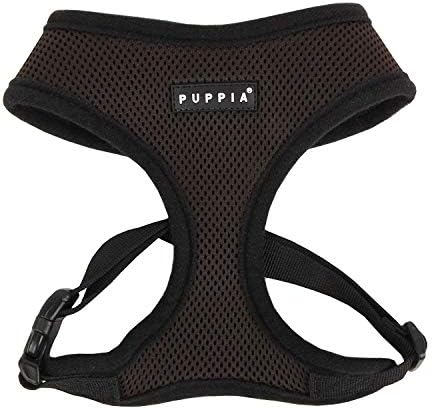 Visit on Amazon → Visit on Amazon →Puppia Soft Dog Harness |
Over-the-head, back attachment, breathable mesh | Small dogs, polite walkers | Adjust the chest belt so it clears the armpit | $20.00 |
 Visit on Amazon → Visit on Amazon →ShawnCo Basecamp Dog Harness |
No-pull pet vest, small | Budget entry into no-pull | Chest panel must lie flat when the dog turns | $19.95 |
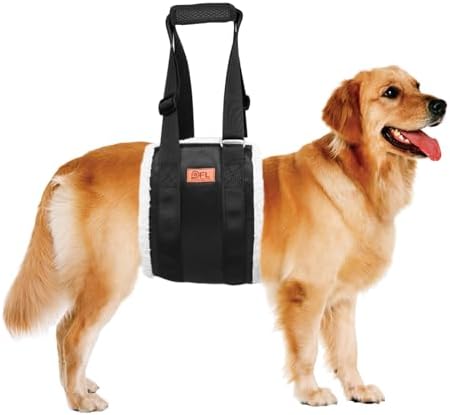 Visit on Amazon → Visit on Amazon →Adjustable Dog Sling for Large Dogs |
Hind leg support sling, adjustable | Weak hind legs, mobility support | Not a walking harness, pairs with one | $19.99 |
The key is the job. Buy the row that matches the problem you actually have, not the row with the nicest photo.
What the hardware tells you
Buckle quality is the entire product. I have seen a plastic buckle let go on a leash pop, and I have bent three plastic D-rings with my thumb. Metal hardware will be standard below thirty dollars within two years as the factories upgrade. Until then, look at the buckle before you look at the color.
Padding is the second thing. Padding that shifts after a month is worse than no padding, because it bunches under the armpit and mats the fur around it. If the foam slides inside its channel on day one, send it back.
Strap webbing matters less than people think, as long as it is wide enough not to cut. Wide webbing spreads load. Thin webbing on a strong dog is a rope with extra steps.
And color fades. One Pacific Northwest winter turns a bright harness gray. That is cosmetic, but if you care, buy the dark one.
Should you buy the SlowTon no-pull set?
If your dog pulls, yes. It is the row I would pick for a medium or large dog that leans into the leash, because no-pull geometry with padded contact points and wide webbing is the correct starting point. A matching leash in the set is a real bonus, not a filler item.
Should you buy the Puppia soft harness?
Yes, for the right dog. Small dogs and dogs who already walk politely will be happier in breathable mesh than in a heavy vest, and the adjustable chest belt makes the fit easy to dial in. If your dog pulls hard, skip it. That is not a knock on the harness, it is a mismatch.
Should you buy the ShawnCo Basecamp vest?
It is the low-risk entry into no-pull. If you want to find out whether your dog responds to front-attachment redirection without a big spend, a small no-pull vest is the cheapest way to test the idea.
Should you buy the support sling?
Buy it when your vet or your rehab person tells you the dog needs hind-end support, and buy it for that job only. It is a mobility aid, not a walking harness. Pair it with a fitted harness for the front half and you have a complete setup for a dog who is working to stay on their feet.